
Did you know people with a bachelor’s degree make about $20,000 more a year than high school grads? This shows how important education is for making money. However, not every student gets the same shot at a good education. Students in poor areas or with disabilities often get left behind. That’s where advocacy for better education policies comes in. It helps make sure every student has a chance to do well.
Advocacy is crucial for making education fair for everyone. The National Center for Education Statistics reports an increase from 79% to 87% in high school graduation rates from 2010 to 2019. This improvement is thanks to groups fighting for better education. They work with teachers, parents, and organizations to push for changes. Their action is key in making education better for all kids.
Key Takeaways
- Policy advocacy is vital in addressing educational disparities and ensuring equitable opportunities for all students.
- Professionals with a bachelor’s degree earn $20,000 more on average than those with only a high school education.
- Advocacy efforts have contributed to an 8% increase in the high school graduation rate over a nine-year period.
- Education advocacy involves coordinated efforts among educators, parents, and advocacy organizations.
- Effective advocacy influences key decision-makers and helps drive significant educational reforms.
Understanding Policy Advocacy in the Education System
Policy advocacy in education is key to driving big changes. It ensures all students, especially those less privileged or with disabilities, get fair access to education. Advocates work hard to influence the rules and laws that shape our schools. This can lead to a more inclusive and fair education for everyone.
Definition and Scope
Policy advocacy focuses on making changes in educational laws and policies. It includes efforts like lobbying to change laws, suggesting new rules, and ensuring important policies are followed. One key policy is the IDEA, which guarantees free and appropriate education for students with disabilities.
Thanks to advocacy, laws like the Rehabilitation Act of 1973 and the ADA of 1990 have been passed. However, challenges remain, such as class segregation for students with disabilities. Advocacy now also tackles issues like the shortage of qualified teachers and the use of restraint and seclusion practices that negatively impact disabled students.
Role of Educational Advocates
Educational advocates play a crucial role in improving our education system. They know the laws well and fight for students’ rights. Their work includes:
- Explaining complicated education laws to help families and students.
- Pushing for laws that stop bad practices like seclusion and restraint while promoting better options.
- Guiding schools in adopting policies that fix major issues, as highlighted by reports like “The Opportunity Myth.”
They also support big projects like the One Million Teachers of Color campaign. This effort, led by TNTP, aims to make our teaching force more diverse by 2030. By shaping policies at various levels, advocates strive for a fair and effective education system for all.
Impact of Advocacy on Educational Change
Advocacy plays a key role in improving our schools and fixing education’s unequal parts. By pushing hard, advocates fight for more money for schools and new rules on tests. Their hard work leads to laws like the Improving Mental Health and Wellness in Schools Act and the RISE Act. These laws have really helped make things better.

Driving Reforms
Advocates aim to fix what’s stopping kids from getting a good education. They address problems like poverty and racism. They fight so every student can get a top-notch education.
Technology is also important. It helps advocates reach out far and wide. It brings people together to make education better for everyone.
Addressing Educational Disparities
Advocates push for schools where all kids, no matter their background, can learn and grow. They work with the government to change the rules. This makes education fairer for everyone.
They also help communities that don’t have as much power. Efforts in North Carolina show work towards hiring teachers from all walks of life. This makes education fairer for everyone.
Keeping an eye on how things are going and making changes is key. Advocates are always looking for new ways to teach and learn. This makes sure every student gets a fair chance at success.,p>
Collaborative Efforts in Policy Advocacy
Success in educational policy advocacy relies on working together. Parents, educators, and organizations must join forces. This unity boosts the power of efforts to influence those who make education policies. It makes sure everyone’s voice is heard.
Partnerships Between Parents and Educators
Working together, parents and educators have a big impact. They become a strong team that looks out for students’ needs. They join school boards, attend meetings, and speak up. This helps push for beneficial education changes.
Groups like the Alliance for Excellent Education and Stand for Children support this teamwork. They show how important it is for parents and teachers to work together.

Influencing Key Decision Makers
Reaching and convincing important policymakers is key in advocacy. Those in charge can make big changes. It’s vital for organizations to use their resources wisely to connect with these decision-makers.
They organize letter-writing, arrange visits, and set up talks. Groups like the Red Tape Reduction Industry Panel are good at this. They help start changes that really matter.
Role of Advocacy Organizations
Advocacy groups are crucial in changing education policies. They do research, gather support, and talk to lawmakers. Efforts by groups like the Trauma Informed Care Collective and CUPS are effective. They bring different people together to tackle specific issues.
These organizations educate both the public and policymakers. They explain the benefits of certain policy changes. This support keeps advocacy going strong over time.
Collaboration is key in education advocacy. Parents, educators, and advocacy groups must unite. Their combined efforts can significantly improve the education system for students everywhere.
The Long-Term Benefits of Policy Advocacy
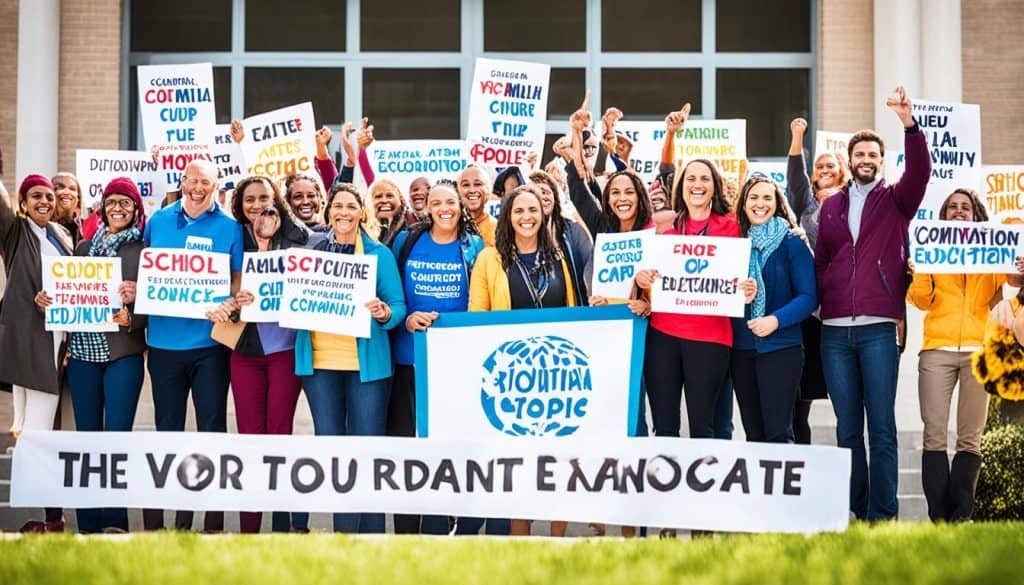
Advocating for changes in education helps many people now and in the future. It makes learning fair for everyone. By fighting for equal opportunities in schools, we break down barriers.
Improving Educational Equity
One key benefit of advocacy is making education fair for everyone. It means all students get a good education, no matter their background. This helps everyone have the same chances in life.
Advocacy makes sure education keeps improving for those who need it most. It leads to lasting changes that make schools better for everyone.
Empowering Teachers and Students
Supporting teachers and students is another important part of advocacy. It means teachers get the resources they need. This lets them focus on teaching well.
Advocacy does more than just improve schools. It makes students feel safe and confident. It also teaches them to stand up for what’s right.
To sum up, fighting for better education policies has big benefits. It makes schools fair and supportive for teachers and students. By tackling big challenges, we make learning better for everyone.
Policy Advocacy: Steps to Get Involved
If you care deeply about educational policy, getting involved in advocacy can make a real difference. Studying Master of Education programs at American University is a great start. These programs teach you essential skills to tackle education policies and advocate effectively.
Joining forces with advocacy groups is crucial too. By teaming up, you can lead strong conversations on educational fairness. Data is key when talking to lawmakers who see thousands of bills. With good data and clear stories, you can push for the changes you want to see.
Linking up with others can make your advocacy stronger. The National Council on Family Relations (NCFR) leads in bringing people together for policy work. Partnering with groups like NCFR broadens your impact. Remember, it often takes many calls or letters to get noticed by lawmakers. Using toll-free hotlines lets you reach out easily, even on weekends.