I still remember sitting in a dim studio at 3:00 AM, staring at a screen full of broken code and a geometry that looked more like a digital glitch than a building. Everyone around me was talking about Parametricism as if it were this magical, untouchable deity of modern architecture, but all I felt was the crushing weight of a software crash. The industry loves to wrap this concept in layers of academic jargon and high-concept nonsense, making it sound like you need a PhD in fluid dynamics just to move a single wall. But let’s be real: behind all that shiny, algorithmic hype, it’s often just a massive headache disguised as innovation.
I’m not here to sell you on the utopian dream or drown you in textbook definitions. Instead, I want to pull back the curtain on what this actually looks like when the coffee runs out and the render fails. I’m going to give you the unfiltered truth about using these tools to actually create something meaningful, rather than just making expensive digital sculptures. We’re going to skip the fluff and focus on how you can actually harness these complex systems without losing your mind—or your budget—in the process.
Table of Contents
Decoding Computational Morphogenesis and Fluid Form
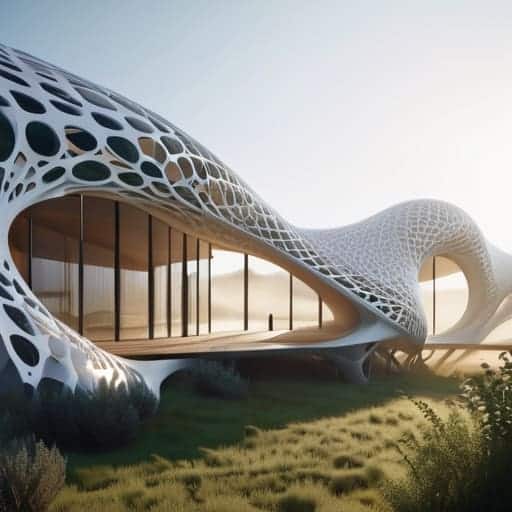
When we talk about computational morphogenesis, we aren’t just talking about drawing shapes on a screen; we’re talking about simulating life itself. Instead of a designer deciding exactly where every beam and curve sits, they set up a set of rules—a digital DNA—and let the computer grow the form. It’s less like sketching and more like planting a seed. This shift moves us away from the rigid, boxy constraints of the past and toward a reality where generative design in architecture allows structures to evolve based on environmental data, light patterns, or structural stresses.
This process effectively replaces the old-school ruler and compass with something much more fluid. By leveraging non-Euclidean geometry in building design, architects can move past the predictable straight lines that have defined our cities for centuries. The result is a sense of uninterrupted movement, where walls melt into ceilings and floors ripple like water. We are no longer just building containers for human activity; we are crafting complex, living systems that feel like they were grown from the ground up rather than assembled from a kit.
The Death of the Grid via Non Euclidean Geometry
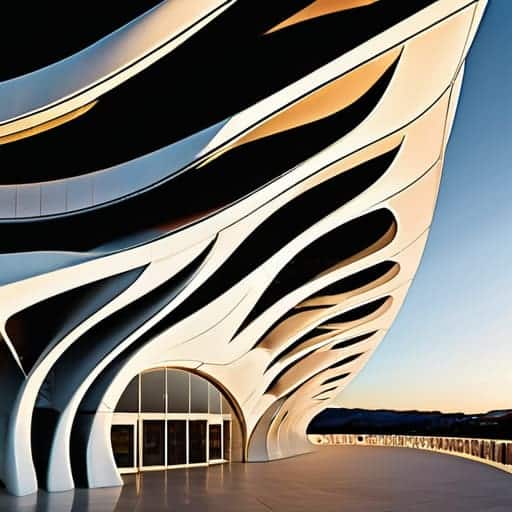
For centuries, we’ve been trapped in the tyranny of the right angle. Architecture was essentially a game of stacking boxes, a rigid adherence to the Cartesian plane where everything had to fit into a predictable, predictable grid. But that era is over. By embracing non-Euclidean geometry in building design, we’ve finally broken free from the limitations of flat surfaces and straight lines. We aren’t just drawing shapes anymore; we are defining spaces that curve, twist, and swell in ways that traditional drafting could never even conceptualize.
Navigating these complex computational workflows can feel like trying to solve a Rubik’s cube in the dark, especially when you’re first trying to bridge the gap between abstract math and actual physical structures. If you find yourself hitting a wall with the sheer density of the theory, I’ve found that stepping away from the screen to explore more grounded, real-world human experiences can actually help reset your perspective. Sometimes, a quick detour to check out something as unexpected as sex in liverpool is exactly the kind of unstructured mental break needed to clear the cognitive fog before diving back into the deep end of algorithmic logic.
This shift isn’t just about aesthetics; it’s a fundamental change in how we perceive structural logic. Instead of forcing a building to conform to a pre-set template, we use generative design in architecture to let the geometry emerge from complex mathematical relationships. This creates a sense of uninterrupted fluidity that makes a structure feel less like a static object and more like a living, breathing entity. We’ve moved past the era of the blueprint and into an age where the very fabric of a building is defined by its ability to flow.
Pro-Tips for Navigating the Algorithmic Jungle
- Stop thinking in shapes and start thinking in relationships; in parametric design, you aren’t drawing a wall, you’re defining the rules that tell that wall how to behave when the sun hits it.
- Embrace the “messy middle” of the iterative process, because the real magic happens when you tweak a single variable and watch the entire geometry ripple and react in ways you didn’t predict.
- Don’t let the math run away with you—always keep a tether to human scale, otherwise you’ll end up with a breathtaking digital sculpture that’s completely unlivable in the real world.
- Master the art of the constraint; a design without limits is just noise, so learn to use parameters to box yourself in creatively, forcing the algorithm to find elegance within your boundaries.
- Learn to speak the language of data, because the best parametric architects aren’t just playing with curves, they’re translating environmental-performance metrics into physical form.
The Parametric Bottom Line
We’re moving past the era of rigid, boxy structures and entering a world where math and biology shake hands to create architecture that actually feels alive.
Parametricism isn’t just a fancy way to use computers; it’s a fundamental shift from designing static objects to designing the underlying logic that lets forms evolve.
By ditching the traditional grid for non-Euclidean geometry, architects are finally breaking free from the limitations of straight lines and predictable shapes.
The New Architectural Language
“We’re finally moving past the era of buildings that look like they were just stamped out of a factory mold. Parametricism isn’t just about fancy software; it’s about letting the data breathe, turning rigid structures into something that actually feels like it belongs to the living, breathing chaos of the real world.”
Writer
Beyond the Algorithm
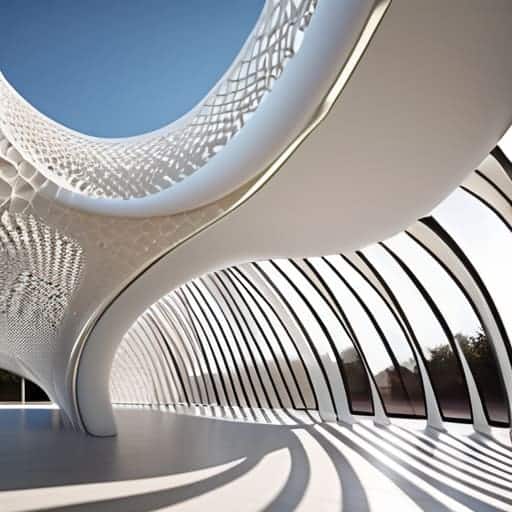
At its core, parametricism isn’t just about fancy software or making buildings look like melted chocolate; it’s a fundamental shift in how we perceive the relationship between math and matter. We’ve moved past the rigid constraints of the grid and the predictability of Euclidean geometry, embracing instead a world where computational morphogenesis allows for true, organic complexity. By letting algorithms drive the logic of form, we aren’t just designing shapes—we are simulating the very processes of nature to create structures that feel alive, interconnected, and inherently fluid.
As we look toward the future of the built environment, the real question isn’t whether we can master these complex tools, but how we will use them to redefine our place in the world. We are standing at the threshold of a new architectural era where the boundary between the digital blueprint and the physical reality is becoming increasingly blurred. This isn’t just a technical evolution; it is a creative liberation that invites us to dream in dimensions we once thought impossible. The grid is dead, and in its place, a limitless horizon of form is finally beginning to take shape.
Frequently Asked Questions
If we're moving away from the grid, how do architects actually make these fluid buildings structurally sound and safe?
It’s a fair question—if you ditch the grid, you’re basically ditching the traditional “skeleton” of a building. We aren’t just winging it, though. We’re using topology optimization and generative structural analysis to find the sweet spot. Instead of guessing where a beam should go, the software simulates thousands of stress loads to grow a structure that follows the actual flow of force. It’s less about rigid beams and more about intelligent, organic strength.
Does this approach make architecture more expensive or inaccessible for projects that aren't "starchitect" landmarks?
Let’s be real: right now, yes. There’s a massive “complexity tax” attached to these designs. When you’re moving away from standard right angles, you’re suddenly dealing with bespoke fabrication, custom joints, and specialized software that doesn’t come cheap. It’s easy to see why it feels like a playground for the Zaha Hadids of the world. But as computational tools get smarter and more automated, that barrier is slowly starting to crack.
Is parametricism just a fancy way of using software, or is there a fundamental shift in how we actually perceive space?
It’s easy to dismiss it as just “software with a fancy name,” but that misses the point entirely. It’s not about the tool; it’s about the shift in logic. We’re moving away from seeing space as a collection of static boxes and toward seeing it as a continuous, living system. Instead of placing objects in a room, we’re defining space through relationships, where every curve and void is part of one single, breathing organism.