Did you know the market for global livestock farm equipment was worth $21.4 billion in 2022? It’s expected to grow to $28.90 billion by 2032. That’s a yearly growth rate of 3.10%. Such growth shows big changes happening in the livestock industry. The Agricultural Resource Management Survey (ARMS) points out these changes. They include changes in how farms are set up, use of new technologies, and shifts in what people eat.
Farmers are building bigger, specialized farms. They’re using new tech to be more efficient and competitive. The fast move to automation and smart tech shows farming is changing. In Asia-Pacific, which made 33% of the market’s revenue in 2022, this change is very clear. This area will likely see growth to about $9.72 billion by 2032.
It’s key for livestock farmers to keep up with these trends. Knowing about the changes in agribusiness and economics helps them. This way, they can grab new chances and avoid risks.
Key Takeaways:
- The global livestock farm equipment market is expected to grow from $21.4 billion in 2022 to $28.90 billion by 2032.
- Asia-Pacific dominated the market in 2022 with a 33% revenue share and is estimated to reach $9.72 billion by 2032.
- Farmers are increasingly adopting automation and data-driven solutions for better productivity and resource optimization.
- Larger and specialized operations are becoming more prevalent, influenced by economic efficiency concerns.
- Understanding market trends helps livestock farmers stay competitive and capitalize on emerging opportunities.
Overview of Changes in Livestock Production
The world has seen big changes in livestock production lately. These changes match our growing needs and new tech. Right now, about 30% of the land supports livestock, helping many people, including small farmers. With the world’s population expected to hit 9.2 billion by 2050, the demand for meat and milk keeps rising.
Livestock production uses more land than anything else for grazing and feed. The business is growing bigger and focusing more on certain animals to keep up with this demand. This shift means more cattle and pig farms are popping up everywhere.
Shift to Larger and Specialized Operations
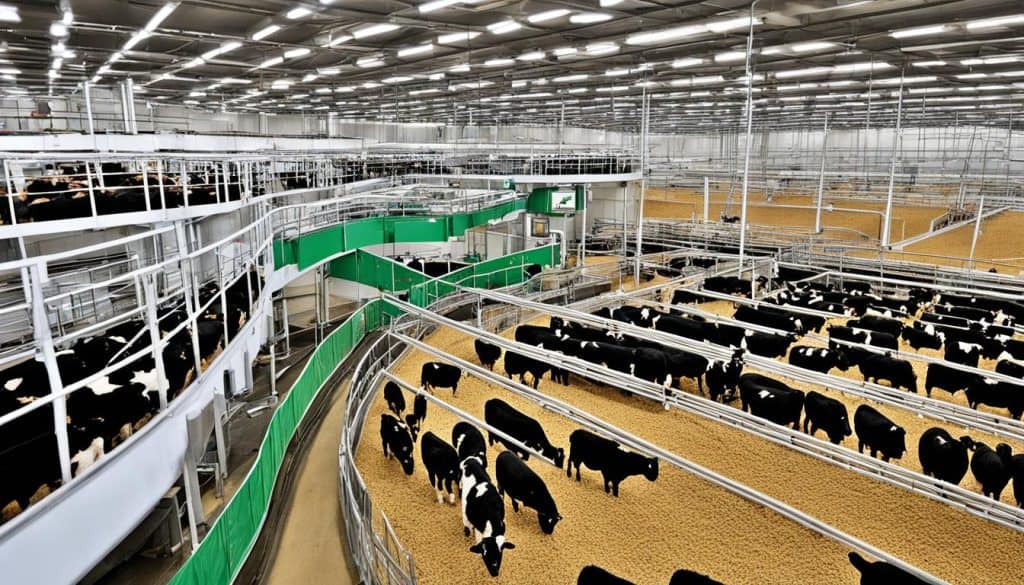
Farms are getting bigger and focusing on one kind of animal. This change seems necessary to meet growing demand. In the past, smaller farms took care of animals, but now, there’s a push for bigger, more efficient operations. For example, in the U.S., the average beef farm has about 44 cows.
Adoption of Cost-Saving Technologies
Using new tech is key in modern livestock farming. It helps farms run smoother, cuts costs, and is better for the environment. There’s big spending on things like automation, precision farming, and better breeding. Because of tech, big feedlots in the U.S. are more efficient, marketing about 40% of fed cattle.
Implications for Economic Efficiency and Product Prices
Using new tech affects the price of meat and milk. Thanks to more efficient farming, producers can charge competitive prices and still make a profit. Programs like the Dairy Margin Protection Program help keep the industry stable despite market changes.
The way we produce livestock is always changing. It’s a mix of technology, efficiency, and economics. This evolution plays a big role in our ability to secure food for the future and maintain sustainable farms.
Impact of Government Policies on Livestock Farming
Government policies greatly affect livestock farming. They shape how farmers decide to run their businesses. The Dairy Margin Protection Program from the Agricultural Act of 2014 helps protect dairy farmers from market changes.

Introduction of Dairy Margin Protection Program
The Dairy Margin Protection Program is a key effort to help farmers handle market uncertainties. It keeps dairy farmers financially stable during economic ups and downs. This shows how new laws can have a big real-world impact.
Legislation and Its Effects on Production Practices
Laws like the Agricultural Act influence how food is produced. The USDA says policy changes lead to big industry adjustments. The Agriculture Improvement Act of 2018 helped by offering disaster help and support for resilience.
Financial Implications for Farmers
These policies also have a big impact on farmers’ finances. USDA helps cover losses for diseased livestock and offers price insurance. Different Federal programs helped make $259 billion in 2022 from livestock, dairy, and poultry.
Understanding Market Trends in Livestock Farming
Livestock farming is always changing because of new trends and what people want. Reports from the ERS show these changes might totally alter the future of this industry. Farmers are now using smarter pricing ways to deal with an unpredictable market.
The direction where livestock products are heading is also shifting. This is due to things like more meat being produced worldwide, more people living on Earth, and climate challenges.
Current Demand Shifts in Livestock Products
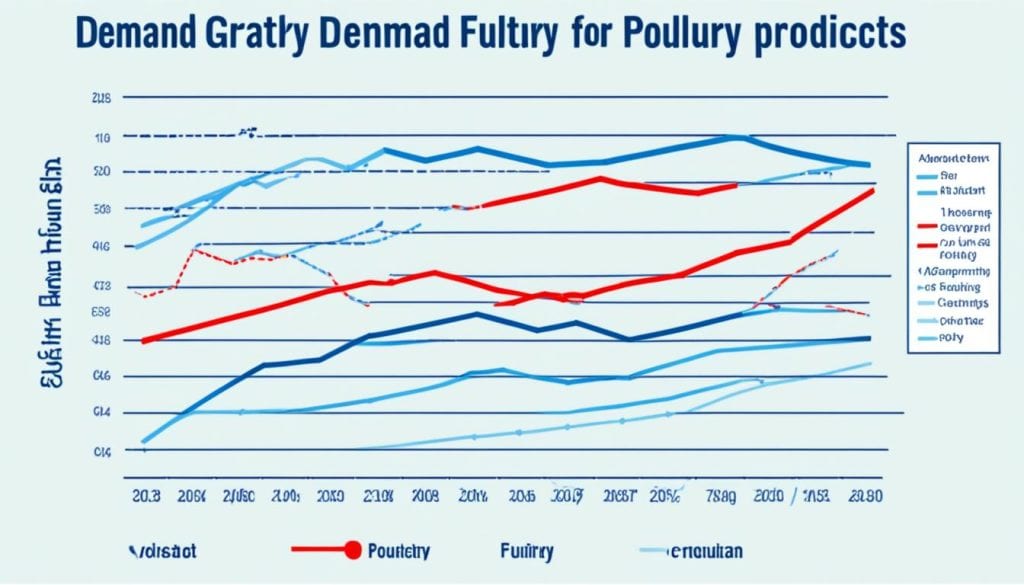
The way people want livestock products is changing. This brings challenges but also chances for growth. Livestock takes up about 30% of the Earth’s land that’s not covered in ice, and the industry is worth at least $1.4 trillion.
It gives jobs to at least 1.3 billion people worldwide. It also helps over 600 million poor farmers in different places. With all these, we see big changes because of people’s changing tastes and the economy. By 2050, with more people living in places like sub-Saharan Africa and South Asia, the demand for these products will double.
Pricing Strategies in a Volatile Market
Facing an ever-changing market needs new product pricing strategies. These must keep businesses going while responding to how demand shifts. In the past 20 years, the U.S. has fewer hog farms, but hog production went up by over 30%. This shows the industry is getting more efficient.
But, climate change is making things even more unpredictable, particularly impacting meat and milk. For example, dairy cows don’t do well with too much heat, and that affects milk production and prices. The dairy industry is moving towards making products other than just milk. They are adapting to what people want and the pressures from climate change.
Technological Advancements in Livestock Production
Technology has changed livestock production in big ways, especially with precision agriculture and automated farming. Nowadays, about 12% of dairy farms use robots for tasks like milking. Experts believe this number will grow to 20% in the next five years. This shows how technology is reshaping the way livestock farms operate, offering solutions to old challenges.
Precision Livestock Farming (PLF) is a big leap forward. It uses sensors, data analytics, and computer vision to better manage livestock. For example, Cainthus uses machine vision to track animals’ behavior, such as what they eat and where they go. This helps farmers make more informed decisions. It also improves the animals’ well-being by keeping an eye on health, milk production, and hormone levels.
Advances in technology are also changing animal genetics. Animal genomics looks at animals’ genes to help with breeding choices, aiming to boost profits and output. Wearable sensors on animals give detailed information. This helps in looking after each animal’s health, diet, and reproduction more closely.
While these new tools offer many benefits like better productivity and animal welfare, they come with challenges. Costs can be high and integrating these technologies into farming practices can be tough. Yet, there’s a bright future. Farmers are starting to use data more in their decisions. This is in response to the growing world population and the need for more food. Technology will be key in making livestock farming sustainable and efficient, ready to meet global needs.