Did you know sustainable agriculture uses a whole-system method? This method offers long-term solutions that are key for future farming generations. Sustainable farms aim to keep a balance. They focus on environmental protection, economic gains, and social benefits. Moving from traditional to sustainable farming is very important. A study in 2018 by Nuffield Scholar highlights the importance of good Farm Environmental Planning. It shows how crucial this planning is for sustainable outcomes in agriculture.
To adopt sustainability in farming means keeping the soil healthy and promoting diverse life. It also means cutting down on chemicals and stopping soil erosion. Other essential steps include saving water, smart resource management, and recycling plant nutrients. Together, these actions lead to caring for our planet.
It’s basic to create a strong plan for farm sustainability. Such a plan mixes different sustainable methods. These include rotating crops, practicing organic farming, and using clean energy. As a result, farms get better at helping the environment, making money, and being fair to people. Let’s look at what steps we need to take. We’ll see how to make a successful plan for your farm, your community, and the world.
Key Takeaways
- Sustainable farms focus on environmental conservation, economic profitability, and social benefits.
- Key sustainability practices include soil health maintenance, nutrient recycling, biodiversity promotion, and water conservation.
- Effective farm sustainability plans require a comprehensive approach considering environmental, economic, social, and cultural factors.
- Successful implementation of sustainable practices involves collaboration among stakeholders, supported by industry investment and government aid.
- Farm environmental planning integrates eco-efficiency and environmental stewardship for long-term agricultural sustainability.
Understanding Sustainable Agriculture
Sustainable agriculture is about balancing ecosystems in farming. It focuses on the long-lasting effects on land, people, and the economy. Farmers use a holistic method to keep farming fruitful and protective of the environment and communities.
Definition and Importance
The Brundtland Report of 1987 introduced sustainable farming. It aims to satisfy today’s needs without harming future generations. This approach enhances environmental health, profits, and equality. It includes varied crops and pest control for better, lasting farming.
The Evolution of Sustainability in Farming
Sustainability in farming has grown to focus on broader challenges. Early on, efforts were made in soil care and pest management. Now, strategies like combining trees and crops show many benefits. This includes healthier wildlife and smarter use of resources.
Key Objectives of Sustainable Farms
Three main goals guide sustainable farms:
- Environmental Stewardship: Practices such as minimal plowing and planting cover crops improve soil and protect different life forms.
- Economic Profitability: Using diverse crops and managing pests wisely boost a farm’s long-term success.
- Social Equity: Fair pay, good working conditions, and community growth are key in sustainable farming.
Sustainability in farming makes reaching these goals possible and strengthens agriculture’s ability to withstand challenges.
Establishing Your Sustainability Goals
Setting up sustainability goals means making them clear and doable. It’s all about knowing what your farm needs and how to improve it. You might get start-up money from places like Compeer Financial Fund for Rural America and the Innovation Center for U.S. Dairy.
To be successful, you should pinpoint your farming priorities. It’s also crucial to know about your area’s climate and soil. And, you must set goals you can actually measure.
Identifying Your Farming Priorities
First, figure out what’s most important for your farm. Think about the type of crops, how much you want to produce, and what’s financially sound. It’s vital that your sustainability goals fit with your personal values and where you see your farm in the future.
Organizations like Lafayette Ag Stewardhood Alliance (LASA) help farmers in southwestern Wisconsin. They support farmers in finding and using the right conservation practices. This helps make farms more sustainable overall.
Understanding Local Climate and Soil
The climate and soil in your area are big factors in sustainable farming. It’s important to know how they impact what you can grow and do. In southwestern Wisconsin, for example, Farmers for Sustainable Food works with farmers. They try out conservation methods with dairy, hog, beef, and crop farmers.
Understanding your farm’s climate and soil is key. It makes sure your sustainability plans work well for your specific situation.
Setting Measurable Objectives
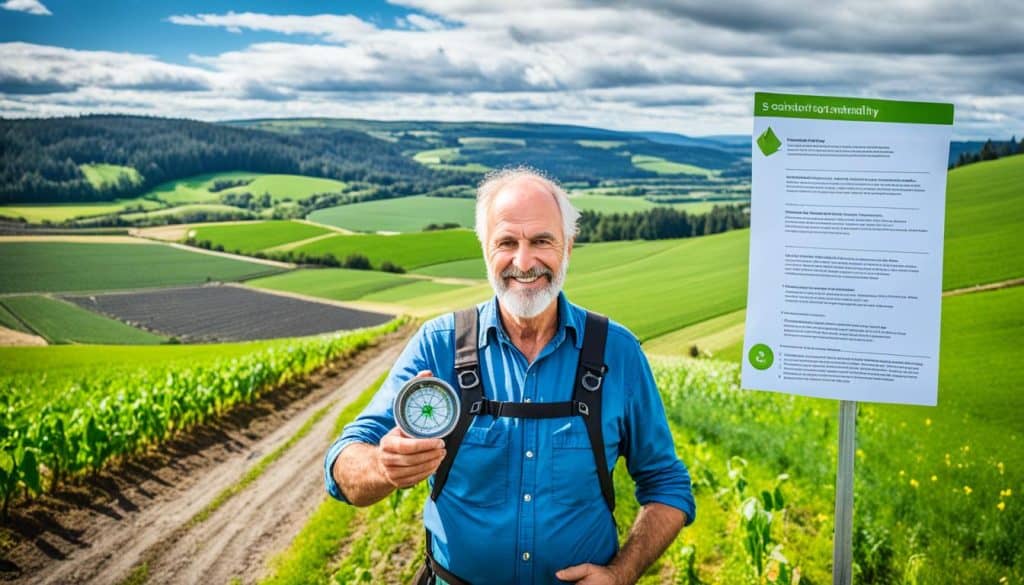
It’s crucial to have goals you can track. This helps you see how you’re doing and make improvements. You can use different tools, both private and public, to assess your farm’s conservation efforts.
Creating S.M.A.R.T. (Specific, Measurable, Achievable, Relevant, and Time-bound) goals is a smart move. These goals should aim to better soil health, boost biodiversity, and use resources wisely. By considering both money and the environment, these goals guide farms towards modern, sustainable agriculture.
Assessing Your Land’s Potential
To create a sustainable farm, you must first assess your land’s potential. This includes exploring soil composition, biodiversity, and natural resources. We provide a guide to effectively evaluate these crucial aspects.

Conducting Soil Analysis
Soil analysis is key to managing natural resources effectively. By testing the soil, you can understand its nutrient content, pH levels, and contamination presence. This knowledge helps pick the best crops and plan for optimal growth. Adjusting soil fertility, for example, may need up to three years.
- Test for nutrient levels.
- Check soil pH for crop compatibility.
- Assess for any contaminants like heavy metals.
Evaluating Biodiversity and Ecosystem
Biodiversity is crucial for sustainable ecosystems. Studying your farm’s biodiversity reveals how ecological interactions influence crop production and health. This diversity helps with pest control, pollination, and soil quality.
Consider these factors:
- Assess plant and animal species present.
- Monitor interactions within the ecosystem.
- Plan to protect and enhance biodiversity.
Identifying Resource Availability
Identifying resources like water, energy, and sunlight is vital for efficient farm management. Knowing what resources are available ensures their sustainable use. For example, drip irrigation saves water, and understanding microclimates aids in choosing crops.
Key resource assessments include:
- Evaluate water quality and availability.
- Analyze sun exposure and wind patterns.
- Consider the topography for potential erosion risks.
Farm Sustainability Plans: The Essentials
Creating a farm sustainability plan starts with understanding the farm’s setup. This means knowing all about the resources, like land and animals. You also need to plan how to grow crops or care for livestock. It’s important to also have a schedule for the year’s activities to stay organized.
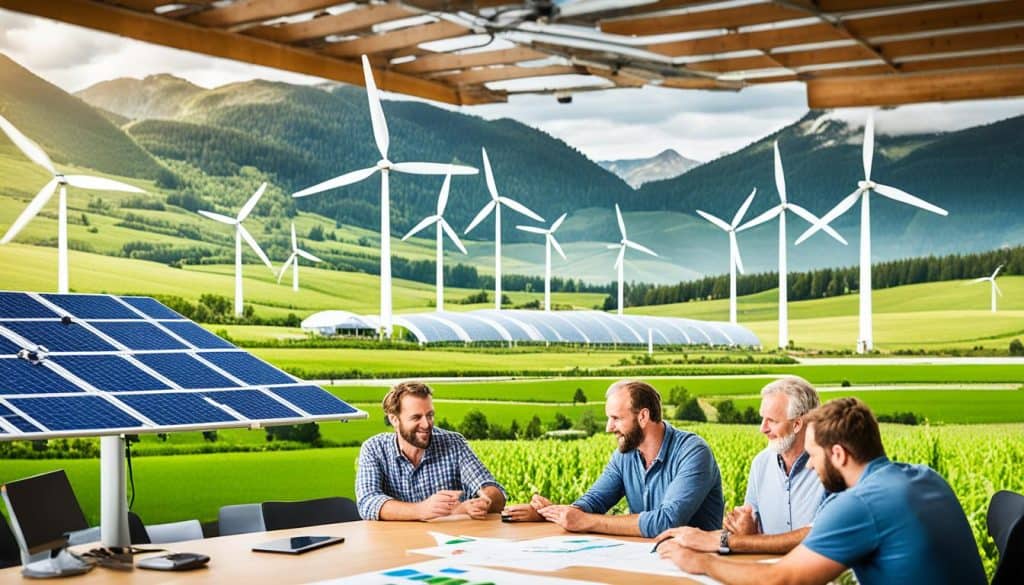
Renewable energy is key to making farms more sustainable. By using things like solar and wind power, farms can lower their carbon footprint. This move saves money and helps protect our planet.
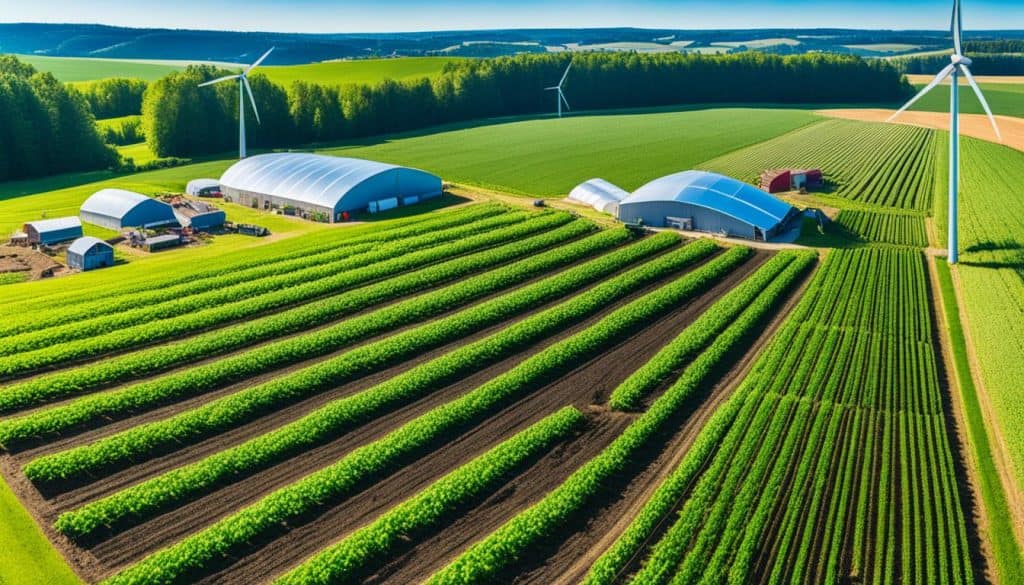
Risk management is also crucial for sustainability. It’s about being ready for anything, like bad weather or changing market prices. A good plan helps the farm keep going strong, no matter what happens.
To make a great farm sustainability plan, several things are necessary:
- Resource Inventory: This includes everything the farm has, like water and tools.
- Production Method Plan: It’s about how to farm, from planting to taking care of animals.
- Timeline of Activities: This is a plan for what to do all year.
- Land and Water Management: Farmers must use the land and water wisely to keep them healthy.
- Renewable Energy Integration: Farms should use green energy sources like the sun and wind.
- Risk Management: Farms need to be ready for things like weather changes and economic shifts.
There are more than 350,000 farms around the world working towards sustainability with FSA verified groups. The tools and standards set help farms be more eco-friendly. They guide farms toward being both resilient and good for the earth.
A farm sustainability plan is much more than a piece of paper. It’s a promise to run the farm well, to use renewable energy, and to manage risks wisely. This effort makes farming good for the farm, the community, and the whole planet.
Incorporating Sustainable Farming Techniques
Sustainable farming is crucial today. It helps prevent soil degradation. It also boosts microbial growth in our lands.
Using sustainable methods leads to better ecosystems and higher yields. It also keeps the soil fertile for the future.
Crop Rotation Practices
Crop rotation is key in sustainable farming. It involves changing crops in the same area to beat pests. It also helps refresh the soil’s nutrients.
Rotating crops, like legumes with maize, cuts the need for extra nitrogen. This makes the soil stronger and prevents it from wearing out.
Utilizing Cover Crops and Green Manures
Cover crops and green manures protect soil from erosion. They hold the soil together between growing seasons. These plants also boost soil health and help it stay fertile.
They increase beneficial microbes and lessen the need for things like haylage. Cover crops enrich the soil and bring many benefits, such as preventing weeds.
Reducing or Eliminating Tillage
Less tillage is vital in sustainable farming. It keeps the soil healthy, boosts organic content, and locks in more water.
Studies have found that less tilling can raise soil organic carbon levels by 1.7% to 3.6%. This shows it’s a great way to keep farming sustainable.
Choosing the Right Crops and Livestock
Selecting the right crops and animals is key for a resilient and profitable farm. By choosing native species, farmers make their farms fit well with the local climate and nature. This means less need for chemicals. Adding a mix of crops and animals makes farms more ecologically stable. It also makes farms able to support themselves in a sustainable way.
Selecting Native and Resilient Varieties
Native species naturally fit local environmental conditions. They’re often tougher against pests and diseases. This means farmers don’t have to use as many chemicals, helping the environment. Focusing on these types of plants and animals not only protects nature but also saves money. This can lead to making more money because of lower costs and better crop yields. Tools like EcoDocs help pick the right varieties by providing fresh data.
Implementing Crop Diversification
Mixing different types of crops is basic for farming the right way. It helps stop pest problems, makes the soil better, and cuts down on chemical use. This way of farming also means not all your money comes from one place. This is safer for the farmer. Using different plants that need different nutrients helps keep the soil healthy. Management tools give real-time data to make better decisions.
Integrating Livestock into Farming Operations
Adding animals to farms makes the most of resources and promotes sustainability. Animals help with soil health by adding manure. This makes the soil richer and better for growing crops. Farms that have both plants and animals are stronger. They can handle problems like bad crops or changes in prices better. Managing animals well, including how they graze and what they eat, makes farms more efficient and sustainable.