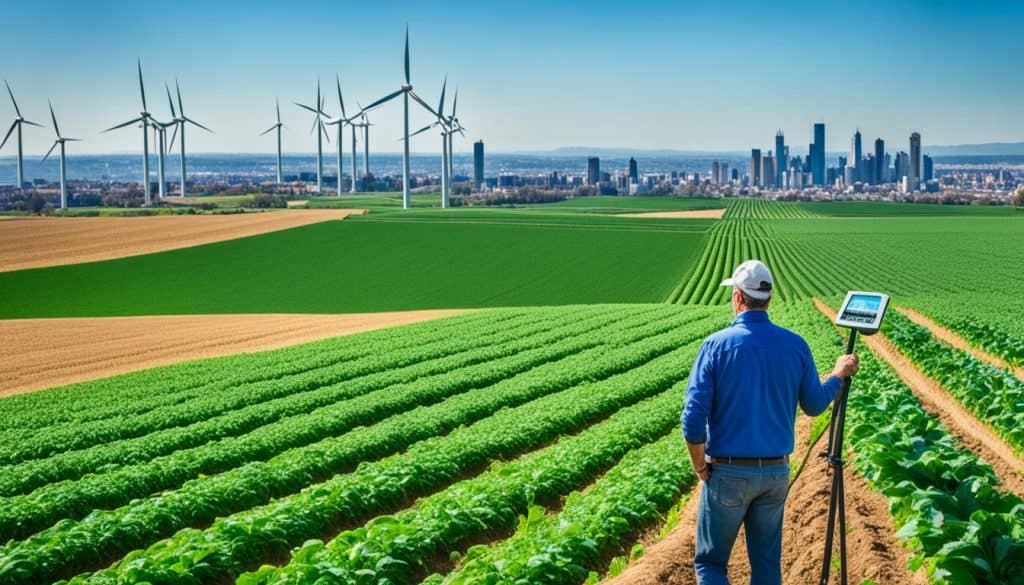
Did you know that up to 40% of food in the United States is wasted? This is a big issue. It shows we need a supply chain that is sustainable from farm to table. Not only does wasting food hurt the environment, but it also stops sustainable agriculture and ethical eating. To cut down waste, we need a supply chain that is clear, green, and puts the environment first.
Using advanced tech like blockchain and IoT devices can help. These tools make it easier to track food products and keep them safe. It means customers can trust their food more. Working together with local farmers is key to keep our food system working well. By sharing information and best practices, we can create a strong link from farm to table.
Key Takeaways
- Up to 40% of food in the United States is wasted, pointing to the need for more sustainable practices.
- Integrating technologies like blockchain and IoT devices ensures traceability and enhances food safety.
- Collaboration among stakeholders is vital to fostering a sustainable and efficient food supply chain.
- Ethical labor practices and eco-friendly farming techniques contribute significantly to sustainable agriculture.
- Open communication and data sharing platforms are essential for improving supply chain management.
Understanding the Farm-to-Table Movement
The farm-to-table movement brings consumers closer to where their food comes from. It supports local farms and shorter supply chains. This has good effects on both the environment and local communities.
Those in the Food and Beverage (F&B) industry get to use fresher ingredients. They also support the local economy. And they build a stronger connection with consumers.
The Role of Local Farmers
Local farmers are key to the farm-to-table approach. They provide fresh, seasonal items using sustainable methods. Take Chef Alice Waters, for example. She started Chez Panisse in 1971. It’s one of the first farm-to-table restaurants in California.
Farmers like Jane prove that local sourcing can change the dining scene. It benefits both our planet and community connections. Chefs can also change menus often because they get new, fresh ingredients.
Reducing Food Miles for Environmental Benefits
Lowering food miles is a big plus of farm-to-table. Food in the U.S. usually travels 1,500 miles to get to us. This adds a lot to our carbon footprint.
The Leopold Center for Sustainable Agriculture says short supply chains cut down on carbon emissions. This makes farm-to-fork better for the environment. It also means we get fresher food.
Fostering Community through Direct Relationships
When consumers, chefs, and farmers work closely, it builds a strong community. This makes the food supply more open and easy to track. It’s very important in the food industry.
People start to care more about where their food comes from. Programs like the National Farm to School Network started in 2007 help with this. Farmers who use ethical growing practices, like Miguel, underline the importance of building community ties and protecting the environment.
Implementing Sustainable Practices in Agriculture
Sustainable supply chains need eco-friendly farming to improve soil and manage water well. This approach is crucial because plants absorb less than half of nitrogen fertilizers yearly. This results not only in financial loss for farmers but also higher greenhouse gas emissions, which are very damaging to our planet.
Promoting Eco-friendly Farming Techniques
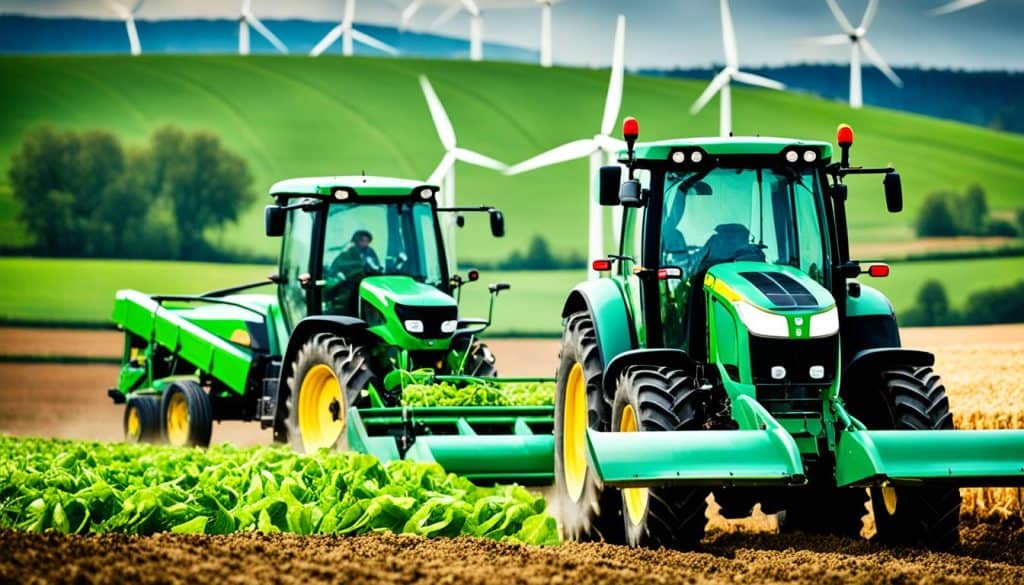
Eco-friendly farming is good for the environment and helps farmers economically. By adopting precision agriculture, farmers can use GPS, sensors, and drones better. This technology helps them know more about crop health, make smarter planting decisions, and use fertilizers more effectively.
Another important approach is Climate Smart Agriculture, which improves farm profits and resilience to climate change. Also, local governments are offering incentives for these practices due to a lack of federal support.
Ensuring Ethical Labor and Animal Treatment
Ethical farming means treating workers and animals right. It’s a key part of a responsible supply chain. Around 40% of U.S. corn goes to feed animals, which produce a lot of methane. But, innovations like adding oregano or seaweed to feed can cut emissions significantly.
It’s important to have good working conditions and focus on animal welfare. This makes farming more sustainable overall.
Minimizing Waste and Resource Use
Reducing waste and using resources wisely are critical. By understanding nitrogen losses, farmers and companies can see their environmental impact. Modern technologies make it easier to collect and analyze data, leading to better environmental reporting.
Working with stakeholders ensures the success of sustainable agriculture. With the support from states and municipalities, these practices can lower carbon emissions and help communities.
Engaging Stakeholders for an Efficient Supply Chain
Engaging stakeholders is key for a good and lasting supply chain. It’s about building collaborative partnerships across the food ecosystem. From the farmers to the customers, getting everyone involved helps. This makes the supply chain transparent and assures high quality, aligning everyone’s goals.
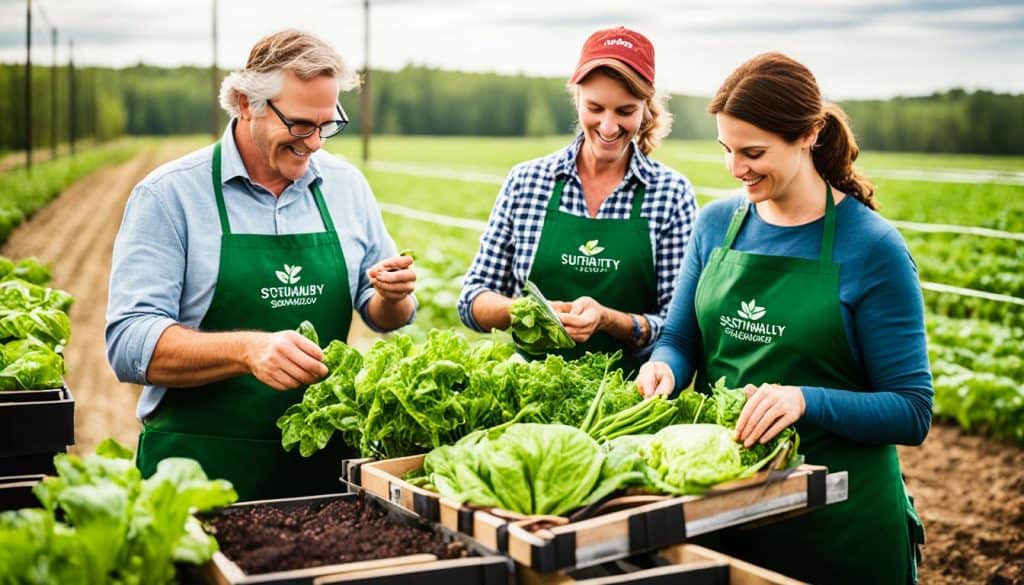
Creating a trusted network with suppliers is vital. This network fights inefficiencies while sticking to environmental and social norms. Maas et al. (2018) showed how stakeholder pressure encourages green practices. These practices not only help the planet but also boost profits.
For a strong supply chain strategy, we must engage systematically. Liu et al. (2018) described stakeholders as key to supplier development, affecting sustainability greatly. Rebs et al. (2019) noted stakeholder pressure positively affects managing a green supply chain in many ways.
- It’s crucial to get distributors and retailers on the same page about logistics. This helps cut down waste and emissions.
- Building an effective rulebook benefits everyone. It combines the strengths of the supply chain and its members for better results.
- When picking suppliers, it’s important to use clear benchmarks. These benchmarks should reflect what’s important to stakeholders.
These actions don’t just build stakeholder trust. They also push forward the “Farm to Fork” vision of a united, green supply chain. Freeman (2010) shared how businesses and stakeholders work together. This teamwork fits perfectly with the need for working together.
Our aim is to create green and efficient supply chains by involving all stakeholders. We promote open talks and stay transparent. This approach leads to a successful food ecosystem. It shows our support for being green and ethical.
Sustainable Supply Chain: Enhancing Traceability and Transparency
In today’s connected world, technology improves supply chains by making them more transparent and traceable. Tools like blockchain, the Internet of Things (IoT), and digital tracking give a clear view of the whole supply chain. This ensures operations are efficient, sustainable, and follow ethical standards.
Leveraging Blockchain Technology
Blockchain creates a secure and unchangeable record of all supply chain transactions. It helps businesses stay safe from fraud, manage better, and save money. This system notes where products come from, how they’re made, shipped, and checked.
This boosts how well we can track food. In 2018, 21.8% of global supply executives said seeing the whole chain was their top challenge. Blockchain is key in solving this.
The Role of IoT Devices in Monitoring
IoT lets us watch products in real-time, making sure they’re always in the right conditions. It tracks temperature changes and moisture, giving important data. This way, product quality and safety stay high.
Real-time info helps stop problems like spoilage quickly, keeping customers happy and loyal.
Adopting Advanced Digital Tracking Systems
Advanced digital systems work with blockchain and IoT for better transparency. Laws in the EU and the US show the need for these systems. They help track everything, from materials to the final product.
This promotes transparency and helps confirm sustainable actions worldwide. As a result, customers might pay 2% to 10% more for products from transparent supply chains.
Overcoming Challenges in the Current Supply Chain Landscape
The current supply chain faces many problems. These issues lead to higher costs and fragmented operations. One main issue is inefficiency, which makes it crucial for stakeholders to adopt new strategies. This is especially true in retail and Direct-to-Consumer sectors, where implementing sustainable practices proves difficult.
Traceability within the supply chain is a big challenge. It causes food safety concerns and makes it hard for buyers to choose wisely. The involvement of many suppliers makes this even harder to manage. The recent surge in e-commerce and container shipping has made these problems worse. This outlines the need for better automation and smoother processes.
To fix these problems, a broad strategy is needed. This includes using technology and working together with others in the industry. Companies focused on sustainability should share knowledge and resources to make a bigger impact. Besides, getting the latest tools for automation can help keep inventory in check and cut down on storage costs. It also makes handling and distribution more efficient, which helps reduce food waste. Training employees on these new tools will make adopting them easier.
In conclusion, tackling these issues means everyone needs to work together for a sustainable future. This focuses on lessening our environmental impact, improving traceability, and meeting customer needs. By doing this, companies can create a strong supply chain that’s ready for any challenges and committed to sustainability in the long run.