Did you know that Grade A milk must be kept cold, below 45 °F, by law? This rule is crucial for keeping dairy safe and high-quality. It’s very important to follow best practices when buying dairy to keep its nutrition and flavor.
When shopping for dairy, pick cold items first and check the package for damage or leaks. This is key to getting the best quality dairy. Pay attention to “sell by” and “best if used by” dates to make sure it’s fresh. Refrigerate your dairy right after buying it, especially if it takes you more than 30 minutes to get home. Using a cooler can help stop bacteria from growing too fast.
Keeping dairy cold all the time is crucial. Don’t leave dairy with raw eggs out for more than two hours. Even cheeses that don’t need much refrigeration should not be out longer than two hours. This helps keep them safe and high-quality.
Pasteurization is a way to make milk safe. It heats milk to 161 °F for at least 15 seconds. Handling containers carefully also prevents contamination. Following these food safety rules helps make sure your dairy product quality is safe and tasty.
Proper Handling of Dairy Products
It’s key to handle dairy products safely to keep them fresh and avoid illness. We must choose our dairy carefully and keep it at the right temperature. Doing so lets us enjoy safe, fresh dairy every day.
Choosing Dairy Products Carefully
Pick dairy that’s cold and in undamaged packaging. Check the freshness dates before buying. Avoid dairy with unpasteurized milk to reduce the risk of getting sick. High moisture cheeses like ricotta and mozzarella should go right back into the fridge after you use them.
Avoiding Room Temperature
Keeping dairy cold is a must. Don’t leave dairy out for more than two hours. For example, keep milk below 40°F (4°C) in the fridge. Yogurt should be sealed and refrigerated after opening to last longer.
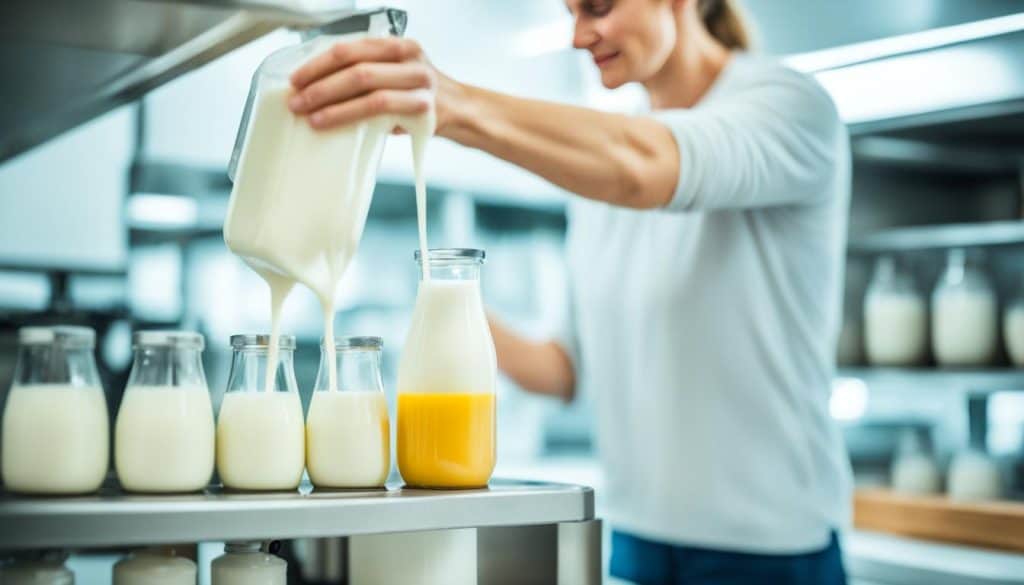
Good dairy practices help keep our food safe and us healthy. By following these steps, we can enjoy dairy’s benefits without worry.
Safe Storage Tips for Dairy Items
Storing dairy products right is key to keeping them fresh and safe to eat. Follow these tips, and you can make your dairy last longer and stay safe.
Maintaining Constant Refrigeration
It’s very important to keep dairy cold to stop bacteria from growing. Keep milk and similar products at 40º F or below. Doing this, they can last 4-7 days past their due date. If opened, they’re good for about 2 weeks.
Eggs stay fresh for up to five weeks in the fridge if kept in their carton. You can freeze milk, buttermilk, and creams for up to 3 months. Just remember to thaw them in the fridge.
Keep your fridge at a steady temperature to ensure your food stays safe. Butter lasts 3-4 months in the fridge. If you prefer it at room temperature, use a butter bell for up to a month. Frozen butter is good for a year, but thaw it in the fridge.
Proper Storage After Opening
After opening dairy products like milk or butter, seal them well before putting them back in the fridge. Don’t put them back in their original package. Instead, airtight containers are best. Cheese stays fresh for about 10 days if wrapped in parchment or wax paper and then foil or plastic.
Hard cheeses, like Cheddar and Swiss, keep for 6 months unopened or 3-4 weeks if opened.
Shelf-stable milk needs to be refrigerated once opened to keep its quality. Likewise, yogurt lasts 7-14 days in the fridge or can be frozen for 1-2 months. Following these tips helps keep dairy products in good shape.
Importance of Dairy Product Hygiene
Dairy hygiene is key to safe dairy eating. Steps like thorough pasteurization kill harmful bacteria. Since the early 20th century, this has been crucial for food safety.
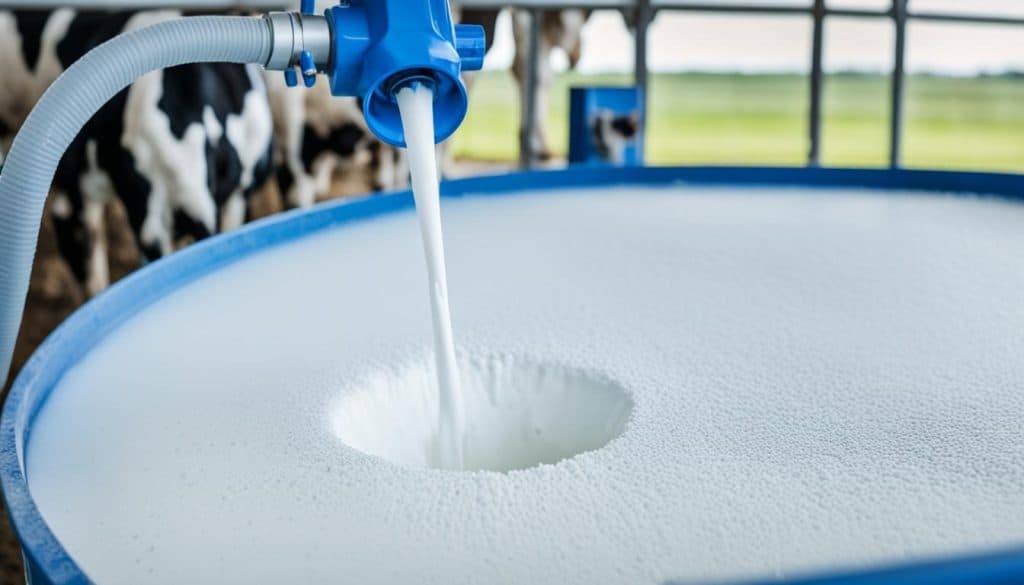
Making sure dairy products don’t get contaminated with bacteria is essential. Milk is highly regulated in the U.S. Cleanliness steps include cleaning milk barn tools after each use, up to three times daily. Milk tankers also get steam cleaned after each load.
When milk leaves the farm, it’s tested for antibiotics, bacteria, and the right temperature. It’s kept cool in tankers under 40 degrees Fahrenheit to stay safe and fresh. At processing plants, every milk tanker is tested again to meet safety standards.
At processing sites, workers wear gloves, masks, and hairnets for hygiene. Milk is refrigerated between 32-38 degrees Fahrenheit until it’s sent out. The whole process aims to stop contamination and ensure only safe, pasteurized milk is sold.
Watching trends in antimicrobial resistance on dairy farms is also vital. For example, testing bulk tank milk helps. This safeguards public health and follows global rules for using antimicrobials in cows. Good dairy hygiene helps keep consumers safe from dangerous pathogens now and in the future.
Safe Dairy Practices
Understanding labels is key when choosing dairy products. It’s important to pick organic dairy for its health benefits. These products have more omega-3 fats and lack GMOs, antibiotics, and pesticides. Labels also show if items are free from rBGH, helping animal welfare and our health.
Identifying Label Information
Label details help find safe dairy items. Labels confirm if a product is organic dairy and rBGH-free. They also tell us if it’s made from grass-fed cows, which are richer in nutrients.

Supporting Local and Family Farms
It’s vital to back local dairy farms and family ventures. Local, non-GMO dairy items are usually of better quality. They also make the journey from farm to us shorter, helping the planet. Buying from small, family farms boosts sustainable farming and strengthens our community’s economy.
Such actions help keep farming details clear and food sources known. Local and family dairy farms are good at this. This makes their dairy products safer and of higher quality.
Alternatives to Dairy Products
Nowadays, finding alternatives to dairy is easier and healthier thanks to many options available. Popular choices include almond, soy, rice, and coconut milk. Each of these has its own nutritional benefits. For example, almond milk provides about 39 calories, 1 gram of protein, and 2.5 grams of fat per cup. On the other hand, soy milk from a leading brand offers 7 grams of protein, 4 grams of fat, and 80 calories per cup.
When choosing dairy substitutes, it’s important to pick products that are certified organic or Non-GMO Verified. This ensures you’re avoiding genetically modified ingredients and supporting ethical production. Carefully reading labels can also help you steer clear of unwanted additives like sweeteners. For those looking to keep up their protein, hemp milk is a great choice because of its high protein content.
Choosing non-dairy options is good for your health and the planet. Non-GMO Verified items often support better sourcing and production practices. Plus, making plant-based milk usually uses far less land and water than dairy farming. This means it’s kinder to the environment. By going for dairy-free options, you get nutritional benefits without sacrificing taste or your values.