Did you know that about 48 million people get sick from bad food each year in the U.S.? That’s 1 in 6 Americans. These illnesses lead to around 128,000 hospital stays and 3,000 deaths a year. It shows how important it is to prevent food poisoning and teach everyone about food safety.
Learning about food safety can cut down these alarming numbers. Studies show people knew more about food safety after taking a course. Their scores went from 16.51±2.60 before to 20.60±2.01 after the course.
Educating everyone on food safety is crucial. The U.S. Department of Agriculture and the Partnership for Food Safety Education have helpful resources. They teach you how to handle and prepare food safely. The FoodKeeper App gives tips on storing food right, helping prevent sickness.
The FDA and other groups work to stop foodborne illnesses. They push for good habits in handling, preparing, and storing food. Using social media and educational resources can make our communities safer and healthier.
The Need for Food Safety backing Education from Early Childhood
About 48 million people get sick from foodborne illnesses each year in the United States. This means 1 in 6 Americans fall ill annually. These illnesses lead to roughly 128,000 hospital stays and about 3,000 deaths each year.
Starting food safety education early is key to fight these numbers. By teaching kids about disease prevention and safe food handling early, we can help them develop healthy habits for life.

Benefits of Starting Young
Teaching food safety young has many benefits. It helps kids learn the importance of cleanliness and safe food handling early. This makes them less likely to get foodborne diseases, which can cause vomiting, diarrhea, and stomach pain.
Early food safety education can also help protect high-risk groups. These include pregnant women, older adults, and people with weak immune systems. It promotes carefulness and awareness around food.
Engaging Activities for Children
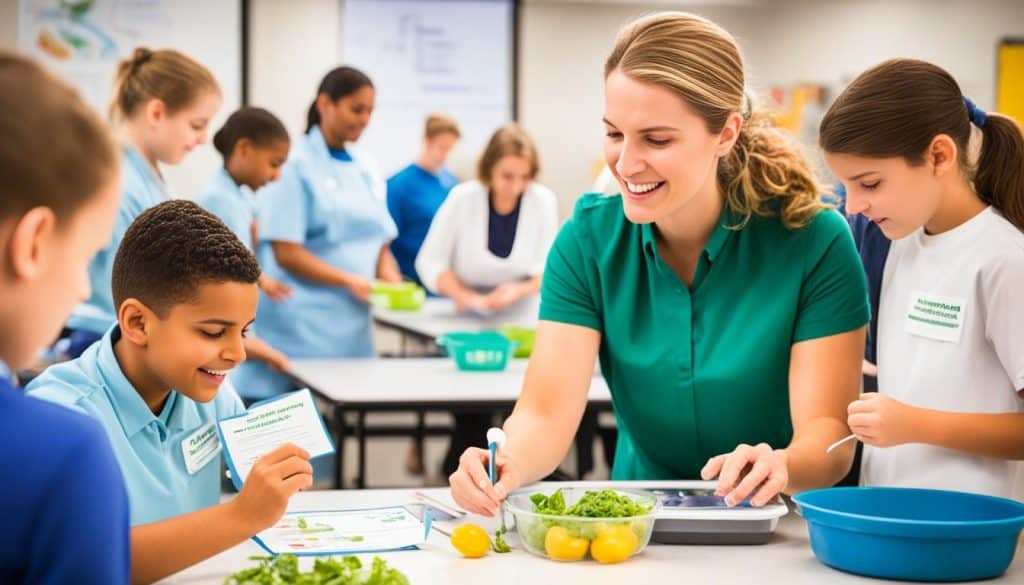
Kids are curious and learn by doing. Hands-on food safety activities can make learning fun and memorable. These can include using a food thermometer, washing hands properly, and keeping perishables in the fridge on time.
These activities work well at home and in schools. They play a big role in preventing foodborne illnesses.
Building Lifelong Habits
Teaching kids about food safety early is vital. It helps them carry these good habits into adulthood. This reduces the risk of foodborne diseases later in life.
The habits they learn can lessen foodborne illnesses in the future. This is good for everyone and reduces public health problems. Emphasizing early food safety education can make our country healthier.
Implementing Food Safety Education in Schools
Schools are perfect places to teach about food safety. By training teachers and staff, they can ensure food is safely handled. It’s vital to have a curriculum that teaches students how to manage food correctly.
Role of Teachers and School Staff
Teachers and staff are key to keeping food safe. The National School Lunch Act requires schools to have a food safety plan. This plan must follow HACCP principles. It’s crucial for teachers to get ongoing training on food safety. They need to know not just the basics but also how to manage a school kitchen.
Effective Curriculum and Training Programs
A good food safety curriculum needs to be up-to-date and thorough. Programs accredited by the American National Standards Institute are important. They offer certifications for teachers and staff. The Healthy, Hunger-Free Kids Act of 2010 made food safety rules even stricter. This means training is even more essential.
“Training and education play a crucial role in food safety; ongoing education for school nutrition employees is essential to reinforce concepts and practices.”
- Every year, contaminated food makes about 1 in 6 Americans sick. So, food safety in schools is super important.
- Schools in the National School Lunch or Breakfast Programs need two food safety inspections each year.
- The Richard B. Russell National School Lunch Act supports various child nutrition activities like the National School Lunch and Breakfast Programs.
Creating a Food Safety Culture in Schools
Building a food safety culture requires leadership and clear rules. Schools need to develop protocols for HACCP compliance. Regular checks are important, whether done by the school or outside inspectors.
Getting parents, students, and the community involved is crucial for a strong food safety culture. The Institute of Child Nutrition offers great resources. Working together with food services helps keep school kitchens safe and students healthy.
Food Safety Education for College Students
Teaching college students about advanced food safety is vital, especially for those studying dietetics or health. They play a key role, often working in areas where teaching about health and food safety is essential. Knowing about food safety can greatly benefit public health.
Importance for Dietetics and Health Students
Students in dietetics and health fields need comprehensive food safety education. Their future jobs in health care require them to know how to handle, prepare, and store food safely. This helps prevent foodborne diseases. The USDA Meat and Poultry Hotline (888-674-6854) is a great resource for college students about safe food practices.

Case Study: Improved Practices Post-Training
A study with dietetics students in Saudi Arabia showed amazing results after a food safety course. Before the course, only 36% knew the right food safety practices. After, it jumped to 88%. Their belief in following safe food practices also increased from 56% to 98%. This shows how effective proper education can be. The students’ actual safe food behaviors went up from 20% to 80% after training. It stresses the need for food safety training in dietetics programs.
Real-World Application and Impact
Colleges have a great chance to include food safety in their curriculums. This helps not only future health workers but also the community. Trained graduates play a big role in healthcare, making sure foods are safe and reducing illness risks. Safe food practices help create healthier communities. Every year, 48 million Americans get sick from food, leading to 3,000 deaths. Better food safety education can reduce these numbers.
In closing, food safety education is key in dietetics studies. It prepares students to improve health education and carry out food safety work in their careers.
Essential Food Safety Knowledge for Adults
It’s key that adults know about food safety. Every year, about 1 in 6 Americans get sick from eating bad food, leading to 128,000 hospital visits. We can cut down the risks of getting sick by knowing more and acting wisely.
Common Foodborne Illnesses and Prevention
Knowing about common foodborne illnesses is crucial. Bacteria like E. coli and Staph aureus can grow fast between 40°F and 140°F. To prevent this, put away perishable foods in the fridge within two hours and follow food safety rules.
Around 600 million people worldwide get sick from bad food every year. This shows why adults need to learn about food safety, to stop such problems.
Safe Food Handling and Preparation Techniques
Handling and preparing food safely is very important. Using a food thermometer helps make sure food reaches a safe temperature, reducing illness risks. Research, including a study from Port Health Offices, found 35 out of 233 food samples were contaminated with E. coli in a year.
It’s important to know how to handle food safely and know the right temperatures for storing and cooking food.
Resources for Ongoing Education
Keeping up with food safety knowledge is important. The FDA and other groups offer good resources to stay informed. Studies link food safety training to better attitudes toward food safety, like those seen in North Jakarta food handlers.
Adults should always look for new information to keep their food handling skills sharp. This helps stop foodborne illnesses.