Many adults in the UK eat too many calories and need to cut back. A balanced diet helps us stay healthy and avoid chronic diseases. It makes sure our bodies get what they need without too many calories.
Eating the right amount of calories depends on how active you are. Men need about 2,500 calories a day, and women need 2,000. Include foods like fruits, veggies, lean protein, and whole grains. Watch your intake of saturated fats, sugars, and salt to avoid gaining weight and health problems.
Planning your diet sounds hard, but it’s not. With mindful choices and healthy habits, like exercising, anyone can follow a balanced diet. This improves your overall health.
Key Takeaways
- Aim for a daily intake of 2,500 calories for men and 2,000 for women.
- Incorporate at least 5 portions of fruit and vegetables into your diet daily.
- Limit saturated fats to 30g per day for men and 20g for women.
- Consume no more than 6g of salt daily.
- Drink 6 to 8 glasses of fluid each day to prevent dehydration.
- Increase intake of fiber, calcium, vitamin D, and potassium.
- Replace sugary drinks with healthier options like sparkling water.
Understanding the Basics of a Balanced Diet
A balanced diet is key to staying healthy. It helps lower cholesterol, reduce blood pressure, and manage weight. Eating a variety of foods is essential for getting all the nutrients your body needs. This includes plenty of vegetables, fruits, whole grains, and proteins, along with drinking water.
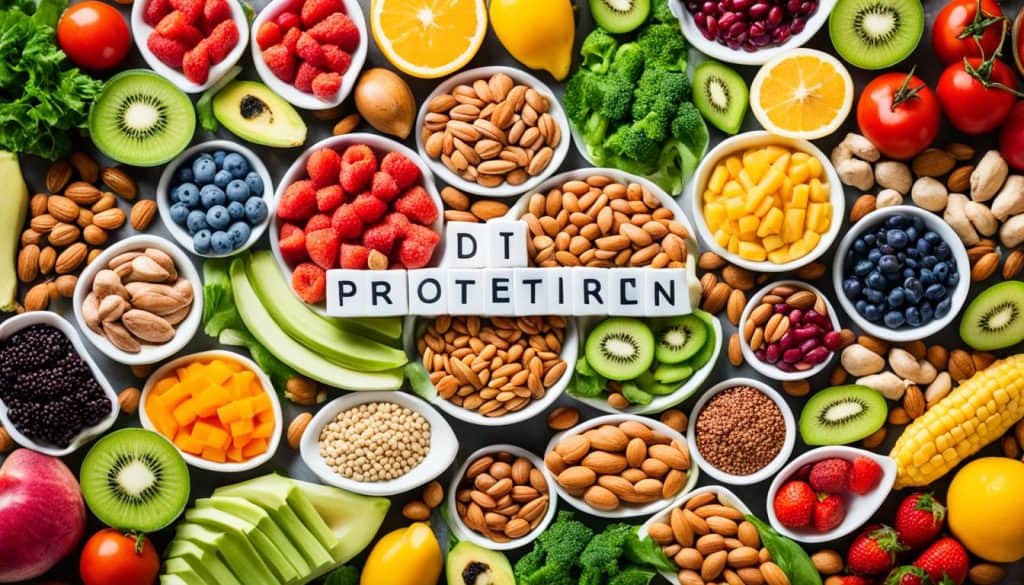
Eating too much processed food can be bad for you. These foods often have lots of salt, sugar, and unhealthy fats. They also lack important nutrients like vitamins and minerals, which can mess up your diet.
Research shows a big part of Canadians’ diets is ultra-processed foods. In the UK, people eat too much junk food and not enough healthy stuff like fruits, vegetables, and fish. It’s important to change this to eat better.
Heart & Stroke suggests making half your plate fruits and vegetables. Eating enough fruits and veggies can lower the risk of many diseases. You should also eat plenty of whole grains for your fiber needs.
Protein should be a quarter of what you eat, focusing on fish, legumes, and plants. Foods like fish, eggs, and pulses help your body grow and repair itself. Try to eat fish twice a week, including oily fish, and choose lower-fat dairy products.
Drink water instead of sugary drinks to avoid gaining weight. If you can’t get safe water, go for coffee, tea, or low-fat milk. Boiling water is also a good option.
Staying active is as important as eating well. It keeps your weight in check and lowers disease risks. Drinking enough water helps you avoid junk food and stick to a healthy diet.
Incorporating Fruits and Vegetables into Your Meals
Adding a variety of fruits and vegetables to your meals can greatly improve your diet. This adds important nutritional benefits. It’s important to eat at least five servings of different fruits and veggies every day. This helps keep you healthy, maintain a good weight, and lower the risk of serious illnesses.
Benefits of Fruits and Vegetables
Fruits and veggies are packed with nutrients. They give you antioxidants, vitamins, minerals, and fiber. These are key for a healthy heart and keeping your blood sugar in check. One study showed that eating more fruits and veggies cuts the risk of dying from heart disease by 4% for every extra serving you eat each day.
The DASH study found that people with high blood pressure saw big improvements by eating more of these foods. Eating these foods can also reduce the chance of getting breast and prostate cancer. This is thanks to substances like lycopene and carotenoids in tomatoes and other produce.
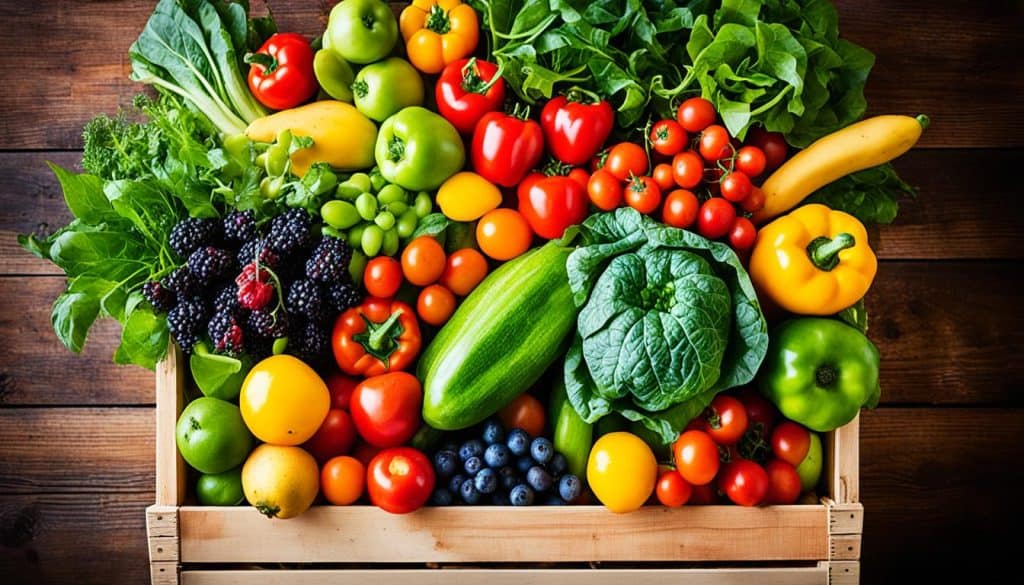
Simple Ways to Add More Produce to Your Diet
It’s easy and fun to eat more fruits and vegetables. Here are some tips:
- Fill half your plate with fruits and vegetables at every meal, as recommended by the American Heart Association.
- Incorporate fresh, canned, or frozen produce to meet the daily goal of 4½ cups.
- Select fruits and vegetables of various colors to maximally benefit from their diverse nutrient profiles.
- Opt for fruit as snacks, choosing whole fruits over fruit juices, and limit fruit juice to ½ cup servings.
- Enjoy nuts and dried fruits in moderation, keeping servings to about ¼ cup due to their high calorie content.
- Prepare a bowl of vegetable soup loaded with various vegetables for a nutritious lunch option.
- Add extra chopped vegetables to your meals whenever possible to boost nutrient intake.
- Keep a stock of frozen vegetables for quick and easy meal additions.
By making these changes, you can better your nutrient intake and health. Having fruits and veggies at each meal is key. This way, the benefits will last and make a big difference.
Choosing Healthy Starchy Carbohydrates
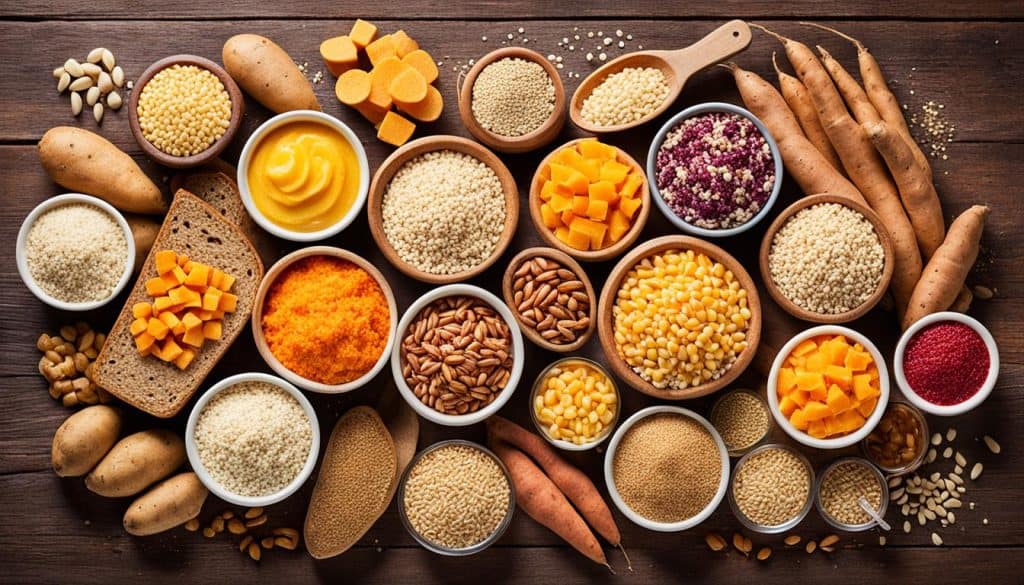
It’s crucial to pick the right kinds of starchy carbs for a healthy diet. These foods should fill a bit more than a third of your diet, says the Eatwell Guide. They’re key for energy and are packed with vital things like fiber and vitamins.
Plus, starchy foods have way fewer calories than fats. This makes them a great source of energy without too much calorie intake.
Whole Grains vs. Refined Grains
Whole grains keep all parts of the grain. This means they have more nutrients and fiber. Eating whole grains lowers the risk of diseases like stroke and heart disease. Examples include brown rice and oats.
In contrast, refined grains like white bread have less fiber and nutrients. Though cheaper, they don’t offer as many health benefits as whole grains do.
Tips for Incorporating Whole Grains
Adding whole grains to your diet is easy and beneficial:
- Opt for whole grain products: Choose items like whole wheat pasta and bread. Look for “100% wholegrain” or “100% wholewheat” on labels for the real deal.
- Explore different grains: Try adding various grains to your meals. This will boost nutrients and add new tastes.
- Start your day with oats: Pick old-fashioned or steel-cut oats instead of sweetened cereals for a healthier breakfast.
- Add whole grains to meals: Make sure to have whole grains in at least a quarter of your meal.
Whole grains bring key nutrients and fiber to our meals. They keep energy levels stable and help manage blood sugar. Eating plenty of whole grains can greatly improve your diet and health.
Managing Proteins for a Strong Diet
Getting enough dietary protein is key for a balanced diet. Proteins are essential for building and fixing muscles, skin, and bones. They also play a big role in our body’s functions, helping our health.
The Importance of Protein in Your Diet
Having the right amount of protein offers many benefits. Men need at least 56 grams a day, while women need 46 grams. Eating a lot of protein helps control hunger and manage weight. It does this by reducing the “hunger hormone” ghrelin.
Protein also helps you burn more calories than fats and carbs do. For older people, eating enough protein helps prevent losing muscle. They should get 1.2 to 2 grams of protein per kilo of body weight.
Best Sources of Lean Protein
It’s good to eat both animal and plant proteins. Top lean proteins are:
- Legumes
- Nuts and seeds
- Fish (at least two servings per week)
- Poultry
- Low-fat dairy products
Eating these foods gives you all the essential amino acids you need. Choosing low-fat and low-sodium dairy also helps keep your diet healthy.
Balanced Diet: Putting It All Together
Making a balanced diet means planning with purpose. Including fruits, vegetables, proteins, and grains is key. The USDA says to fill half your plate with fruits and veggies. The other half should be grains and proteins.
Home-cooked meals using whole foods are best for balance. For example, make sure at least half of your grains are whole. Lean meats and beans are great protein sources.
- Fruits and Vegetables: Target five servings daily. They’re half of what you eat.
- Grains: They take up a quarter of your plate. Choose whole grains like rye.
- Proteins: Also a quarter of your plate. Go for lean choices like fish and legumes.
- Dairy: Don’t forget dairy or fortified soy for calcium.
Planning meals in advance leads to better dietary habits. It saves time and meets nutritional needs. Eating smaller meals can help keep your energy up. Drinking plenty of water is important too.
Being flexible with your food choices makes dieting enjoyable. You can have treats if you stay active. This balance is sustainable.
Here are more tips for your meals:
- Breakfast: Start with protein for muscle health. Try protein pancakes or baked eggs.
- Lunch: Lean protein and carbs for energy. Whole grains keep you full longer.
- Dinner: Mix carbs with proteins and fats for a balanced end to the day.
Reducing Saturated Fat, Sugar, and Salt
To keep a healthy and balanced diet, it’s key to eat less saturated fats, sugars, and salt. For adults, health guidelines in the UK suggest no more than 30 grams of saturated fat daily for men, and no more than 20 grams for women. Often, foods high in saturated fat can be spotted by their nutrition labels, showing more than 5 grams per 100 grams, usually marked in red.
Choosing products with green or amber labels helps cut down on saturated fats. Items in amber have 1.5 to 5 grams of saturated fat per 100 grams. This simple choice makes a huge difference in reducing saturated fat intake.
It’s also vital to watch how much free sugar you eat. Adults and kids should get less than 10% of their energy from free sugars. Aim for even less than 5% to greatly cut the risk of getting too heavy or having tooth decay. Avoid processed snacks, sugary drinks, and cereals full of sugar for better health.
Choose fruits, whole grain toast, unsalted nuts, or malt loaf instead. These foods are healthier and don’t have added sugars. They are better for you in the long run.
Keeping an eye on salt intake is crucial for avoiding high blood pressure. Most people eat 9-12 grams of salt a day, way above the less than 5 grams recommended. Be sure to read labels on packaged foods to keep track of how much salt you’re eating.
Using natural flavors like herbs and spices instead of salt can also help. This not only lowers your salt intake but also avoids high blood pressure and other health problems. It’s a smart move for staying healthy.