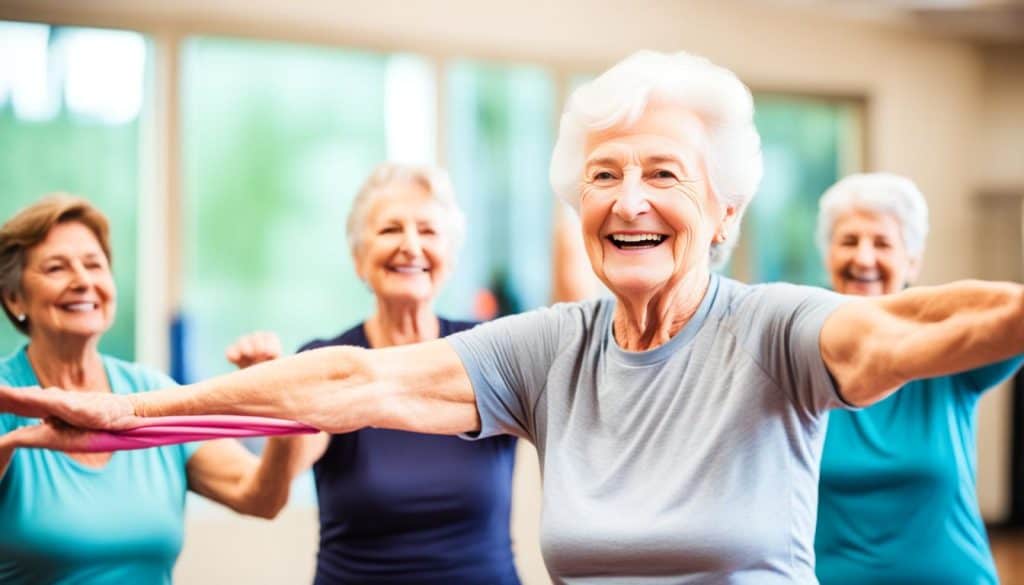
Did you know that seniors often face loneliness? This can lead to serious health issues like depression and heart disease. It is so important now to focus on healthy aging. Making lifestyle changes can help seniors stay lively and independent, no matter their age.
Seniors should stay active and eat well to enjoy a better life. Experts suggest getting at least 150 minutes of exercises like walking each week. Eating lots of fruits, veggies, whole grains, lean proteins, and healthy fats also helps. This diet can cut down the risk of big health problems, including heart issues and diabetes.
Family support plays a huge part in a senior’s health journey. Just offering a kind word or a little help can boost their independence and happiness.
Key Takeaways
- Increased social isolation and loneliness elevate health risks for seniors.
- Experts recommend at least 150 minutes of moderate-intensity aerobic exercise per week for older adults.
- A nutritious diet, rich in fruits, vegetables, lean proteins, and whole grains, can boost immunity and lower chronic disease risks.
- Routine health checks and medical screenings are vital for early detection and effective treatment of health issues.
- Family support is crucial in fostering healthy lifestyle changes in seniors, promoting independence and better quality of life.
Introduction to Healthy Living for Seniors
As we get older, it’s vital to know how aging affects our health. This knowledge helps seniors live longer and better. Healthy living for seniors includes caring for physical and emotional well-being.
Understanding Aging and Health
Aging brings changes like less muscle mass, weaker bones, and slower thinking. Research shows that after 55, having more muscle mass predicts a longer life better than weight or BMI does. It’s important to have health plans that meet individual needs.
Poor sleep can also lead to dementia and worse depression.
“Adults aged 40 and older who took 8,000 steps or more per day had a 51% lower risk of death from all causes compared to those who took only 4,000 steps.”
This fact shows how important regular exercise is for seniors.
Importance of Maintaining a Healthy Lifestyle
For the elderly, living healthy is key. Doing 150 minutes of aerobic exercises and strength training twice a week is good for the brain and body. Eating right, like the Mediterranean or DASH diet, also helps avoid heart disease.
Stopping smoking and drinking less alcohol improves senior health. Quitting smoking around 45-54 adds six years to your life. Too much alcohol can harm the brain and heart, especially in older adults.
Mental and social well-being are also crucial. Being active and connected with others leads to better health and less risk of dying early. Joining community events makes senior living more enjoyable.
Preventing Social Isolation and Loneliness
It’s key to understand how loneliness differs from social isolation, especially for seniors. Research links both to serious health issues like heart problems, depression, and memory loss. Those feeling lonely or isolated tend to have longer hospital stays and may die sooner than those with friends and family around.
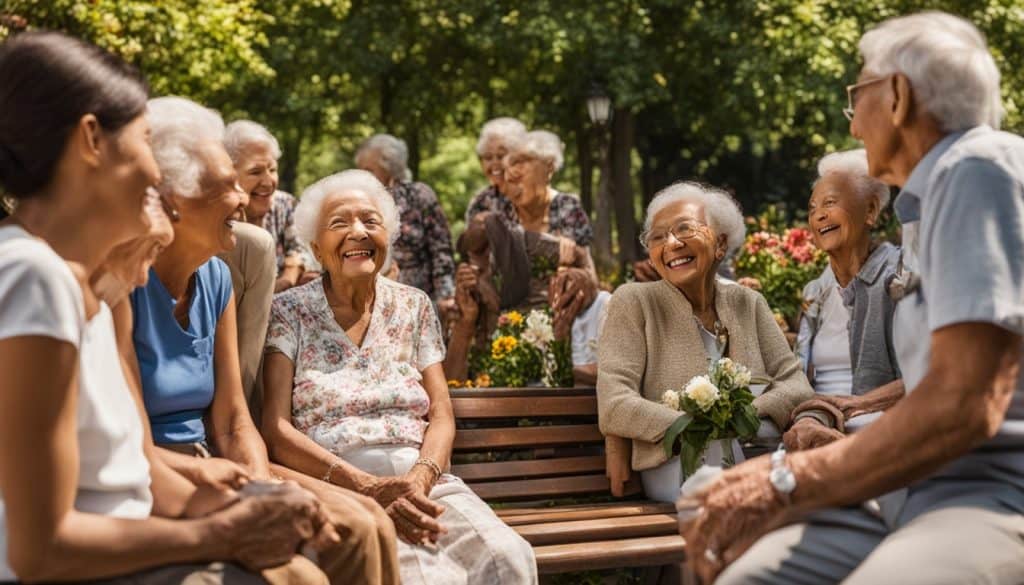
Difference Between Loneliness and Social Isolation
The term social isolation means literally not having people around. Loneliness, however, is feeling alone, no matter how many people are around. Both situations can badly affect one’s health, leading to more anxiety, sadness, and trouble thinking clearly. Knowing the difference helps in finding the right ways to help seniors.
Ways to Stay Connected
For older adults, staying in touch is crucial for their health and happiness. Here’s how they can keep connected:
- Schedule regular phone calls or video chats with family and friends.
- Participate in shared-interest groups or community programs.
- Utilize services like the Eldercare Locator to find local resources.
- Engage in social activities, support groups, or faith-based organizations.
- Adopt a pet for companionship.
- Volunteer for causes that matter to you.
Keeping up social connections fights off the negative effects of being alone.
Using Technology to Connect
Technology helps seniors stay in touch, especially when they can’t meet in person. Video calls on Zoom and Skype make seeing loved ones easy. Social media and online groups help share interests and reduce loneliness. Plus, learning to use these tools can make seniors more confident. With technology, we can help seniors feel a sense of belonging.
Promoting Physical Activity
Getting seniors to stay active is key for health. Activities like *senior exercise* lower stress and improve sleep. They also decrease the chance of sickness and fewer hospital visits. A study found that 53% of people around the world aren’t active enough. Making sure older folks get enough exercise can make them healthier.
Types of Exercises Beneficial for Seniors
Some exercises are really good for older people. They include:
- Aerobics: Walking, swimming, or dancing boosts heart health.
- Strength Training: Lifting weights or using bands strengthens muscles.
- Balance Exercises: Doing Tai Chi and yoga lowers the chance of falling.
- Flexibility Exercises: Stretching helps with moving around easier.
Research by Camboim et al. in 2017 showed exercise makes life better for the elderly.
Setting Realistic Exercise Goals
It’s important to set goals that can be reached. The WHO says older adults need 150 minutes of exercise a week. Goals should match what a person can do and enjoy. Working with therapists and rehab centers helps make plans that work.
Practical Tips for Staying Active
Here are tips to help older adults keep moving:
- Selecting Appropriate Exercise Gear: Wear comfortable shoes and clothes for safety and ease.
- Starting Slow: Increase how hard you exercise little by little to avoid getting hurt.
- Keeping Social: Work out with others for fun and to feel less lonely.
Chodzko-Zajko et al. (2009) said being active is good for seniors’ bodies and minds. Making exercise plans that fit each person’s needs, along with support, can help them be more active.
Encouraging Healthy Eating
Nutrition becomes more crucial as we age. It helps keep muscles and bones strong and fights off diseases. Eating well means a better life as we get older.
Key Nutrients for Seniors
We need certain nutrients more as we age. Seniors should get plenty of potassium, calcium, vitamin D, fiber, and vitamin B12. Protein is also key for muscle health. Many seniors, especially those over 71, don’t eat enough protein, says the USDA.

It’s also vital to drink plenty of water. As we age, we might not feel as thirsty. But avoiding sugar-filled or salty drinks is good for our health.
Adopting a Balanced Diet
Eating right can help avoid diseases like high blood pressure and diabetes. The USDA suggests eating lots of veggies, fruits, grains, dairy, and protein. The Mediterranean diet is great too, with its focus on fruits and seafood.
Seniors should cut down on added sugars, bad fats, and salt. Figuring out portions and how much to eat of each food group can help. Resources like MyPlate Plan are great for this.
Healthy Meal Planning Tips
Planning meals helps make sure we eat a variety of foods. Here’s how to plan well:
- Incorporate a variety of foods: Include different groups like vegetables, fruits, grains, and proteins.
- Update traditional recipes: Use healthier ingredients, like whole-grain bread instead of white.
- Practice meal prepping: Prepare meals ahead and keep them ready to eat.
- Check expiry dates: Make sure the food is fresh and safe to eat.
- Consult healthcare providers: Talk about your diet needs with professionals regularly.
Following these tips and eating a balanced diet can lead to a healthy life for seniors.
Maintaining Cognitive Health and Engaging the Mind
Keeping our minds sharp is more important as we get older. Activities that boost the brain, learning new things, and being mentally active are key. They help improve our thinking and overall happiness.
Brain-Boosting Activities
For a better brain, you can do activities like quilting or digital photography. This may help your memory. Learning to play an instrument or solving puzzles is also great for your mind.
Being active like this improves how the brain works. It might also help avoid memory problems. Going to places like community events or museums adds to the benefit by meeting others.
Benefits of Lifelong Learning
Learning all your life is good for your brain. Seniors can take courses online or at community centers. Exploring new things or old hobbies keeps the brain young. Learning a skill can make your memory better. This is more effective than just hanging out or doing less thinking.
Other activities like brain exercises can also keep seniors sharp. They help with reasoning and moving faster. Doing this makes you feel good and gives you a goal.
Staying Mentally Active
Being active in the mind is crucial. Reading, playing games, or using brain apps are suggestions. Physical exercise is just as important; it could be 150 minutes a week. This not only keeps the body fit but also helps the brain.
Talking to others is great for the mind too. Regular video calls with friends can keep the brain healthy in those 75 and older. A mix of thinking, moving, and socializing boosts brain power in seniors.
Prioritizing Mental Health and Wellbeing
Keeping mental health in check is vital as people get older. Senior emotional health shapes one’s life quality. Following a healthy lifestyle, like exercising and eating well, improves seniors’ focus on emotional health. This boosts not only their physical health but their mental wellness too.
Seniors with good emotional health tend to be more socially active. This activity helps reduce loneliness and isolation. Building connections with the young can bring happiness and meaning to their lives. Also, mindfulness and meditation are key in reducing stress and increasing self-awareness.
Regular exercise is a cornerstone of a senior’s health routine, supporting both body and mind. It lowers stress levels significantly. Eating well, with foods like fatty fish and whole grains, boosts mental health too.
It’s important to talk openly about mental health issues. This encourages seniors to get the help they might need. Unfortunately, there’s a shortage of mental health care professionals trained to work with the elderly. This makes it even more crucial to focus on these challenges. Sadly, many seniors may face mental health issues and not seek help because of stigma.
The number of people over 60 will hit two billion by 2050. This means we need to focus more on stress management and emotional health. If we support mental health better, we can ensure a happier, healthier life for the elderly.
Senior Health: Regular Check-ups and Screenings
To keep seniors healthy, preventive care is key. It involves regular check-ups and screenings. These help find and manage health issues early on.
Importance of Routine Health Checks
Seniors should get yearly health checks. These checks look for early signs of heart disease, diabetes, and some cancers. They’re also a good time for doctors to update medication plans.
During these visits, doctors give advice on healthy living. This includes tips on eating well, staying active, and handling stress.
Common Screenings for Seniors
Preventive screenings are critical for older adults. Here are some important ones:
- Blood pressure should be checked at least once every year.
- Cholesterol levels should be checked every five years if normal.
- Colorectal cancer screening, such as colonoscopies, is recommended until age 75.
- Diabetes screening should occur every three years.
- Eye exams every one to two years, annually if diabetes is present.
- Flu shots are recommended yearly.
- Prostate cancer screening (for men aged 55 to 69) should be discussed with a healthcare provider.
- Lung cancer screening with LDCT for individuals meeting specific criteria.
- Immunizations for shingles, pneumonia, and tetanus.
- A one-time hepatitis C test for adults aged 18 to 79.
- Skincare exams for individuals at a high risk of skin cancer.
- Osteoporosis screening for those with risk factors.
Managing Medications and Doctor Visits
For seniors taking many drugs, managing medications is key. Regular visits to the doctor can help. They ensure drugs don’t negatively interact and are still needed.
Talk openly with doctors to tweak drugs as necessary. This helps in addressing new symptoms quickly. It improves health outcomes.
Screenings and good medication management help seniors live healthy, active lives.
Nurturing Relationships and Staying Socially Active
It’s really important for elderly people to keep an active social life as they get older. Studies link socializing with lots of health benefits. They show how crucial it is to keep up with friends to stay healthy. Being alone too much can be as bad for you as smoking or being overweight. It can lead to feeling sad, worried, and even to some long-term illnesses. So, it’s key to take part in community life and keep close to your friends and family.
Getting older can bring some challenges that make it hard to hang out with people. Things like not hearing well, or problems seeing, or not being able to get around can get in the way. But if seniors deal with these issues, like using hearing aids, they can hang out more and stay sharp. Joining in on local events, helping out as a volunteer, or doing fun activities can help make new friends. When big life changes happen like retirement or losing a spouse, it’s very important to try extra hard to stay socially active.,p>
Being social can even help you live longer and stay smart. A study from the University College London found that hanging out with friends can guard against memory loss. People who are chatty and meet up with friends often are less likely to forget things than those who don’t. Finding a new hobby, learning something new, or getting into social media are great ways to meet more people. All these activities open doors to making life richer by being part of a community.