
Did you know practicing gratitude can change your brain and make you happier? Studies show it boosts happiness and improves relationships. It also fights depression and anxiety and strengthens the immune system. Gratitude makes us emotionally healthier and more joyful.
Dr. Robert Emmons, a top gratitude researcher, says gratitude goes beyond feeling good. His research shows it lowers stress hormone levels and inflammation. It also betters our heart function. Plus, gratitude increases serotonin and dopamine, making us feel good.
Think of gratitude practice as a daily mental vitamin. It benefits both mind and body. By acknowledging the good in our lives, like family and friends, we get happier and healthier. Gratitude is a simple but powerful practice.
Key Takeaways
- Gratitude boosts dopamine and serotonin levels, enhancing emotional well-being.
- Grateful people experience lower stress levels and improved cardiac function.
- Expressing gratitude can strengthen relationships and social connections.
- Practicing gratitude regularly can improve sleep patterns and boost the immune system.
- Simple gratitude practices can lead to a healthier, happier life.
The Science Behind Gratitude and Health
Gratitude is not only a feel-good emotion. Its health benefits of gratitude are proven by science. Many studies show that a gratitude practice leads to better physical and mental health. Let’s explore the science backing these benefits.
Physical Health Benefits
Dr. Robert Emmons and David DeSteno’s research shows the health changes gratitude brings. For example, it reduces inflammation and lowers blood pressure. Heart-failure patients keeping gratitude journals for eight weeks had better heart function.
College students who listed things they were grateful for weekly experienced fewer health issues. They had less instances of headaches, shortness of breath, and nausea. This shows gratitude’s strong link to better physical health.

Mental Health Benefits
Gratitude greatly benefits mental health. Emmons found that gratitude journaling strengthens mental health. Nearly 300 adults, mostly students seeking counseling, were studied. They were grouped into those writing gratitude letters, those writing about bad experiences, and those not writing at all.
People who wrote about gratitude felt much better mentally after four and 12 weeks. This method decreases depression and anxiety symptoms. It also improves the brain’s mood and mindfulness.
Emotional Well-Being
Gratitude significantly impacts emotional well-being. Dr. Kristin Francis found that gratitude boosts happiness and contentment. It fosters emotional resilience, improving how we handle life’s challenges. Also, expressing gratitude strengthens our relationships, enhancing social connections.
These relationships help us deal with stress better. Thus, improving our overall emotional well-being.
Practicing Gratitude: Daily Techniques
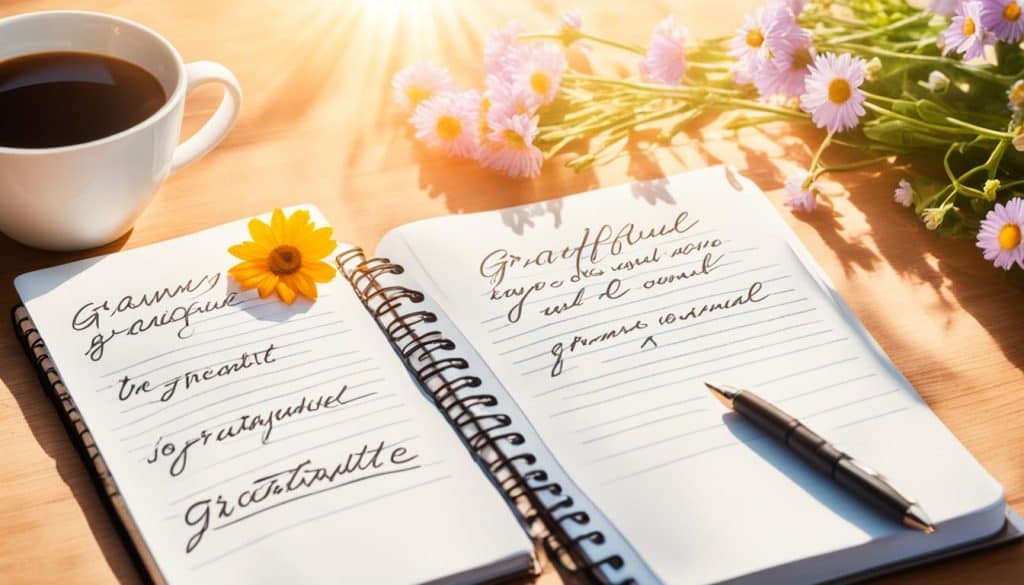
Making gratitude a part of every day is easy with the right techniques. One method is to keep a gratitude journal. Here, you write down the good things in your life. It helps you see and cherish the blessings around you.
Gratitude Journaling
Gratitude journaling is a key way to build a thankful mindset. Writing down what you’re thankful for boosts your well-being. It’s good for your mental and physical health. Studies have shown it can lower inflammation for heart patients and improve mood. A gratitude journal also makes it easier to notice and appreciate the positives in life.
Three Good Things Exercise
Dr. Karl VanHarn and Jean Holthaus suggest the “Three Good Things Exercise.” Every night, I think about three good things that happened that day. This habit builds a thankful mindset and makes me more positive. Doing this exercise often can change your brain. It helps you see more good things, lowers stress, and boosts self-esteem. And, it lets you admire what others do, without feeling jealous.
Morning Gratitude Rituals
Starting the day with gratitude rituals can make your whole day better. David Agee, LMSW, advises taking a moment each morning to acknowledge the good in life. This makes you more resilient emotionally. It prepares you to tackle the day ahead with a grateful heart. Plus, starting the day this way can improve how well you sleep and reduce nighttime waking. It keeps you positive all day and night.
Ways to Cultivate an Attitude of Gratitude
Adopting a grateful outlook is more than just saying thanks; it’s about seeing the good in every situation. Fewer than half of people often share their gratitude, showing a disconnect between feeling and expressing it. This can greatly influence our happiness and how we connect with others.
Starting a daily gratitude practice can lead to better sleep, healthier hearts, and stronger emotional health. These benefits help us foster appreciation and find joy every day. Pine Rest staff say making gratitude a part of our viewpoint is key. For example, writing heartfelt thank-you notes can deepen our appreciation for others.
Here’s a simple guide to grow your gratitude:
- Awareness: Notice the small things that make you thankful.
- Appreciation: Acknowledge and cherish the good parts of life, like friendships and health.
- Affection: Show love and thanks to people, which will help strengthen your relationships.
- Allowing abundance: Understand that being grateful brings more joy and positive experiences into your life.
Gratitude also boosts empathy, making us more mindful of how others feel. Practicing gratitude helps reduce stress by keeping cortisol, the stress hormone, at bay. This practice doesn’t just lower stress but also ushers in a happier and more positive life. So, making cultivating gratitude a daily habit can change your mental health for the better, showing the true power of giving thanks.
Gratitude and Its Impact on Relationships
Gratitude is key in building strong relationships. It deepens connections and makes interactions meaningful. Research shows that saying thank you improves relationship quality and makes people happier. Psychologist Sara Algoe, Ph.D., found that personal thank yous make relationships last longer and feel closer. Gratitude spreads positivity and goodwill, greatly affecting our interactions and community.
Expressing Appreciation
Saying thank you is powerful in keeping connections strong. Studies show grateful partners are happier and closer. For example, couples who express gratitude feel more connected the next day. New sorority members who thanked for gifts felt a stronger bond with the person who gave the gift. Heartfelt notes or saying thanks out loud makes relationships richer and more cherished.
Strengthening Bonds
Gratitude makes personal ties stronger and connections deeper. Couples doing gratitude activities spent 68 extra minutes together daily and showed more affection. Even outside romance, a gratitude journal helps in tough times by reminding us of good social ties. Being grateful boosts happiness and health, making relationships better and more satisfying.
Creating a Ripple Effect of Positivity
Gratitude goes past just two people and spreads positivity to many. When we express thanks, it makes people want to act kindly in return. This creates a culture of kindness and respect. Gratitude can also lessen anxiety and depression, leading to a more supportive community. By appreciating others, we all feel better, showing how gratitude can change society positively.