
Did you know during the COVID-19 pandemic, about 100 new laws were made in 38 states for school mental health? These laws show we now see how important schools are for helping kids with mental health. They didn’t just give more money and plans. They also made sure teachers and students learn about mental health. This is to build a better school mental health system (CSMHS).
Back in 2019, data showed 16.5% of American kids had a mental health disorder. When the pandemic hit, these issues got worse. This made it clear how vital schools are in supporting students’ mental health. To help, governments and the Biden Administration put new mental health policies in place. They aim to make these school supports even better.
Key Takeaways
- Nearly 100 laws were enacted across 38 states to support mental health in schools during the COVID-19 pandemic.
- In 2019, 16.5% of U.S. children had at least one diagnosed mental health disorder.
- 12 states implemented laws focused on strategic planning to improve access to school-based mental health services.
- 26 states increased financial support for school-based mental health initiatives.
- Legislative actions emphasize the necessity of mental and
- health education for both school staff and students.
The Importance of School-Based Mental Health Services
School-based mental health services are key to improving student well-being. By providing these services at school, students can more easily get the help they need. This is crucial for dealing with mental health issues in kids and teens.
Over 77% of U.S. teens with mental disorders have used these services. Also, 38% of U.S. children have disabling mental health conditions, as reported by parents. This shows how important support within schools is for our kids’ health.

Having mental health services in schools helps a lot. For young kids, these services were found to be 73% effective. They help with mental health and also make schools better places by lowering absences, improving behavior, and making a more positive school atmosphere.
Many U.S. children face mental health challenges that affect their lives. Schools can fill a big need with a multitiered support system. This helps all students, but especially those who need extra help, and evens out access to care, especially in rural areas.
School mental health systems play a big role in student success. They help with prevention and early treatment. Schools are vital in helping students grow both mentally and academically.
Impact of COVID-19 on Student Mental Health
The COVID-19 crisis hit student mental health hard in the U.S., making existing problems worse. We look at how the pandemic changed how students use mental health services.
Pandemic-Driven Challenges
During the pandemic, more students faced mental health problems. Depression cases went up by 8.5%. Social and emotional issues increased by 7.9%. Before the pandemic, these numbers were much lower.
COVID-19 changed a lot for students. Staying apart and other limits hurt their mental well-being. Many felt more stressed and sad. Online classes also made things tougher for them.
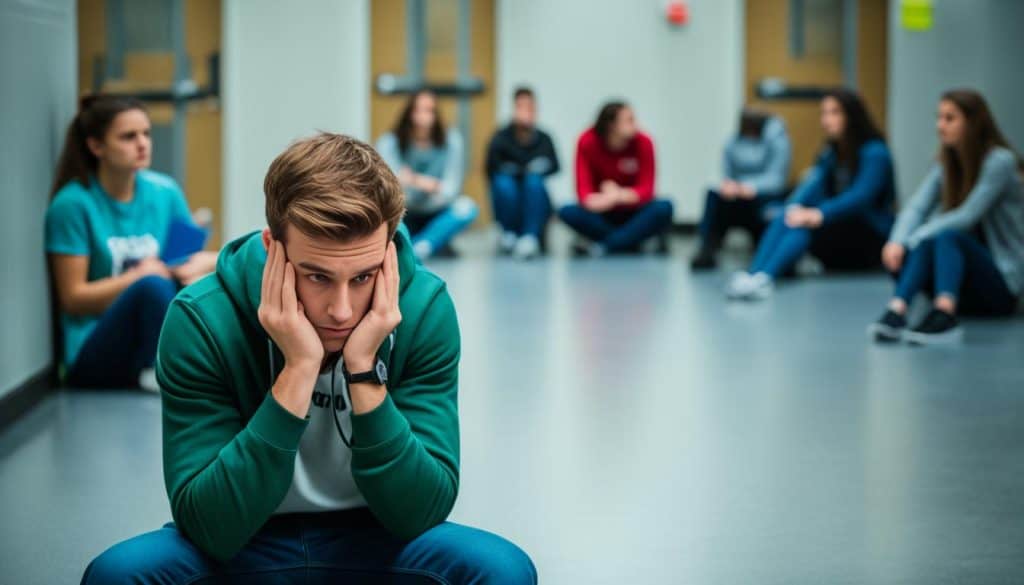
Students felt lonely and worried about getting sick. Not seeing friends and not knowing what comes next made anxiety and depression rates jump. A study found 88% of teenagers felt this way during the pandemic.
Changes in Mental Health Services Utilization
When the pandemic hit, how students reached out for mental health help changed. With schools going virtual, getting to traditional help was hard. Fear of getting sick and fewer available doctors made fewer families seek help.
Schools and experts had to think of new ways to give support. They had to make sure students could get help, even in tough times like these.
It’s important to know how the crisis affected student mental health. Knowing this helps us make stronger support systems for them for any future problems.
Federal Initiatives for Comprehensive School Mental Health Systems
Federal efforts are key in growing school mental health systems. Different federal agencies work together. This teamwork helps fund and start these important services.
Health Resources & Services Administration Programs
The Health Resources & Services Administration runs the School-Based Health Centers program. These centers are vital in delivering behavioral health services in schools. They make mental health care more reachable for students, helping those in need, especially in underserved areas.
Substance Abuse and Mental Health Services Administration Initiatives
The Substance Abuse and Mental Health Services Administration has introduced initiatives like Project AWARE. Its goal is to boost wellness and resilience in schools. SAMHSA also works with CMS to bring new payment and service models. This helps improve school-based behavioral services at the state level.
Department of Education Grants
The Department of Education gives out grants for school mental health. These grants fund prevention and targeted interventions within the Multi-Tiered System of Support (MTSS). This support is crucial for developing a strong, wide-reaching mental health setup in schools.
Allocating Funding to Increase School-Based Mental Health Services
The need to boost mental health services in schools is critical. The Biden-Harris Administration is stepping up, nearly doubling the investment in U.S. mental health services for schools. This means students are much more likely to get help right at school.

Now, there’s an extra $32 million for school mental health programs, making $70 million in total. This boost will help schools reach the mental health support they need for students. Before, $571 million was invested to increase mental health workers in schools.
The Bipartisan Safer Communities Act adds $1 billion to make schools safer and support student mental health. It also includes help for schools to grow and maintain these services. This plan aims for well-rounded, lasting support in schools.
Efforts to support mental health in schools are getting a big push from the government. They’re offering training and resources through the Departments of Education and Health. Plus, a new toolkit from SAMHSA is available to help kids handle stress better.
To recover from the pandemic, schools are using relief funds to focus on mental health. They’re also turning to telehealth to reach students everywhere. This makes sure even students far away get the help they need.
Medicaid is now helping pay for mental health services in schools too. This is great for students in need. And, thanks to certain projects, support is even going to students dealing with violence or needing help with conflict.
With new funding, about 5,400 new mental health workers can be hired in schools. Another 5,500 will receive training. This effort aims to build a strong group of mental health helpers for students everywhere. States are encouraged to use these funds to improve online mental health services and support for all students.
Mental Health Education for School Staff and Students
Mental health training is now a must for school staff and students. Seventeen states require mental health education for staff. This helps create a supportive school environment. Teachers can catch and handle mental health issues early because of this training.
Consider Florida during the 2022-2023 school year. They set aside $140 million for Mental Health Assistance. Also, $5.5 million was aimed at Youth Mental Health Awareness for staff. This boosts mental health training, supports suicide prevention, and promotes emotional learning.
- Promoting mental wellness among students and staff.
- Early intervention and appropriate responses to mental health issues.
- Enhancing emotional learning through structured curricula.
Programs focus on teaching staff to spot signs of mental health problems. Signs like withdrawal, self-harm, fear, and mood swings are key indicators. Regular training is crucial since educators often see these signs first.
Practical resources are also part of this effort. The 988 Suicide & Crisis Lifeline is a prime example. It’s available by calling or texting 988. SAMHSA’s National Helpline also offers round-the-clock services at 800-662-HELP (4357).
Investments support mental and emotional learning too. For example, an $8.9 million grant promotes early childhood mental health. Programs like Help Me Grow Florida provide free screenings for kids. These help catch developmental and behavioral issues early.
Empowering educators and students is key. With the right tools and information, schools can be safe and supportive. By focusing on mental health training, suicide prevention, and emotional learning, we build a better educational environment for all.
Guiding Policies for Student Mental Health Support
The importance of mental health in schools is growing. States are finding new ways to meet youth mental health needs. In October 2021, a big step was made with Senate Bill 224, becoming Education Code Section 51925. It helped make student mental health support a priority.
Furthermore, Assembly Bill 2246 now requires local schools for grades seven to twelve to have suicide prevention policies. These include plans for prevention, intervention, and what to do afterward.
With mental health being so crucial, Assembly Bill 2639 was introduced. It asks LEAs to check their suicide prevention policies every five years. This is to keep them up to date and effective. The Model Mental Health Posters, started by Assembly Bill 748, make it easier for students to find help. These posters are for students in grades 6 to 12.
This important work gets support from the Mental Health Services Act (MHSA). It offers money for school programs. The MHSA is looked after by the California Department of Health Care Services.
Responding to crises is also critical. Project Cal-STOP and Project Cal-Well are two programs focused on this. They teach students and staff how to deal with violence and promote mental wellness in schools.
The Student Mental Health Policy Workgroup helps by reviewing the needs of students in California. They suggest policy changes. Programs at school are also vital. They help with physical, mental, and behavior health, making things better for students and teachers.
Under Education Code 49428.15, programs that boost behavior health training are being rolled out. With one in five students facing mental health challenges that affect their learning, this is crucial. Suicide, being a top cause of death for young people, shows the need for strong mental health programs in schools. Schools play a key role in providing these essential services.
Recent State Laws and Their Impact on School Mental Health Systems
In the USA, state laws have been key in shaping school mental health policies. The pandemic made the mental health of young people a big topic. Now, states are taking action by putting money into mental health, planning, education, and policies for schools. This is vital as one in five kids face mental health issues each year.
Georgia, Colorado, and Nevada are making big strides in supporting school mental health. Georgia is spending $26.9 million to get more counselors, aiming for one counselor for every 450 students. Colorado has a $15 million fund to bring more behavioral health experts into schools. They are also spending $12.3 million on training school counselors. Nevada put in $2 million to start a center focused on growing the behavioral health workforce. This includes training people to work in schools.
A lot of young people with depression aren’t getting the help they need. Also, suicide is a major cause of death for teenagers. The pandemic made these problems worse, leading to more kids going to the ER for mental health issues. States are stepping up to address this. For example, Washington is giving $500,000 a year for online mental health help in rural schools. This effort aims to make sure all kids can get mental health support.