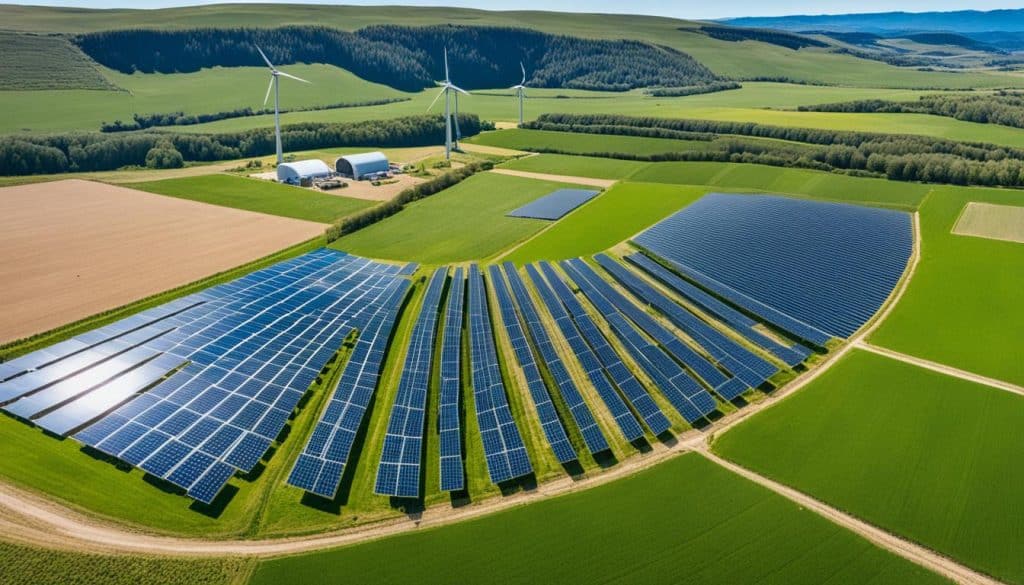
The Conservation Stewardship Program (CSP) leads the way in caring for our land. It covers more acres of working land than any other federal program. This shows the agriculture industry’s dedication to keeping nature healthy. It does this through sustainable farming and wise use of land, always aiming to get better at protecting the environment.
Sustainable agriculture is key to keeping our planet healthy. It looks to safeguard our environment, keep natural resources going, and make sure soil stays fertile. Its main goals are to make farms more profitable, support farmers in taking care of the land, improve life for farm communities, and meet our growing need for food and clothing.
Farmers and their communities are essential in saving our natural resources. Their efforts to grow the economy, include everyone, and protect nature are crucial. This balance ensures our ecosystem thrives long into the future.
Key Takeaways
- The CSP covers more acres on a multi-year basis than any other federal conservation program.
- Sustainable agriculture aims to protect the environment and sustain natural resources.
- Environmental stewardship involves continuous improvement in environmental performance.
- Farmers play a crucial role in responsible land use and conservation practices.
- Key goals include increasing farm profitability and enhancing the quality of life for farming communities.
Introduction to Sustainable Agriculture
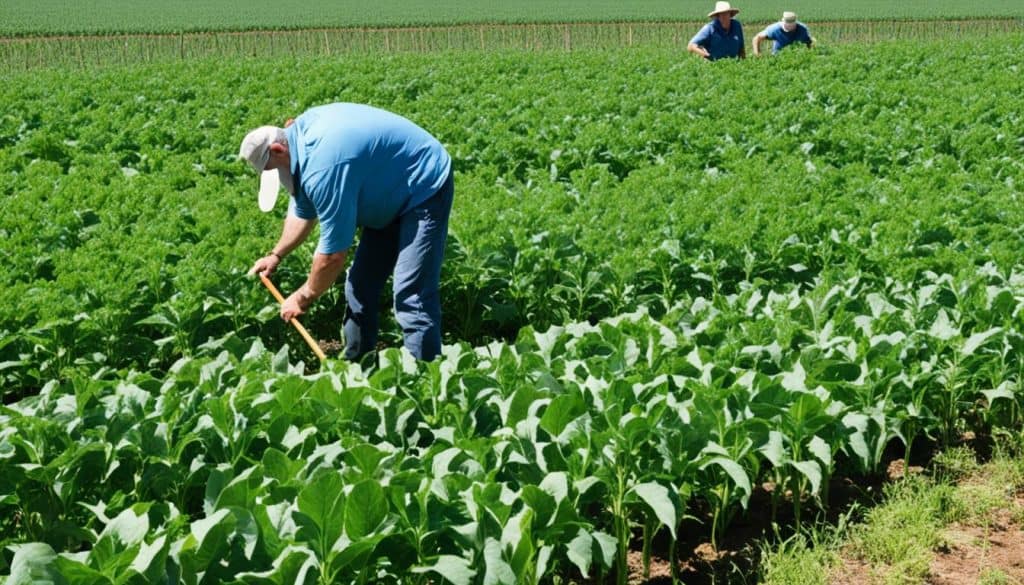
Sustainable agriculture combines traditional and modern farming ways. It aims to produce food and other goods without harming the environment. This method supports the growth of the population while saving nature and helping farmers make a living.
Definition and Goals
Sustainable farming aims to be good for the planet, people, and profit. It focuses on:
- Ensuring economic viability: Farmers find new markets and add value to their products through direct sales and processing.
- Ecological sustainability: Farmers improve soil without much synthetic fertilizer. They use farm-based nutrients, reduce plowing, and protect soil with plants all year.
- Social responsibility: This approach supports small farms and local economies. It favors selling directly to consumers and strengthening community bonds.
Importance in Modern Farming
The need for sustainable farming is growing because of:
- Population growth: With our global population expected to rise, sustainable farming can help produce more food and water sustainably.
- Environmental preservation: Sustainable methods like cover crops help keep water clean and prevent soil loss. They also include planting long-living crops and safeguarding areas near waters.
- Global goals alignment: Sustainable farming matches the United Nations’ 17 goals for a better world. It connects economy, society, and environment goals.
In short, sustainable agriculture is about better farming for our future. It’s a commitment to caring for our planet while meeting human needs.
Role of Environmental Stewardship
Environmental stewardship is key in making agriculture sustainable. It reflects our shared goal to care for our environment. The U.S. Environmental Protection Agency sees it as protecting nature, using resources wisely, and following environmental laws. It also means improving the well-being of communities.
Definition by the U.S. EPA
The U.S. Environmental Protection Agency views stewardship as our joint duty to boost environmental quality. It’s about efficient resource use, protecting ecosystems, and obeying environmental regulations. It’s also linked to bettering our health, studies show.
Historical Context and Evolution
Environmental stewardship’s roots are deep in American history, starting with early conservation. Now, it covers various actions like restoration and sustainable practices. The Resilience Institute notes that those active in stewardship are often more resilient. This highlights how caring for nature ties to social and economic strength.
Key Practices in Sustainable Agriculture
Sustainable agriculture involves using natural resources wisely to keep farms productive for a long time. We explore key methods such as cover crops and rotational grazing. They help in managing plants, animals, pests, and improving biodiversity.
Cover Crops and Rotational Grazing
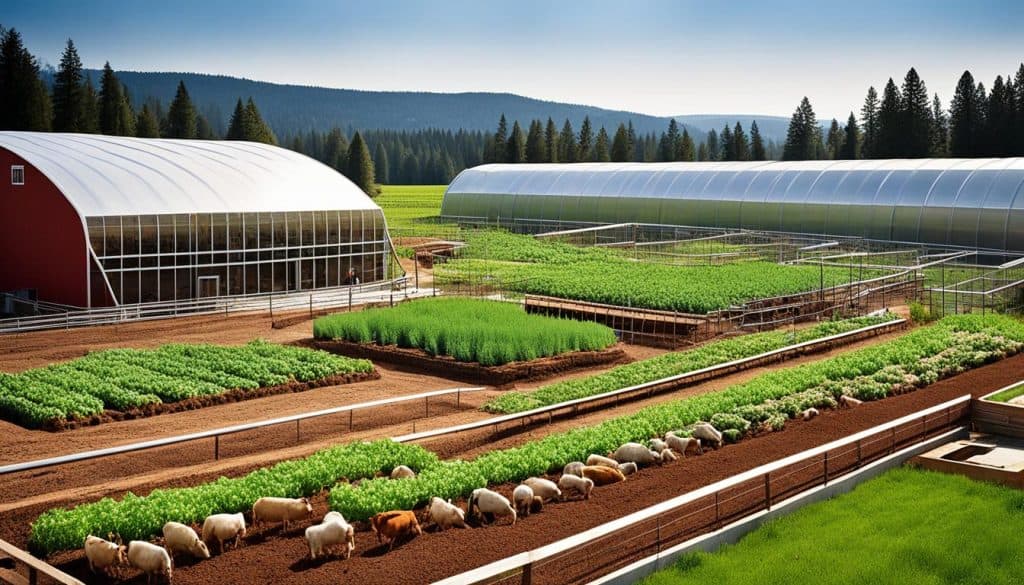
Cover crops like rye and clover prevent weeds, control erosion, and make soil healthier. They can cut soil erosion by 25% and boost soil nutrients by 30%. Rotational grazing is a way to save on feeding costs, ensure animals get quality food, and manage waste. It makes farms 15% more efficient and profitable.
Ecologically-Based Pest Management
Integrated Pest Management (IPM) uses multiple approaches to keep pests in check. It aims to lower the risks to wallets, health, and the planet. Farms using IPM have cut chemical pesticide use by 30% while still controlling pests.
Buffer Strips and Organic Farming
Buffer strips protect water quality by capturing runoff before it pollutes. Paired with organic farming, which avoids synthetic inputs, they support a healthy ecosystem. Organic methods focus on soil health and biodiversity, leading to farms being 30% more sustainable than single-crop farms.
Benefits of Environmental Stewardship
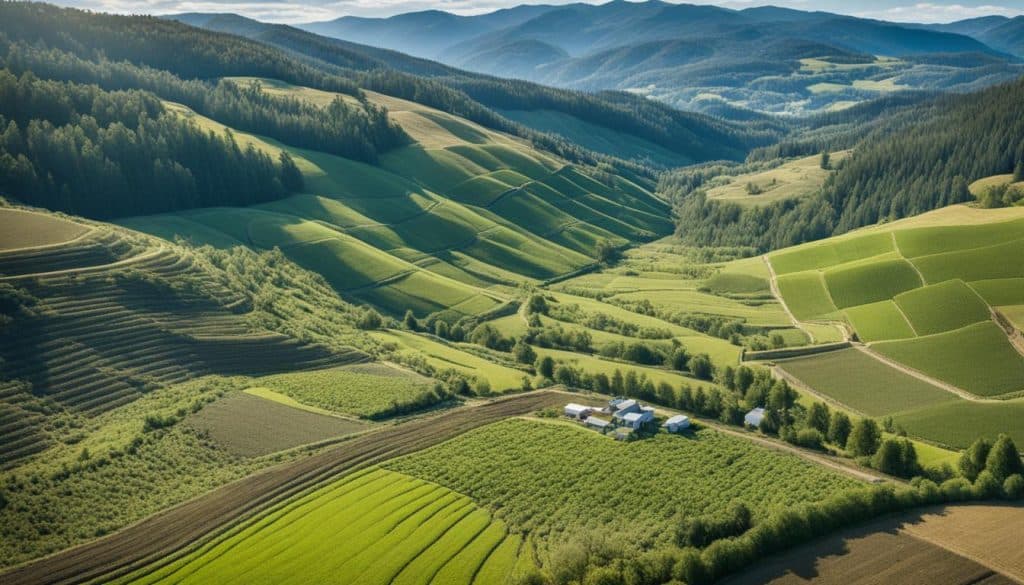
Environmental stewardship is hugely beneficial. It shows how vital sustainable agriculture is. By focusing on practices that are good for soil, water, and life, we make farming better for the future.
Benefits to Soil Health
Soil restoration benefits greatly from environmental stewardship. Crop rotation and cover crops improve soil. These methods help soil health and encourage good microorganisms.
- Enhanced Soil Structure: Growing diverse crops makes the soil better and stops erosion.
- Increased Nutrient Availability: Things like composting bring back important nutrients to the soil.
- Improved Organic Matter: Organic farming makes the soil’s carbon content higher, improving its quality.
Impact on Water Quality
Keeping water clean is another part of environmental stewardship. Efforts like buffer strips along waterways reduce harmful runoff. This keeps water life safe from pollution and harm.
- Buffer Strips: These areas clean pollutants before they can enter water bodies.
- Wetlands Restoration: Restoring wetlands helps clean water and maintain groundwater levels.
- Implementation of Riparian Zones: These places help clean water naturally, taking away contaminants.
Enhancing Biodiversity
Habitat protection is key to supporting biodiversity. Creating different habitats gives wildlife places to live. Planting native species and saving natural areas are crucial for life’s variety.
- Pollinator Gardens: These gardens are homes for bees and butterflies, important for pollination.
- Forest Reforestation: Trees are planted to rebuild lost homes for many species.
- Wetland Conservation: Wetlands support a wide range of water and land animals.
In summary, environmental stewardship leads to better soil, clean water, and safe habitats. This makes farming landscapes resilient and sustainable for the future.
Government Programs and Support
Many government initiatives help farming be more sustainable. They offer key money aid and know-how, pushing farmers towards practices good for them and the planet.
Conservation Stewardship Program (CSP)
The Conservation Stewardship Program (CSP) Its five-year contracts can get extended, rewarding those who keep up and add on eco-friendly methods. This way, farmers stay focused on helping the environment long-term.
Farm Leo’>
The Farm Bill sets and funds the needed conservation efforts. It helps agriculture stay sustainable by setting goals and offering incentives to farmers. The Bill brings money, research, and help needed to protect our lands.
Financial and Technical Assistance
Conservation incentives push for more green practices. CSP gives payments and free expert advice through the NRCS. Farmers can also get specialist help for setting up and starting green projects. With year-round NRCS support, good farming for the earth never stops.
Challenges in Implementing Sustainable Practices
Sustainability has its benefits, but many challenges block its widespread use. Economic limits are a big challenge, stopping many farmers from changing to new, sustainable ways. These financial struggles lead to high start-up costs, making small and medium businesses hesitate.
Economic Barriers
Many farmers run into economic walls when trying to be sustainable. The cost needed for new, green technologies is often too much. Also, moving to different energy sources can affect jobs and poverty, making sustainability hard for some areas. With not enough money support, making sustainability common is tough.
Educational and Training Gaps
There’s also a big education and training gap stopping farmers from using sustainable methods well. It’s important to spread knowledge so farmers can learn new skills and apply eco-friendly ways. But, many lack the resources for proper training. Fixing these education issues is key to help farmers and make sustainability efforts work in the long run.