Did you know bakers and flour confectioners get hurt 18.2 times more often than other workers? This fact shows how crucial baking safety guidelines are. If you love to bake, you’ll want every baking step to be safe and clean. This ensures treats are not only tasty but also safe to eat.
First off, storing baking ingredients correctly is key to avoid contamination. It’s also vital to keep the kitchen clean. Wash your hands often, wear a clean apron, and prep surfaces well. This helps stop foodborne illnesses from spreading.
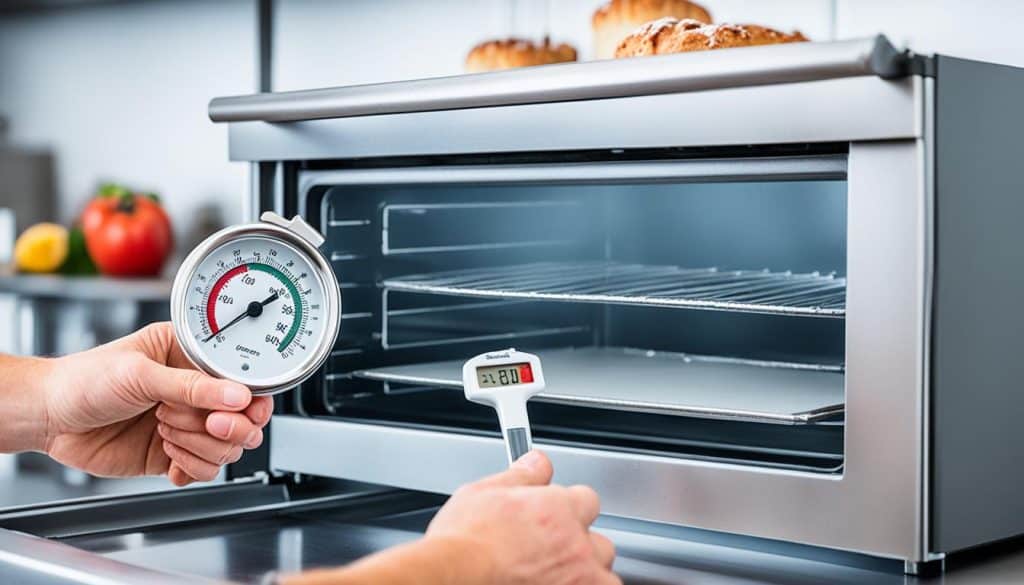
Using toothpicks and thermometers to check if baked goods are done is very important. It helps make sure everything is cooked through. This reduces the chance of getting sick from bacteria in undercooked foods. Keeping baking equipment clean and in good shape is also necessary for safe baking practices.
Whether baking for a holiday or just because, safety and quality matter most. Following these key tips lets us enjoy baking with confidence and peace of mind.
Importance of Proper Preparation in Baking
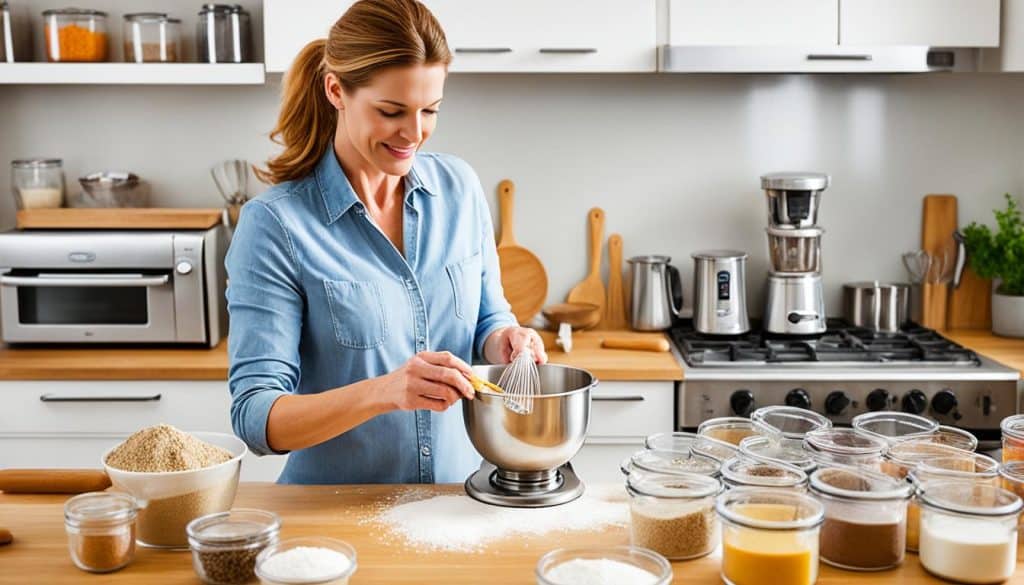
Preparation is key in baking. It ensures a successful and safe process. Before starting, gather all needed ingredients and equipment. The Home Baking Association says this reduces cross-contamination risks. It’s also important to follow hygienic practices. Wash hands, tie back long hair, and wear a clean apron. These steps are essential for both professional and home bakers to keep baked goods safe and high-quality.
Assembling Ingredients and Equipment
Getting your baking equipment and ingredients ready ahead of time makes the process smoother. The North American Milling Association believes this ensures nothing is forgotten. ThermoWorks suggests that controlling the temperature of ingredients and processes is easier when everything is at hand.
Washing Hands and Hygenic Practices
Hygiene is critical in baking. Washing hands often helps prevent contamination. The Home Baking Association advises tying back long hair and removing jewelry. Wearing a clean apron is also important. These practices help keep the baking process clean, safe, and high-quality.
Maintaining Cleanliness in Your Baking Space
Keeping your kitchen clean is key to a healthy and effective baking area. Home Baking Association experts stress the need for food-safe cleaners and a strong cleaning plan. This plan keeps both bakers and eaters safe. Also, stopping cross-contamination is crucial for food safety and quality.
Regular Cleaning Routines
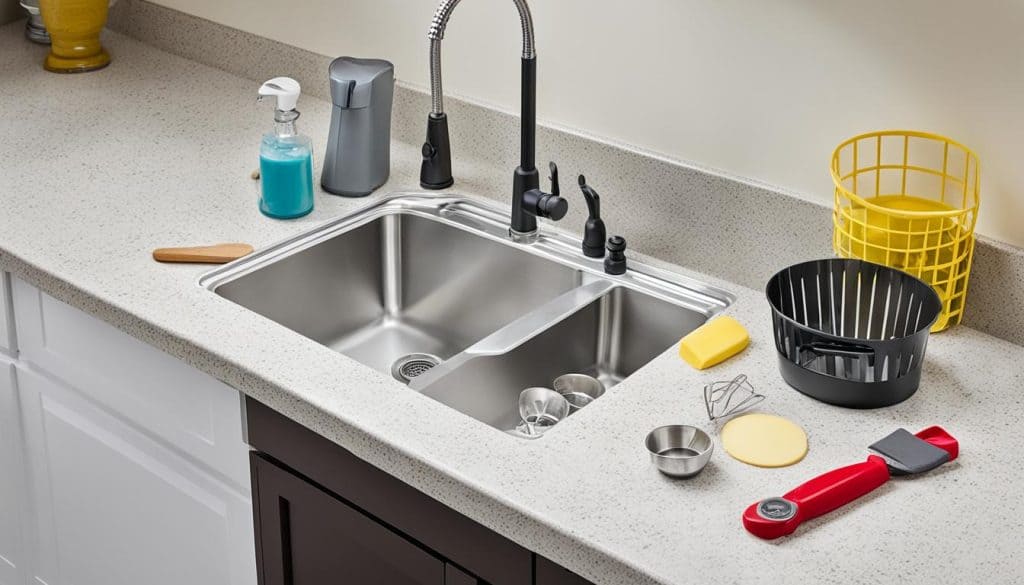
Having a regular cleaning schedule is important for kitchen cleanliness. Daily and weekly tasks keep everything clean and germ-free. Cleaning tools and areas often stops germs and keeps baked goods safe. A clean space is safe for everyone and keeps the food tasting good.
Using Food-Safe Cleaners
Choosing the right cleaners is a must for a clean baking area. These cleaners get rid of germs without harming the food. Cleaning with these products keeps everyone eating your food safe.
Preventing Cross-Contamination
Stopping cross-contamination is vital for a safe bakery. Allergens can cause serious problems, making clean-up important. Clean regularly and wash hands to keep things safe. It helps to prevent sickness from spreading.
Overall, being tidy in the kitchen—like sticking to cleaning schedules, picking the right cleaners, and avoiding cross-contamination—is important. These steps keep food safe and yummy to eat. They help avoid health issues and ensure delicious, safe baked goods.
Safe Baking Practices
It’s key for anyone moving from baking for fun to starting a home business to follow safe baking steps. Harmful bacteria like Salmonella in eggs and E. coli in flour can cause food poisoning. It’s vital to stick to baking best practices for safety and quality.
Pasteurized cookie dough with heat-treated flour and pasteurized eggs is safe from foodborne illnesses. Keeping home baking safety in mind, wash your hands for at least 20 seconds with warm, soapy water before and during baking. This helps a lot in preventing germs.
Cleaning kitchen counters with bleach stops bacteria from spreading and keeps baking areas clean. It’s important to wash tools and boards used with raw eggs or flour in a dishwasher or hot, soapy water. This is part of professional baking standards.
Store raw dough in the fridge right after you make it. This keeps the ingredients safe until baking time. Also, bake goods at the right temperature and for the correct time as the recipe says. Doing this makes sure your treats are both tasty and safe.
Keep baked items covered in the fridge or at room temperature, following the recipe’s advice, to keep them fresh and safe. By following these baking safety tips, your baked goods will not only taste great but will be safe for everyone to enjoy.
Testing and Ensuring Doneness
Ensuring doneness in baking is key to avoiding health risks from undercooked items. It’s important to follow baking temperature guidelines. Checking that your baked goods are fully cooked is a must for any baker.
Using Thermometers and Toothpicks
For testing baked goods, thermometers and toothpicks are very helpful. A thermometer shows the inner temperature of your items. Cakes and bread, for example, should be between 200-210°F to be properly baked. If you insert a toothpick into cakes or muffins and it comes out clean or almost clean, they’re done.
Avoiding Underbaked Products
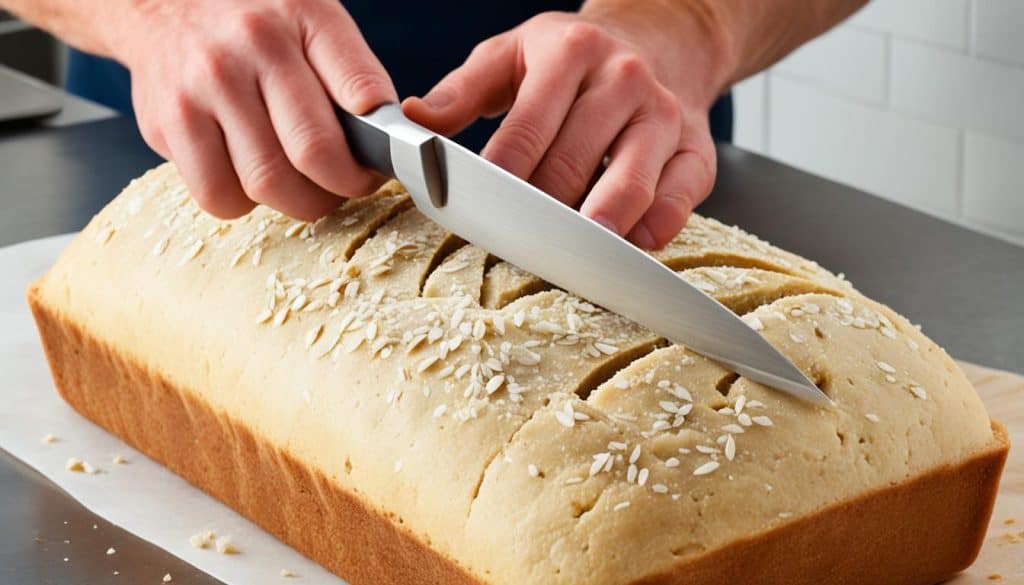
Not underbaking is key not just for texture but for health too. The Federal government finds nearly 48 million people get sick from food illnesses each year in the U.S. That’s about 1 in 6 Americans. Getting baked goods to the right temperature can stop bacteria like Salmonella and E. coli from growing.
Following the right baking temperature guidelines and using proper tools is critical. These steps ensure your baked goods are safe to eat. They lower health risks and make your baking better and more enjoyable.
Proper Storage of Baking Ingredients
Storing baking ingredients correctly makes your baked goods last longer and taste better. It’s important to keep ingredients from getting spoiled, contaminated, or losing their strength. Let’s look at the best ways to store common baking ingredients for the best results.
Storing Ingredients in Airtight Containers
Airtight containers are key for keeping storage of baking ingredients safe from moisture, pests, and other problems. Things like flour, sugar, and cocoa powder should be kept in tight containers. Keeping storage areas cool and dry, between 50° and 70° F with low humidity, is advised by experts.
- Flours and Sugars: Keep them in airtight containers in a cool, dry spot. They usually last up to two years.
- Cocoa Powder: Store it tightly sealed to keep its flavor and avoid clumps.
- Spices: They should be in airtight containers away from light and moisture to keep their taste.
It’s not just dry goods that need careful storage. Watching the storage environment, like keeping humidity in check, is important for keeping ingredients fresh.
Handling Perishable Items Correctly
Some items like dairy, eggs, and certain flours spoil faster and need careful handling. Keeping things like whole wheat flour, nuts, and yeast cold helps them last longer and stay fresh. This is crucial for keeping ingredients at their best.
- Dairy Products: Refrigerate things like milk, butter, and creams right after using them.
- Eggs: They should be kept cold to prevent them from going bad.
- Nuts and Whole Grain Flours: Keep these cold too, to keep them fresh longer.
Keeping an eye on temperature and humidity where you store food is very important. Regular checks help make sure perishable items stay in the best condition. Using airtight containers in the fridge also stops odors and keeps things fresh.
By sticking to these storage tips, bakers can be sure their ingredients stay top-notch. This means better and more reliable results in every bake.
Personal Hygiene Tips for Bakers
High personal hygiene standards are key for safe, quality baked goods. As a baker, I always follow hygiene rules to lessen contamination risks. These habits protect our products and keep bakers clean.
Washing Hands Frequently
Frequent handwashing is vital in baker hygiene. It cuts down the spread of germs, essential for clean baking. Proper handwashing means using soap and scrubbing for at least 20 seconds. This includes all hand parts and under the nails. Doing this regularly helps keep our bakery safe.
Wearing Clean Clothing and Aprons
I make sure to wear clean clothes and aprons daily. Clean aprons, hairnets, and gloves are a must for keeping our baking space pure. This habit shows professionalism and keeps outside dirt away. These steps, with regular handwashing, set our cleanliness standard high in baking.
Statistics reveal regular handwashing can cut pathogen spread by 50%. — Food Safety Studies
Safe Handling of Baking Tools and Equipment
It’s really important to handle baking tools safely to keep your baked goods top-notch and your kitchen safe. Regular equipment checks and maintenance help avoid accidents. They also make sure your tools last longer. This makes baking both fun and efficient. The Home Baking Association highly recommends following these safety practices in your kitchen.
Regular Equipment Inspections
Checking your baking tools and appliances regularly is crucial. This helps spot issues like tattered cords on mixers or cracks in your baking dishes. Spotting these problems early stops accidents and keeps your baking smooth. Make it a habit to do these checks to keep cooking without any hitches.
Proper Cleaning and Maintenance
Keeping your baking tools clean is as important as regular inspections. Wash things like mixers and bowls with warm, soapy water to keep bacteria away. Also, make sure to oil moving parts and replace anything that’s worn out. These steps make sure your tools are safe and work their best. Taking care of your equipment means you’ll bake with ease and keep turning out great food.