Did you know only 6% of cropland acres had cover crops in the 2017 USDA Census? This fact shows a big gap in today’s farming knowledge. As farming changes, old ways of teaching aren’t enough. Now, future farmers need a mix of real-life and formal livestock education. This mix helps them face the modern farming industry’s challenges.
Finding future farmers is not just about livestock. It’s also about understanding modern farming skills, like using technology and managing a business. Programs like Future Farmers of America are key. They help young people become agricultural leaders. Education plays a vital role in making farming sustainable and profitable.
Key Takeaways
- Livestock education now goes beyond traditional methods, incorporating technology and formal training.
- Programs like Future Farmers of America play a crucial role in developing essential farming skills among youth.
- Only 6% of cropland acres utilized cover crops, indicating a need for better soil health education.
- Future farmers need a broad understanding of both hands-on and business-oriented skills to succeed in modern farming.
- A well-rounded agricultural education fosters better leadership in the agricultural sector.
The Importance of Formal Livestock Education
Modern agriculture is complex, requiring vital knowledge and skills. Today’s farmers tackle tasks from animal healthcare to financial markets’ understandings. Formal livestock education is key for efficient and sustainable farm management. It offers structured training programs. These help farmers gain specialized skills to face contemporary challenges.
Technology and Knowledge-Intensive Farming
Technology has boosted farming productivity. Old methods have been replaced by smarter, knowledge-driven agriculture technologies. This change means fewer, but more productive, farms. It shows why continued education is important. Knowledge-intensive farming needs farmers to keep up with new practices and tools. Thus, ongoing agricultural training is crucial.
Education is vital for farmers to adopt modern agriculture technologies. It improves livestock management and farm productivity. This has been proven in various studies.
The Role of Post-Secondary Education
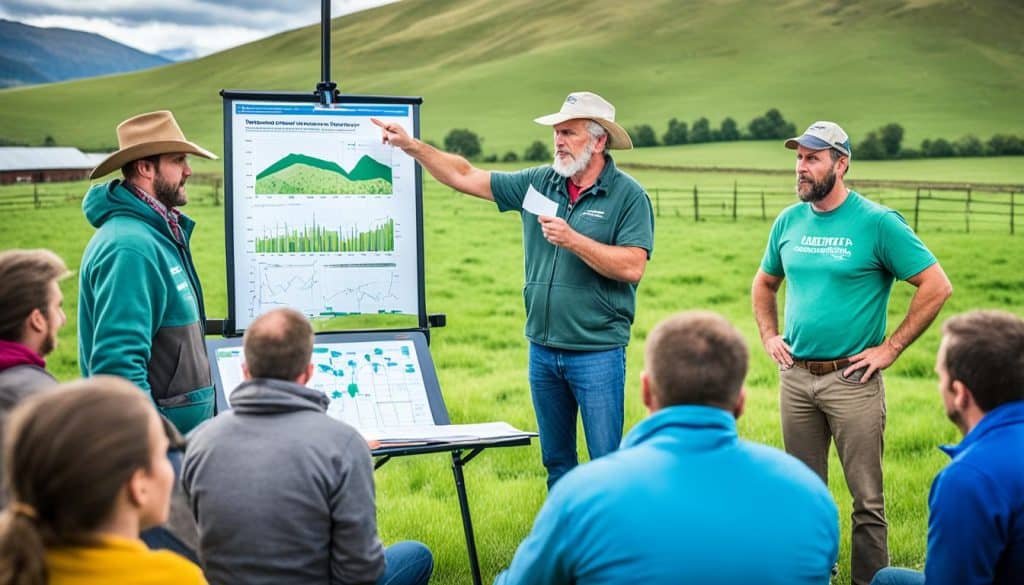
Post-secondary education is crucial for training new farmers. The National Council for Agricultural Education and the Agricultural Workforce Policy Board support this. They advocate for a complete farm management education. These programs teach many subjects, from biotechnology to agronomy. Their value is immense due to the complexity of farm management.
Statistics back up the importance of education. For instance, a study in Odisha, Eastern India, showed education’s impact on using modern paddy varieties. It led to higher farm productivity. Research consistently shows that education boosts productivity. This is especially true when modern technology is used. Post-secondary education creates a learning space for future farmers to succeed in the changing agricultural field.
Fundamental Skills in Livestock Management
Effective livestock management needs a mix of key skills to thrive. These skills help increase productivity and sustain the farm.
Basic Animal Husbandry
Providing good care for animals keeps them healthy and happy. This means they always need access to water. Shelters protect them from bad weather, keeping them comfortable and healthy. It’s also crucial to keep their living areas clean to prevent diseases and maintain a good farm.
Good communication is key on a farm. It helps everyone stay ready and adapt quickly. This creates a positive work environment, making things run smoothly.
Animal Nutrition
Nutrition is very important for livestock. A balanced diet helps animals grow, stay healthy, and reproduce well. Minerals are also needed for their health and that of their babies.
Finding the best way to feed animals is important. Being proactive about their health helps tackle challenges better. This keeps the farm running smoothly.
Environmental Stewardship
Caring for the environment is crucial for farms. Using the best practices helps protect ecosystems. Paying attention lets farmers adjust to get the best results.
Working together towards sustainability is important. Showing leadership in this area encourages better practices. Rewards for sustainable actions motivate employees, making the farm stronger.
Hands-On Training and Practical Experience
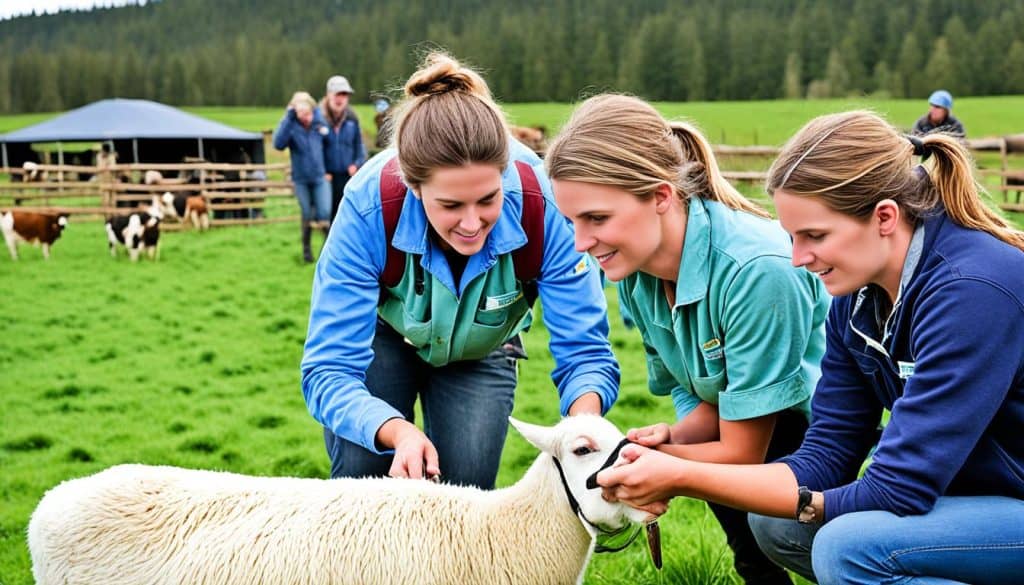
Learning by doing is key in agriculture education. It offers lessons books can’t. Schools with hands-on farm training make students ready for real farming better than others.
The Value of On-the-Job Learning
Experiential learning gives students a chance to see what work is like out there. The University Farm acts as a real farm. There, students use modern farming tech. Small classes mean more one-on-one advice to make them ready for work.
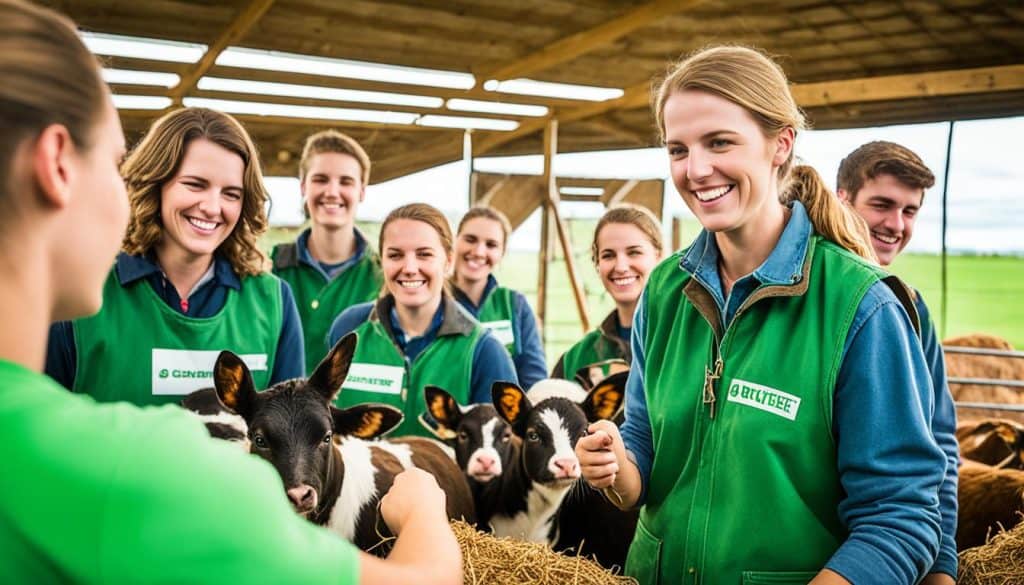
Summer internships and projects help too. They make book learning solid and help make important connections. Students get to try things like water saving in real situations at places like Fort Hays State University (FHSU).
Balancing Theory with Practical Skills
It’s important to learn farming both from books and by doing. Purdue University has an online quiz to help students see how they’re doing. Knowing both well helps future farmers face the unexpected and choose wisely.
The Rodale Institute teaches both in class and on the farm for at least 40 hours a week. Their 22-month track also offers guidance and advice to make sure grads know their stuff.
For example, the West Sacramento Urban Farm Program has students work on Sundays sometimes. This and similar programs mix practical work with learning from books. This is key for good farming education.
The Role of Technology in Modern Livestock Management
Technology is changing how we manage livestock, making things more efficient and innovative. Thanks to agricultural tech, farmers can face today’s farming challenges better. Tools like data analytics and high-tech equipment are transforming farming, boosting both productivity and profits. Companies such as Cainthus use machine vision and AI for continuous monitoring of cow health, showing the benefits of smart farming.
Applications of Technology
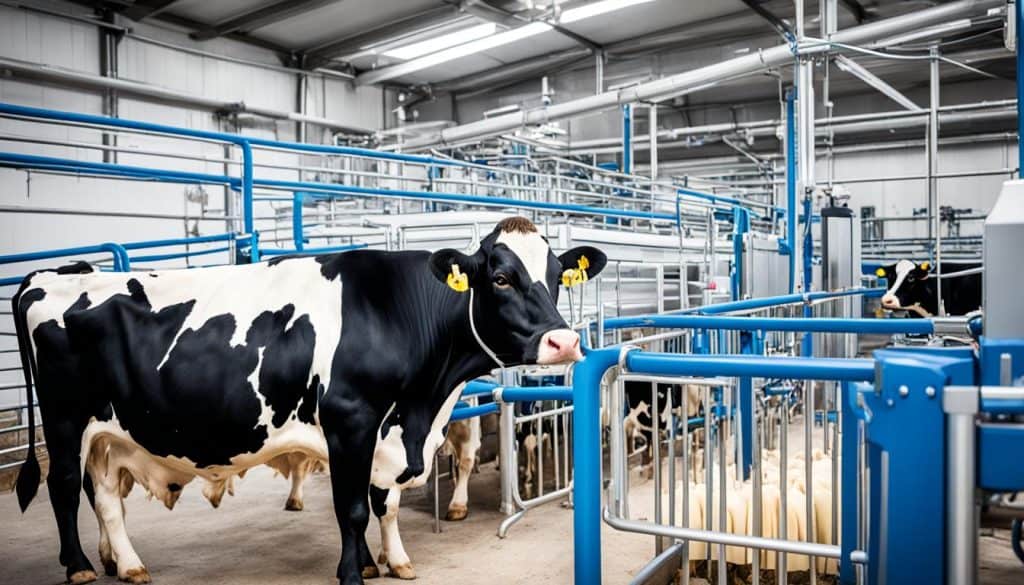
Now, 12% of dairy farms use robots, and this may hit 20% in five years. Livestock tech has greatly advanced, bringing in tools like sensors for milk quality and health checks. These innovations help in detecting diseases early, improving animal welfare. New techs like virtual fencing and genome editing are also coming up. They make livestock even better by enhancing certain traits.
Global Marketing and Business Management
In the business side of farming, global marketing heavily relies on new technologies. The use of IoT in agriculture is growing, though not everyone can access it yet. But using data analytics and bioinformatics helps farmers make smarter decisions. This boosts both productivity and profitability. Companies like Rex Animal Health are leading with data in vet medicine and genetic analysis. This brings valuable insights into managing animals better. The US livestock market, worth over $30 billion a year, shows the big interest in agricultural tech.
Future Directions and Challenges in Livestock Education
The world of farming is always changing, bringing new problems and chances for farmers. Livestock farming takes up a big part of our planet and is worth over $1.4 trillion. It’s very important to add modern farming education to our training programs. We need to teach about new science, tech, business management, and how to take care of the environment. This helps improve life in the countryside and keeps the farming business thriving.
The National Institute of Food and Agriculture (NIFA) helps a lot by offering programs for both newbie and seasoned farmers. Livestock farming gives jobs to over 1.3 billion people and is a main source of income for 600 million poor farmers around the world. Advanced farming education is critical. It helps farmers get the hang of public policies and the latest in science and tech. This is key for the future of managing animals.
But, there are big hurdles ahead for agriculture. The need for meat and other livestock products is going to double in some parts of the world by 2050. Since the 1960s, we’re making way more beef and chicken than ever before. With growth like this, farms need to keep learning new things all the time. Scientific knowledge is doubling every nine years, which means farmers must always be ready to adapt. Facing these issues with top-notch livestock education is vital. It’ll ensure farming continues to be sustainable and profitable for the future.