
Did you know that by 2050, the world will need twice as much food? This challenge makes it important to change how we farm. We need to focus on sustainable farming which helps keep the environment balanced and saves natural resources. Ecosystem services are now seen as key for mixing economic growth with taking care of our planet.
Programs like the Acid Rain Program have shown success with a cap-and-trade system to cut down emissions. These efforts show that using ecosystem services can help both our economy and the environment. Since farming, ecology, and economics are all linked, using ecosystem services is vital for a green future.
Key Takeaways
- The global demand for food is projected to double by 2050, highlighting the urgency for sustainable agriculture.
- Conserving natural resources and maintaining ecological balance are vital for future food security.
- Ecosystem services, such as pollination and soil fertility, are crucial for sustainable farming.
- Past initiatives like the Acid Rain Program demonstrate the economic and environmental benefits of ecosystem services markets.
- Effective integration of ecosystem services in agriculture can balance economic gains with ecological preservation.
Introduction to Ecosystem Services in Agriculture
Ecosystem services are key to farming sustainably. These services started to be recognized in the 1990s. They include things like clean water, fresh air, and a variety of plants and animals. The farming sector, which added $1.109 trillion to the U.S. economy in 2019, uses these services. By doing so, it supports taking care of our environment.
Definition and Importance
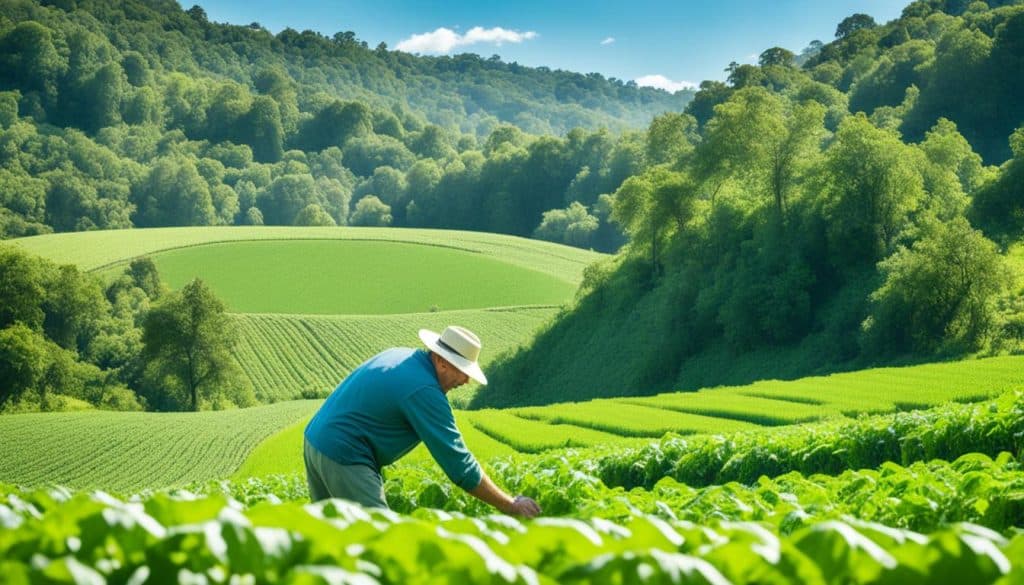
Ecosystem services benefit everyone, but they face issues like unfair use and overuse. Financial rewards for conservation help overcome these problems. For example, farms can store water, improve water quality, and be homes for pollinators and animals. They also help in storing carbon. Using methods based on regenerative agriculture can boost these services. This promotes the availability of essential resources and enhances long-term farming success.
Historical Context and Evolution
The idea of ecosystem services in farming has grown a lot over time. The Millennium Ecosystem Assessment outlines four types of these services. They include things like pollination, which helped fruits, nuts, and vegetables production by $75 billion in 2007, and nutrient recycling, vital for soil health. By improving farming through these services, we tackle big challenges like keeping water clean. This is especially important in places with nitrate issues, like the Mississippi River area.
It’s crucial to include ecosystem services in farming strategies moving forward. This is needed to deal with the growth of crop and ranch lands expected to go up by 23% by 2050. Rangelands alone take up more than a quarter of the planet’s land surface.
Benefits of Biodiversity in Sustainable Farming
Biodiversity is key to sustainable farm practices. It gives us many benefits like better pollination, pest control, soil health, and climate strength. Keeping different species on farms helps crops grow and stay healthy.
Pollination and Pest Control
Bees and butterflies help crops grow but are decreasing because we’re using their land for farming. From 2015 to 2016, the US turned 2.5 million acres of grassland into cropland. This hurt pollinator populations. Having a variety of crops attracts and keeps these helpful species, making farms more resilient. Using less pesticides through good pest management also helps.
Soil Fertility and Water Management
Diverse plants improve soil and water use. Rotating crops and keeping natural areas around farms boost soil nutrients and structure. This helps stop erosion and allows the soil to absorb more water. These practices show how important biodiversity is for sustainable farming.
Climate Resilience
Biodiversity is crucial for facing climate change. With many pollinators disappearing, it’s urgent to protect diverse farm ecosystems. Farms with many types of life can deal better with extreme weather and pests. For example, rainforests are home to many species and help keep the planet healthy. We need to protect these vital areas.
In the end, growing a range of crops and supporting nature makes farming sustainable. It helps farms produce food without harming the environment. This way, farms can keep going strong into the future, even as the climate changes.
Implementing Ecosystem Services for Enhanced Farm Productivity
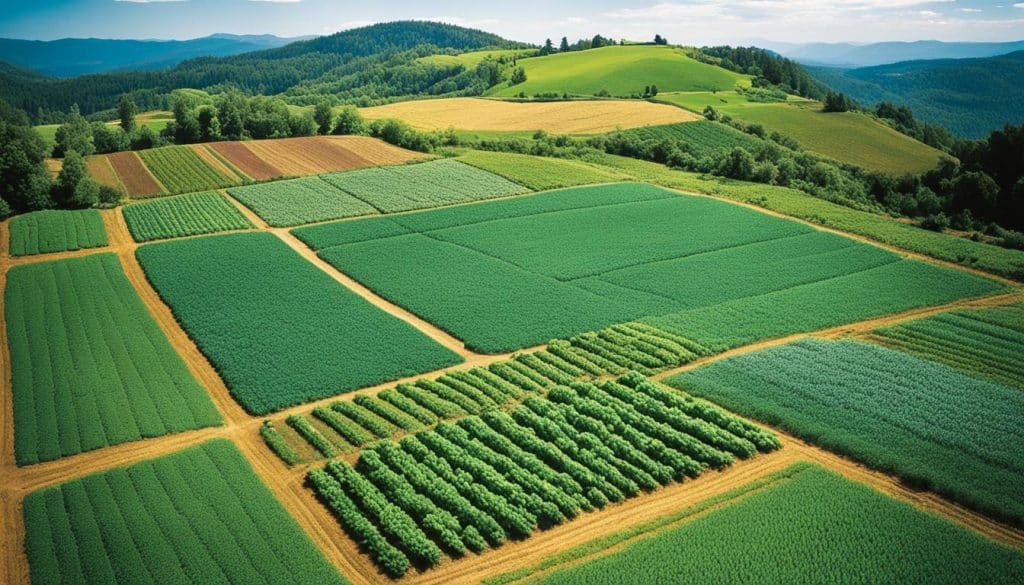
Adding ecosystem services to farming can greatly improve how much food is produced. It also keeps nature in balance. Farms cover almost 40% of the land on Earth and offer many benefits, not just crops. By using methods that care for the land, farmers can make more food and do it in a way that lasts. Let’s look at success stories and methods that show why these ways of farming are so important.
Case Studies: Successful Implementations
The Acid Rain Program is a great example. It shows how creating a market for ecosystem services can up productivity without harming nature. This program worked well to cut down sulfur dioxide in the air. This success shows it’s possible to do the same in farming. In the USA’s North Central region, where most of the corn and soybeans grow, experiments have found that more kinds of crops with less chemical use work just as well, if not better, than the usual way. These cases prove we can farm in new ways that are good for our planet.
Techniques and Practices
There are several ways to help nature through farming. Some key strategies include:
- Polycultures: Growing different crops together can help with pests, improve the soil, and make crops steadier.
- Hedgerows: Hedgerows offer homes for helpful insects and animals, increasing the variety of life and health of the ecosystem.
- Push-Pull Systems: Mixing plants that pests don’t like with ones they do can protect crops naturally and make them tougher.
Using these methods helps farmers work with nature, not against it. This leads to more food and a healthier planet. For example, farmers in the Midwest with big farms are starting to use these eco-friendly strategies. They help with clean water, pest control, and keeping the climate stable. These farming ways promise a better future for our earth and the people who grow our food.
Financial Incentives for Ecosystem Services Adoption
Adopting ecosystem services in agriculture takes a big investment. However, there are many financial incentives to make these changes easier. These incentives not only promote sustainable farming but also help the shift towards a green economy.
Payments for Ecosystem Services (PES)
Payments for Ecosystem Services (PES) reward farmers for being eco-friendly. For example, the U.S. Conservation Reserve Program gives out $1.8 billion every year under contracts with farmers. This program helps protect land that is at risk environmentally. Another option, the Soil and Water Outcomes Fund, pays farmers to better soil health and water quality.
A big review of nearly 18,000 papers found that PES really works for getting farmers to farm sustainably. It showed that PES has a big positive effect on both the environment and farmers’ finances worldwide.
Carbon Credits and Green Finance
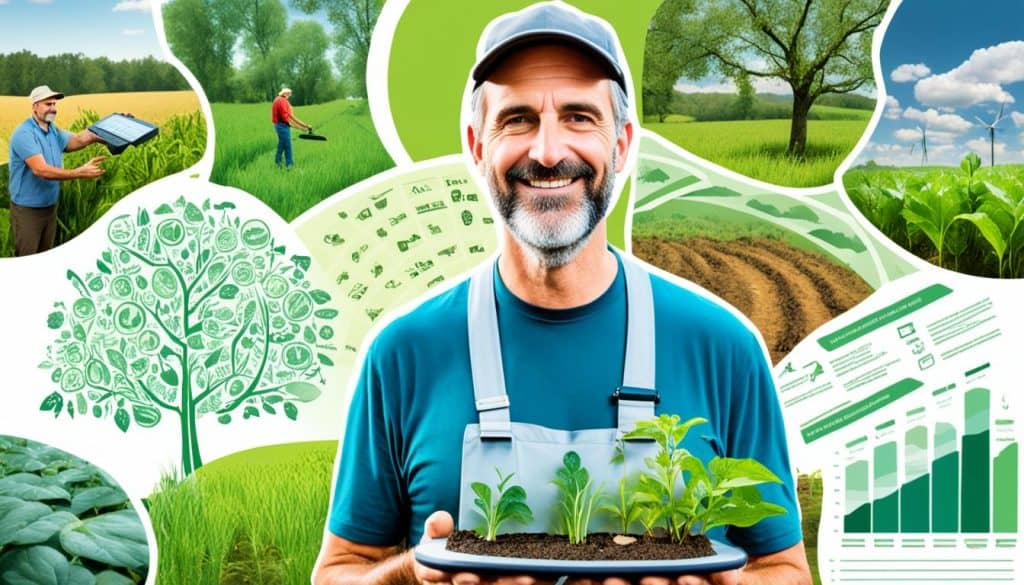
Carbon credits are another way to get sustainable farming financed. They let farmers sell carbon offsets when they lower emissions through their farming practices. These credits play a big role in green finance efforts to make agriculture more sustainable.
In China, the Grain for Green program, worth $43 billion, helped cut down on deforestation. It paid farmers to leave forested slopes untouched. This shows how green finance can grow to support ecosystem services and reduce environmental harm.
Blended Finance and Tax Incentives
Blended finance mixes public and private money to make investing in sustainable projects less risky. It draws private investors to help ecosystem services. Tax incentives, on the other hand, lower the costs for farmers to switch to sustainable methods. Shifting agricultural subsidies toward sustainable practices gives a big economic boost towards a green economy.
Various research has shown these incentives work well. An evaluation of 40 case studies in Latin America showed big benefits from PES programs. This success is backed by other research on PUkraineatterns of PES use worldwide.
Future of Sustainable Farming through Ecosystem Services
Looking ahead, using ecosystem services can make farming sustainable. Markets for these services are growing, which is good news. They offer money incentives for farmers to farm in earth-friendly ways. In particular, Payments for Ecosystem Services (PES) and carbon credits will help a lot. They provide strong support for taking care of our environment.
Statistics show how important ecosystem services are for farming. Research by Wezel et al. (2020) and Huber et al. (2022) proves that these services boost farm productivity and help nature. Right now, 40% of the land is used for growing food and grazing animals. This shows there’s a huge chance to use these practices everywhere.
It’s also key to teach people about ecosystem services for long-lasting change. Groups like Field to Market and Microsoft’s work on orphan crop genomes show they are serious about going green. With the world population expected to hit 9 billion from 7 billion by 2050, it’s more important than ever. We need to produce food without hurting our planet.
To wrap it up, using ecosystem services in farming is both doable and necessary. This approach means we can feed more people without harming our earth. Working together, through policies, technology, and financial incentives, farming can be more earth-friendly. This is the way to ensure a healthier planet for future generations.