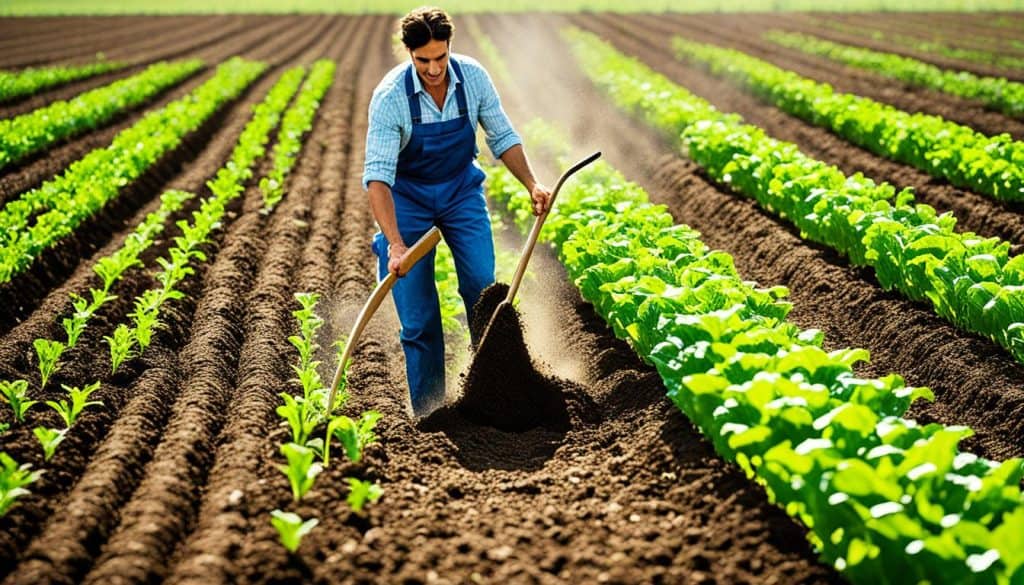
Did you know about the FAO’s role in sustainable agriculture? They help countries create policies that are good for both genders and promote nutrition. This effort helps change the way we make and use food. It tackles big issues like how much food we need, losing plants and animals, and climate change.
These Sustainable Agriculture Policies aim for social, economic, and environmental well-being. They help make our planet and people healthier. By following the Sustainable Food and Agriculture (SFA) methods, everyone works together. This collaboration is key to reaching the Sustainable Development Goal 2, which focuses on ending hunger and promoting sustainability.
The FAO emphasizes the need for SFA approaches, supportive policies, and finance. They share knowledge through reports and case studies on many topics. Areas like water management, the effects of COVID-19 on dairy, and key sustainable agriculture principles are covered.
Governments must base their policies on solid evidence and work together to enhance agriculture sustainably. This is crucial amidst challenges like climate change. By building partnerships and increasing support, we can move towards more sustainable farming practices.
Key Takeaways
- FAO supports policies that promote sustainable agriculture, forestry, and fisheries.
- Gender-responsive and nutrition-sensitive policies are crucial for sustainable agriculture.
- Sustainable Food and Agriculture (SFA) approaches are essential to meet Sustainable Development Goal 2.
- Collaborations and multi-stakeholder platforms enhance the implementation of sustainable agriculture policies.
- Mobilizing finance and building capacity are pivotal for transitioning to sustainable about agriculture.
Sustainable Agriculture Policies in the United States
Sustainable agriculture in the United States aims to meet our needs for food and fiber. It works to improve the environment and keep farms profitable. A strong policy framework supports these goals. It includes methods to boost farmer livelihoods and protect natural resources.

Overview of Key Legislation
At the heart of these policies is U.S. Code Title 7. This law sets guidelines for sustainable farming. Practices it recommends include:
- Integrated Pest Management (IPM)
- Rotational grazing
- Water and soil conservation
- Crop diversity
- Nutrient management
- Agroforestry
These methods aim to increase food production and encourage sustainable farming. They strive for a balance with nature and economic viability.
The Impact of Farm Bills
The farm bills are key to U.S. agriculture policies. For example, the 2018 Farm Bill will spend about $428 billion in five years.
Most of the budget supports Commodities, Conservation, Trade, and Nutrition. Less than $5 billion is for “Other” initiatives. These include the Local Agriculture Market Program (LAMP) and the Organic Agriculture Research and Extension Initiative (OREI).
The farm bill process has four main stages:
- Reauthorization Phase
- Congressional Committees work on separate bills
- Conference Committee combines these bills into one compromise package
- Appropriations Phase, which allocates federal budget funds to support the programs
This step-by-step process tackles different parts of the agricultural sector. Its aim is to make American farms more sustainable and viable for the future.
Environmental Regulations and Sustainable Agriculture
Environmental regulations help champion sustainable farming. They focus on using resources wisely to keep our farms healthy and balanced. These rules support actions that protect the environment, such as saving water and soil. They also support farming methods that work with nature, like agroforestry. Together, these practices form a strong environmental policy for agriculture.
The Role of Water Quality and Wetland Protection
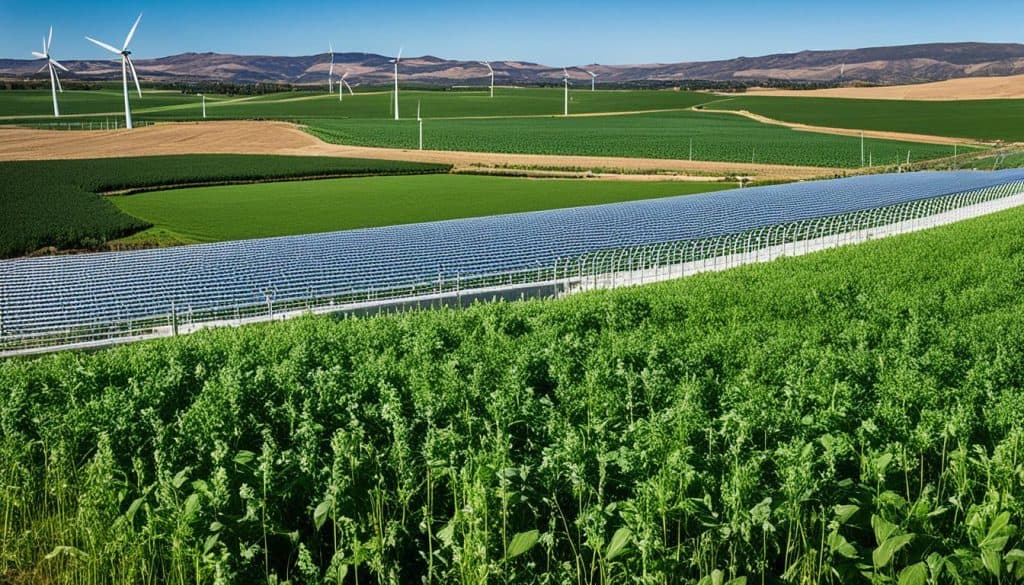
Keeping water clean is key for sustainable farming. Federal programs like EQIP are designed to help with this. They encourage farmers to use practices that protect our drinking and surface waters. Protecting wetlands is also important. Wetland buffers are a good way to do this. They help keep our water resources safe and support farming that’s good for the environment.
Regulations Promoting Soil Conservation
Healthy soil is essential for sustainable farming. Programs like the Conservation Reserve Program encourage methods that protect soil. These include farming with less plowing and not tilling the soil. Such practices stop soil erosion and make farms more productive in the long run. The National Resources Conservation Service offers help and incentives for these important practices too.
Agroforestry and Biodiversity Conservation
Agroforestry is about mixing trees with crops and livestock. It’s great for keeping farms diverse and healthy. This method helps the soil, provides homes for animals, and helps capture carbon from the air. Supporting agroforestry and protecting biodiversity are key to managing resources wisely. It shows a commitment to caring for our land, making sure our farms can keep producing food in the future.
Federal and State Advocacy for Sustainable Practices
Advocacy at the federal and state levels is key to promoting sustainable development in agriculture. Groups work hard to impact policies and practices. Their goal is to create dialogues, increase awareness, and push for policies that encourage agricultural innovation.
Role of Advocacy Groups
American Farmland Trust (AFT) and the National Sustainable Agriculture Coalition (NSAC) lead in policy advocacy. AFT focuses on sustainable farming and saving farmland. Meanwhile, NSAC aims to reform federal policies to better support agriculture and rural communities. These organizations play a big role in promoting sustainable practices through partnership and engagement.
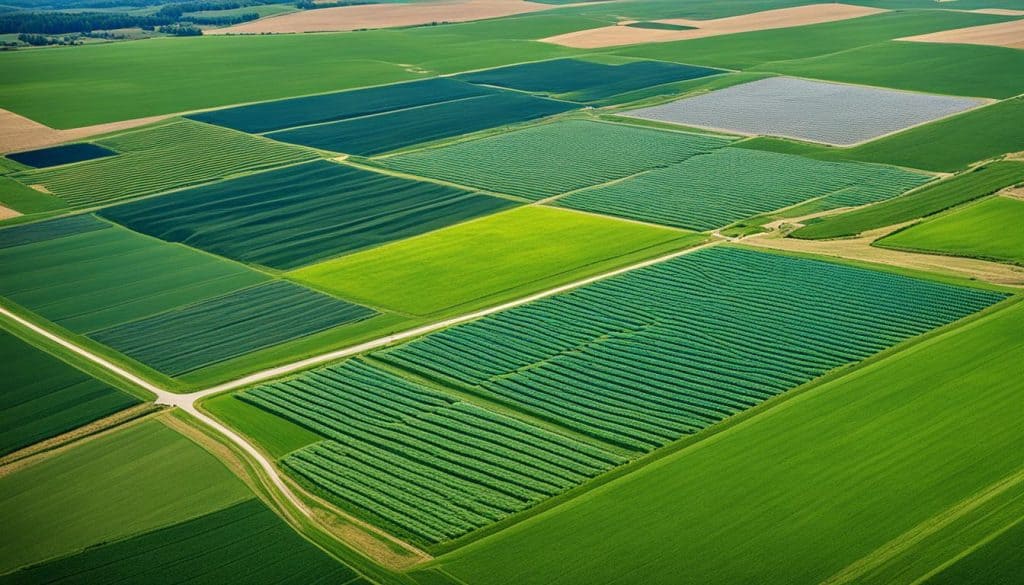
CISA works with food nonprofits and leaders like Rep Smitty Pignatelli to push for better agricultural policies. The National Young Farmers Coalition strives to change laws to help new farmers. New England Farmers Union (NEFU) fights for policies that support small family farms and cooperatives.
Public and Private Sector Collaborations
Collaborations between the public and private sectors are crucial for sustainable agriculture. These partnerships unite government, businesses, and nonprofits. Together, they take on projects that promote sustainability. The Center for Rural Affairs focuses on rural development policies, small businesses, health policy, and clean energy initiatives.
Earthjustice legally fights for a cleaner environment, including in farming. Their advocacy proves the power of legal action in creating change. Northeast Organic Farming Association/Massachusetts (NOFA/Mass) champions policies for sustainable agriculture. They focus on organic standards, transparency in the food system, and easing regulatory burdens.
Recent surveys show that over 70% worry about climate change’s effect on farming. Farmers are adopting climate-friendly methods like planting perennial plants. There’s a growing consensus on the need for policy changes to support these sustainable methods, with many supporting financial incentives for farmers.
To volunteer for policy work, contact Kelly Coleman, Deputy Director, at 413-665-7100, ext. 14.
Investment and Funding for Sustainable Agriculture
Our farms need different types of investments to stay sustainable. Much of this support comes from government funding programs.
The U.S. Department of Agriculture (USDA) plays a big role in giving federal assistance to sustainability projects. For instance, the Sustainable Agriculture Research and Education (SARE) program got over $46 million from them. Since 1988, SARE has pushed for climate-smart farming with grants and education programs in every state and territory.
Government Funding Programs
Funding programs like the Agriculture and Food Research Initiative and the 2018 Farm Bill have changed sustainable farming big time. These initiatives focus on research and development, which is crucial for bringing new farming methods. In 2022, the National Institute of Food and Agriculture (NIFA) dedicated $2.2 billion to research to help farms last longer. This money is key for pushing farming forward with new science and technology.
Private Sector Investment in Sustainable Farming
While government money is very important, private investment is also crucial for sustainable farming. Businesses put money in and lead the way with new sustainable ideas. When public funds and private money work together, it speeds up the move to sustainable farming. This is important for methods like agroforestry, renewable energy, and supporting local food.
Working together, public and private sectors are more important than ever for green farming. These partnerships help with financial incentives for farmers and businesses to use sustainable methods. By mixing government help with private investments, we can all aim for a greener and tougher agriculture future.
Sustainable Farming Practices and Their Adoption
It’s crucial to adopt sustainable farming to protect the environment and keep farms productive. Farmers who use a variety of crops improve soil health and control pests better. Reports suggest that crop rotation and planting different crops together can boost yield by about 25%. These practices also deal with economic, environmental, and social challenges well.
Cover crops and long-lasting plant types are key to stopping soil from washing away. They also help cut back on the need for harsh chemicals. With these methods, soil erosion drops by 40% and the use of herbicides and fertilizers goes down by 30%. Farms that use less plowing lose up to 50% less soil than those that stick to old ways.
Farmers can use smart strategies to adopt sustainable methods more easily. This leads to better food security and sustainability. For example, using smart pest control can reduce the need for chemical sprays by 60% without losing effectiveness. Mixing livestock with crop farming boosts farm productivity by 20% and cuts costs by 15%.
Engaging with local communities is also important for success. Working together helps farmers adjust practices to fit the area’s specific needs and wants. Focusing on soil health can make crops 20% more resilient to weather changes and reduce water use by 15%. Adapting practices locally creates a stronger, more sustainable farming scene overall.