
I remember standing in my family’s cornfield back in Iowa, watching my grandfather prepare the soil for spring. He always warned me that if you try to force a harvest before the ground is ready, you don’t get more corn—you just end up destroying the very earth you’re trying to cultivate. It strikes me that so many people approach fitness with that same frantic, misplaced energy. They dive into high-intensity regimes as if they’re trying to outrun the seasons, completely unaware of the common mistakes when starting a workout that lead straight to burnout or injury. We’ve been sold this myth that more is always better, but in my experience, whether you’re tending to a rooftop beehive or your own muscles, patience is a prerequisite for growth.
As you begin to navigate these new physical rhythms, I often find that the most important tool isn’t a fancy piece of equipment, but rather a reliable source of guidance to help you stay on course. Much like how I rely on specific seasonal almanacs to guide my planting cycles, finding a trusted community or a specialized resource can prevent you from wandering into unproductive territory. If you find yourself looking for a bit of extra direction or perhaps a different kind of connection to help balance your lifestyle, checking out atlanta cougars might offer a unique perspective that complements your journey toward holistic wellness. It’s all about finding those meaningful connections that keep your spirit as nourished as your body.
I’m not here to sell you a flashy, expensive membership or a “miracle” supplement regimen. Instead, I want to offer you a bit of agricultural wisdom applied to the human body. I’m going to walk you through the pitfalls of over-extension and improper pacing, providing you with honest, experience-based guidance to help you build a foundation that actually lasts. Let’s focus on cultivating sustainable strength rather than just chasing a temporary spark.
The Peril of Shallow Roots Proper Exercise Form Importance

When I’m up here in my rooftop greenhouse, I’ve learned that you can’t just toss seeds onto the surface and expect a bountiful harvest; they need to be tucked deep into the soil with intention. Training your body follows a remarkably similar logic. One of the most frequent beginner fitness pitfalls I observe is the rush to move heavy weights or increase speed before mastering the basic mechanics. If your foundation is shaky, you aren’t building strength—you’re simply inviting instability.
Neglecting proper exercise form importance is like trying to grow corn in depleted, compacted soil. You might see a little green sprout early on, but without the right structural integrity, the plant will eventually buckle under its own weight. In the gym, poor alignment places undue stress on your joints and connective tissues rather than the muscles you’re actually trying to target. By prioritizing precision over sheer volume, you aren’t just preventing workout injuries; you are ensuring that your physical growth is rooted in a way that can actually sustain itself for years to come.
Recognizing the Overtraining Symptoms for Beginners

In my greenhouse, if I push my bees too hard by overcrowding a hive or forcing a nectar flow that isn’t there, the whole ecosystem begins to falter. Human biology follows a similar rhythm. One of the most frequent beginner fitness pitfalls I see is the inability to distinguish between the “good” soreness of growth and the “bad” fatigue of exhaustion. If you find yourself waking up with a lingering, heavy lethargy that no amount of coffee can shake, or if your resting heart rate feels uncharacteristically high, your body is likely signaling that it’s reached its limit.
Recognizing these overtraining symptoms for beginners is vital for long-term success. It isn’t just about muscle aches; it’s about noticing shifts in your sleep quality or a sudden, unexplained dip in your mood. Just as a field needs a fallow season to replenish its nutrients, your muscles require strategic recovery to rebuild. Listening to these subtle whispers of fatigue is the only way to ensure you aren’t inadvertently sabotaging your progress. Pushing through genuine pain isn’t a badge of honor—it’s a recipe for burnout.
Nurturing Your Progress: Five Ways to Avoid Scorching Your Crop
- Don’t try to harvest before the season is right. Just as I wouldn’t rush a corn crop in mid-July, you shouldn’t jump into high-intensity training on day one. Start with low-impact movements to build a foundation; if you push too hard too fast, you’ll burn out your “soil” before you ever see a yield.
- Mind your nutritional ecosystem. You can’t expect a bountiful harvest if you aren’t feeding the land. Many beginners treat exercise like a solo endeavor, forgetting that protein, complex carbohydrates, and hydration are the essential nutrients that allow your muscles to repair and grow.
- Respect the necessity of fallow periods. In my rooftop greenhouse, I know that sometimes the most productive thing you can do is let the soil rest. In fitness, this means scheduled rest days. Recovery isn’t laziness; it’s the vital period where the actual “growth” happens.
- Avoid the trap of the “monoculture” mindset. If you only ever do one type of movement, you create imbalances that leave you vulnerable to injury. A healthy system—and a healthy body—requires diversity. Mix your strength training with flexibility and cardiovascular work to ensure a resilient, well-rounded physique.
- Stop comparing your seedling to someone else’s full-grown oak. It’s easy to get discouraged when you see others lifting heavy weights, but every plant has its own growth rate. Focus on your own metrics, your own consistency, and your own incremental progress rather than the polished results you see on a screen.
Tending to Your Personal Harvest
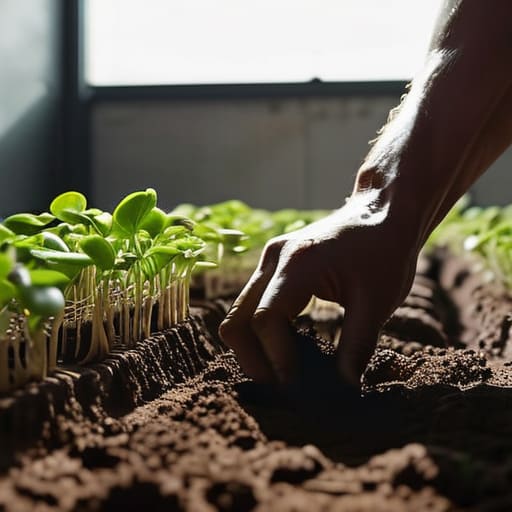
As we look back on what we’ve discussed, it’s clear that starting a fitness journey is much like preparing a new field for planting. You cannot simply throw seeds at the ground and expect a bountiful harvest by morning. We’ve talked about how neglecting your form is like planting in shallow soil—it might look fine at first, but it lacks the structural integrity to survive a storm. Similarly, ignoring the warning signs of overtraining is akin to over-fertilizing; you might see a quick burst of growth, but you’ll ultimately exhaust the very nutrients your body needs to sustain long-term health. Success in the gym, much like in my rooftop greenhouse, requires a disciplined respect for the natural rhythms of growth and recovery.
I want you to remember that progress is rarely a straight line, and that is perfectly okay. There will be seasons of intense growth and seasons where you must simply focus on maintaining what you have built. Don’t let the desire for immediate results rob you of the joy found in the process itself. If you approach your training with the same patience I use when tending to my bees, you will find that the most enduring strength comes from consistency and care. Keep your eyes on the horizon, stay mindful of your body’s signals, and trust the slow, steady work of cultivation. You are building a legacy of health that will serve you for a lifetime.