Did you know good animal husbandry can up livestock productivity by 30%? Keeping livestock healthy is key for farmers and ranchers’ success. Dr. David Shirbroun, from Boehringer-Ingelheim, highlights the need to put livestock health first through proper care.
Animal husbandry is more than breeding and caring for farm animals. It’s crucial for the health and output of livestock. By making environments stress-free, keeping cattle safe from predators, and giving them balanced diets and clean water, you can grow healthy, disease-resistant animals. Starting disease prevention early, vaccinating cows, and talking to local vets are essential for keeping cattle in top shape.
Key Takeaways
- Effective animal husbandry practices can boost livestock productivity by up to 30%.
- Providing a stress-free environment is essential for cattle health.
- Proper diets and clean water sources are fundamental for animal care.
- Early disease prevention strategies include vaccinations and adequate colostrum for calves.
- Consulting local veterinarians for both preventative and treatment measures is crucial.
The Importance of Animal Welfare in Livestock Health
Ensuring good welfare for livestock is key to maintaining healthy farm animals. Proper care boosts animal health, farm productivity, and helps the agriculture sector.
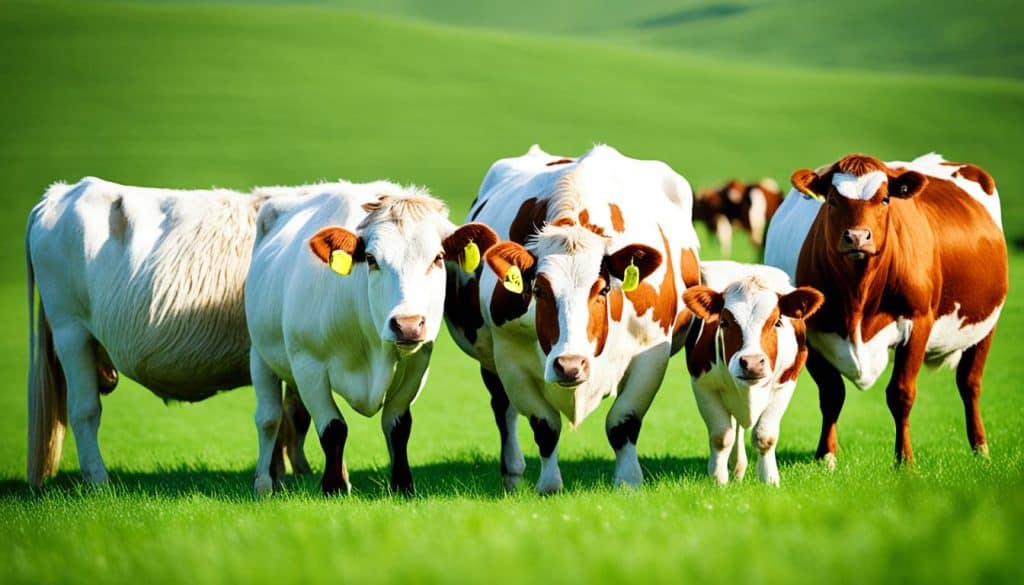
How Animal Welfare Impacts Productivity
Improving animal welfare in farms can lead to more productivity. Research in countries like China and India shows better welfare means better meat quality. This boosts farm yields and profits.
Better welfare also means lower risks for brands and appeals to consumers. People prefer meat from animals treated well, offering a marketing edge.
Stress-Free Environments for Livestock
Keeping animals stress-free is vital for their welfare. Dr. Shirbroun says they need protection from bad weather and access to water and food. These steps keep animals healthy and growing well.
Good housing is also important. It should not be overcrowded or poorly ventilated, as that can spread diseases. Proper living conditions lead to healthier and more productive livestock.
The Role of Nutrition in Animal Welfare
Nutrition is crucial for animal welfare and farm output. Animals need the right foods for their stage in life and purpose. This keeps them healthy and improves growth and reproduction.
Better nutrition also means fewer medical expenses. It helps avoid diseases related to poor diets. This shows how proper nutrition benefits animals and farming financially.
Key Components of a Strong Animal Husbandry Program
Establishing a solid animal husbandry program is crucial for healthy and productive livestock. It combines caring for the animals’ living conditions, protecting them, and providing the right food and clean water. Let’s explore these important components more closely.
Environmental Considerations
Good animal husbandry includes managing the environmental aspects of farming. It means setting up health and safety programs for everyone around the animals. These programs should have tests and vaccines ready. Also, having disaster plans can keep both animals and people safe if something goes wrong. Being prepared is essential.
Protection from Predators
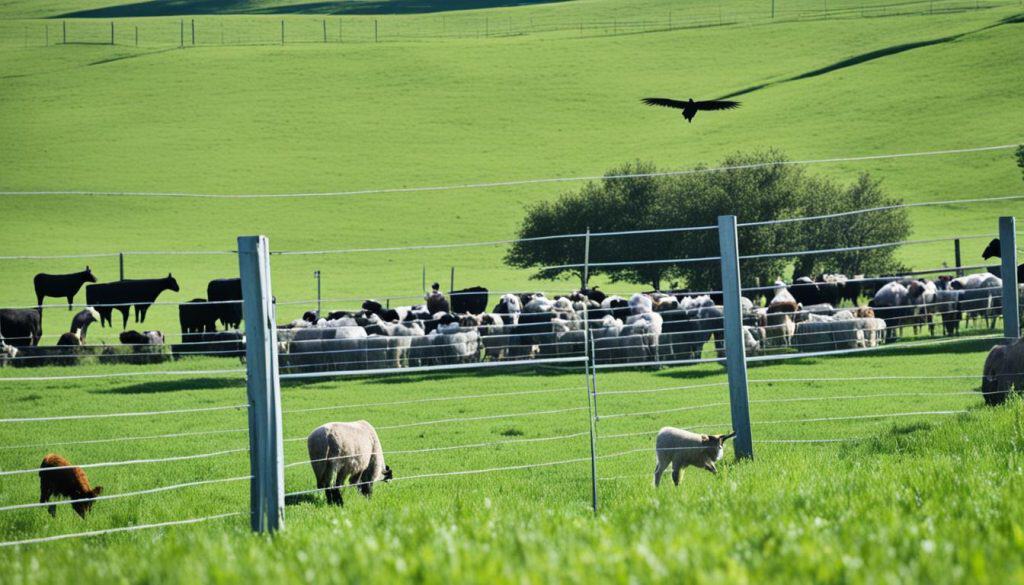
Keeping livestock safe from predators is key. Predator control helps create a calm environment for the animals. Secure shelters and safety measures are important to stop threats. Safe animals are happy and more productive.
Nutrition and Clean Water Supply
Getting the right food and water is basic but very important. Nutritional planning for livestock ensures animals get quality food and plenty of clean water. Animals do better when their diet is good and they’re well-hydrated. Water is especially vital.
It’s also important to keep a positive atmosphere on the farm. Talking well with employees, vets, and feed experts is key. Being detailed and managing things before problems occur helps a lot. Recognizing and rewarding good work makes the husbandry program stronger.
The Science Behind Livestock Breeding
Livestock breeding combines animal reproduction, genetics, and genetic management. It aims to improve herd health and productivity. Modern breeding programs build on these areas for sustainable herds.
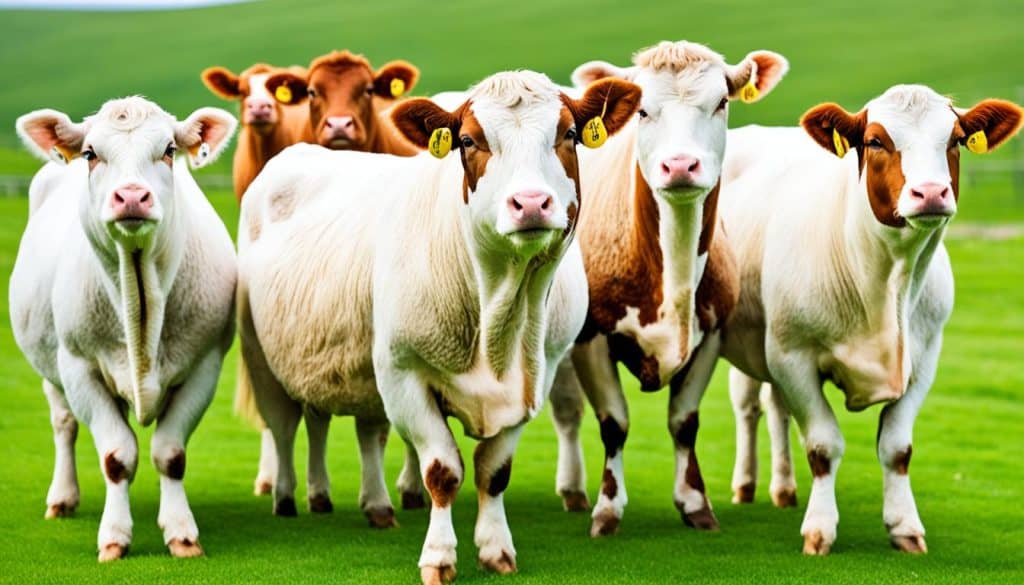
Genetic advancements have changed the game since the 1980s. For example, improved hens now lay over 250 eggs a year. Meat chickens have also been bred to grow faster on less feed.
Research in dairy cattle has led to higher quality herds through the proven sire system. Breakthroughs in animal reproduction have also upped birth rates. Managing diseases like Marek’s in chickens has cut sickness rates by 90% and increased egg production by 4%.
Good genetic management looks at the impact on farm economics too. The global demand for meat and dairy is set to jump 80% by 2030. Livestock uses about 40% of the world’s farming land to produce 20% of our calories.
New farming tech helps boost livestock genetics efficiency. Drones and sensors are part of this. Robots also help farmers manage herds better and increase production. These tools help make animal reproduction more sustainable and ethical.
Effective Feeding Practices for Optimal Livestock Health
Getting livestock health right needs good feeding practices. It’s crucial to know what your cattle need nutrition-wise. Their needs change with age, breed, and why you’re raising them. So, creating a feeding plan that fits is key.
Understanding Nutritional Requirements
Every animal needs different food. For example, dairy cows that are feeding calves need lots of a specific protein. But, growing pigs do better with a little less protein to avoid wasting nutrients and hurting the environment. It’s all about getting the right mix of nutrients.
For pigs and horses, lysine is important. Chickens need methionine. Making sure they get what they need helps them stay healthy and productive.
The Role of Forage
Forage gives livestock important fiber and nutrients. It’s the bulk of what cattle eat, especially those grazing on different plants. It’s crucial to keep high-quality forage available all year. This keeps your animals well-fed and healthy.
Supplementing with Concentrates
To give livestock enough energy, adding concentrates to their diet is often needed. This is especially true for animals raised in tight spaces. Grains can help a lot. But, we must deal with phytate-bound phosphorus in animals like pigs and chickens. Adding phytase, an enzyme, makes phosphorus easier to absorb. This boosts growth and health.
Seasonal Adjustments in Feeding
The season can change how much food animals need. In cold weather, they burn more energy to stay warm. So, feeding plans must change to avoid nutritional shortages. Keeping an eye on and adjusting what you feed them through the year is essential. It keeps them healthy and productive no matter the season.