Did you know the global population is now 7.6 billion and growing? This growth puts a lot of pressure on our planet’s resources. Countries like the United States use more resources than developing countries. This means we must manage our resources carefully. We need to be sure we can meet our needs today without stopping future generations from meeting theirs.
Maximum sustainable yield (MSY) lets us use as much from nature as we can without using it all up. Sustained yield, however, is about using resources at a rate that lets them keep coming back. Both ideas help us use resources in a way that keeps them around for the future. They help us find a balance between using resources and letting them grow back. This is key for the economy and for making sure resources last.
To keep this balance, we have to manage resources well. Overusing them can lead to big problems, like the Dust Bowl in the 1930s. This disaster was caused by overusing resources and bad management. We need strategies that help us grow without making the same mistakes. It’s important for our future and for the next generations.
Key Takeaways
- Global population increase underscores the urgent need for effective resource management.
- Developed nations consume a larger share of global resources, intensifying the need for sustainable practices.
- Maximum sustainable yield and sustained yield are essential strategies in sustainable resource management.
- Sustainability involves balancing current needs with the well-being of future generations.
- Proper resource management can prevent historical environmental catastrophes like the Dust Bowl.
Understanding Sustainable Yield and Its Importance
Sustainable yield is key for keeping our world in balance. It works against the pressure on our renewable resources. It’s about taking from nature without harming its future bounty. This way, our environment and economy can thrive for a long time.
Take forestry as an example. If we get the math wrong on sustainable yield, we could harm ecosystems. Sustainable yield in forestry means cutting just enough trees without hurting future growth. Sweden and Russia use this approach to keep their forests productive.
In managing fisheries, sustainable yield guides how many fish we can catch safely. This approach has grown smarter over time. It changes as nature and human activity do. This keeps fish plentiful and marine life balanced.
Sustainable yield also applies to groundwater use. We calculate a safe amount to use without draining aquifers. Thanks to new technologies, like desalination, we find new ways to get water. This helps protect our ecosystems while we meet our needs.
Using sustainable yield, we look after resources like timber and fish for the future. It ensures these resources last indefinitely. It’s a key part of keeping our planet healthy for ourselves and the next generations.
The Key Differences Between Sustained Yield and Maximum Sustainable Yield
It’s essential to know the difference between sustained yield and maximum sustainable yield (MSY). Each plays a key role in how we manage resources. But, they’re different in their goals, definitions, and how they affect the economy.
Definitions and Objectives
Sustained yield is about keeping resources available for the long run without using them up. Its main aim is to make sure we take out resources at the same rate they can grow back. This helps us use them over and over. On the other hand, maximum sustainable yield tries to get the most we can from resources without using them up. It looks for the biggest amount we can take regularly.
Approach and Risk
With sustained yield, the focus is on keeping resources safe by not taking too much. This careful approach lowers the chance of running out of resources. But, maximum sustainable yield plays closer to the edge. It goes for the biggest take possible, which brings more danger. Changes in the environment can really affect how much we can take.
Economic Considerations
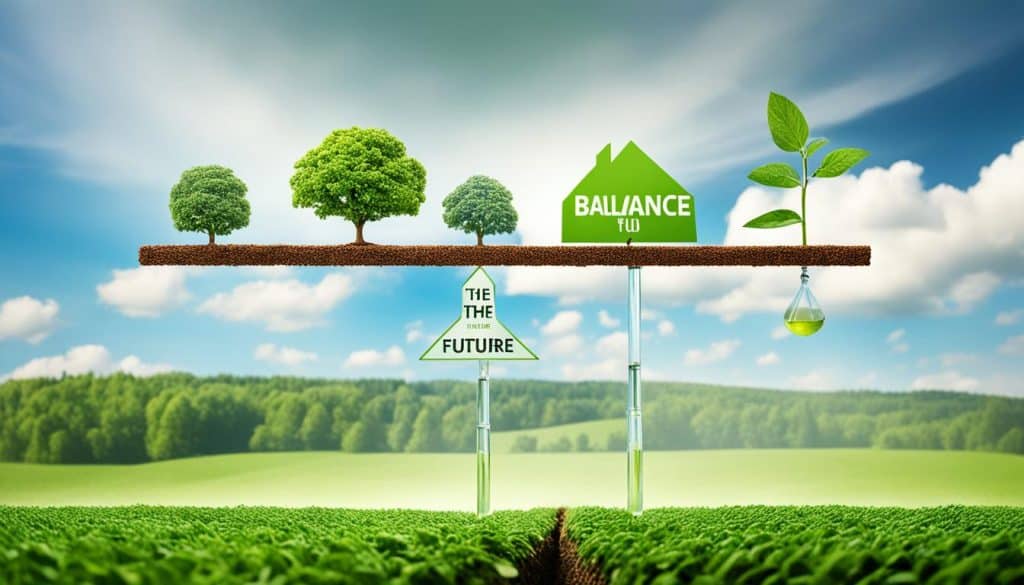
Choosing between sustained yield and maximum sustainable yield also depends on money matters. Sustained yield aims for steady, long-term economic gains by putting resource health first. However, maximum sustainable yield might make more money quickly by taking more resources out. In places like Australia, managing fisheries to have a bit more biomass than needed for MSY helps. This extra step boosts economic gains and lowers the risk of overfishing and losing fish stocks.
The Role of Resource Regeneration in Maximizing Sustainable Yield
Resource regeneration is key to keeping yields sustainable. It means making sure natural resources keep coming back. We achieve this by balancing what nature offers and how we use it. This allows us to support regenerative practices, environmental preservation, and responsible harvesting.
Natural Resource Replenishment
Refreshing natural resources depends on the ecosystem. In forests, certain trees like sugar cane and maple can grow back from their roots or stumps. Agriculture boosts yields by up to 30% through use of fertilizers, water, and pest control.
In fishing, improving salmon and trout numbers has been a win. By carrying out methods like egg fertilization the right way, we see more fish. This makes more resources available without harming nature.
Human Impact and Environmental, Changes
Our actions have a big impact on the environment. When we harvest resources without much thought, it can harm more than help. For example, using nets that catch everything can be really bad for the ecosystem. Switching to better methods can decrease damage by 25%.
In fields like agriculture, only allowing hunting of adult male deer helps keep populations stable. Fighting pests and diseases ensures crops and livestock stay healthy. By doing these things, we achieve a good balance. It keeps productivity high while protecting the environment.
Balancing Economic Efficiency and Environmental Sustainability
To balance economic efficiency with environmental sustainability, we must look at resource use and environmental laws. The U.S. has managed to grow its economy without harming the environment more. This became possible after the Environmental Protection Agency (EPA) was started in the 1970s. Since then, there have been big improvements in how we use resources and protect the environment.
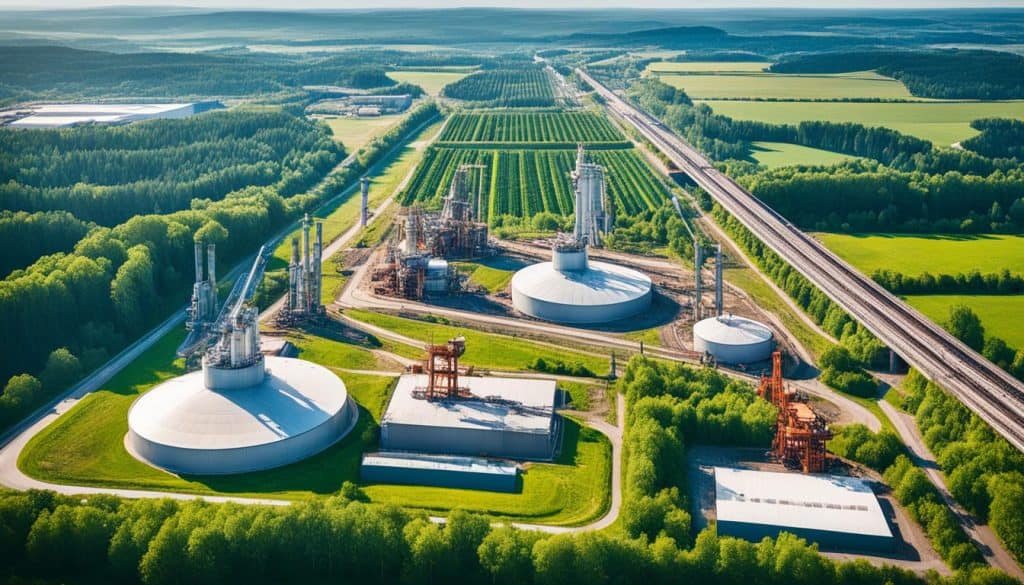
Air pollution control technologies have been a big help. They let power plants and vehicles lessen their environmental harm while still supporting the economy. For example, Los Angeles has cleaner air now than in the 1960s. Now, you can see the mountains from downtown again. Also, New York City stopped dumping sewage into the Hudson River and started treating it instead. This shows major progress in caring for our environment and using resources wisely.
Strategies for Efficient Resource Management
There are key strategies for managing resources well without stopping economic growth. Let’s look at some important strategies for this:
- Investing in green technology: New technology for pollution control, renewable energy, and water treatment shows we can grow our economy and protect the environment at the same time.
- Regulation compliance: Following rules about air pollution has let power plants and vehicles grow without making pollution worse.
- Integrating sustainability into organizational practices: Companies now look at how to use less energy and water and make less waste in their daily operations.
Case Studies and Real-World Applications
Looking at real-life examples helps us see how we can have sustainable economics. Take New York City, for instance. It made bike paths along the polluted Hudson River. This shows how careful city planning can help use resources better and still support the economy.
Also, young Americans are changing how they consume things. They are less interested in owning cars and prefer eco-friendly ways to get around, like ride-sharing and biking. This helps the environment and supports economic models that value sustainability.
These examples show that focusing economic growth on environmental sustainability is a good way to deal with climate change. We don’t have to stop making progress to do this.
Sustainable Development and Its Challenges
We face many hurdles in achieving sustainable development. The United Nations created 17 goals to guide our journey. Yet, reaching a future that’s eco-friendly has its obstacles. For instance, Russia and Ukraine are major wheat and barley suppliers, making up 30% of exports. Political tensions there can shake up the world’s food supply. This shows why we need reliable plans to face such challenges.
Our planet’s health is also at risk. Since 1960, we’ve lost a lot of our farmable land. This loss affects our food future and showcases the urgency for new solutions. Moreover, livestock takes up a big chunk of land, leading to more problems.
Politics can either help or hinder our sustainable development goals. Some governments stick with old energy sources, slowing progress. This makes working together globally even more important. There are big gaps in wealth and access to jobs between countries and city vs. rural areas. It makes achieving our goals even harder.
In sum, tackling the issues of sustainable development needs teamwork. We must strive for economic and environmental balance. It’s about finding ways to grow without harming our planet. By working together, we can aim for a fair future for everyone.