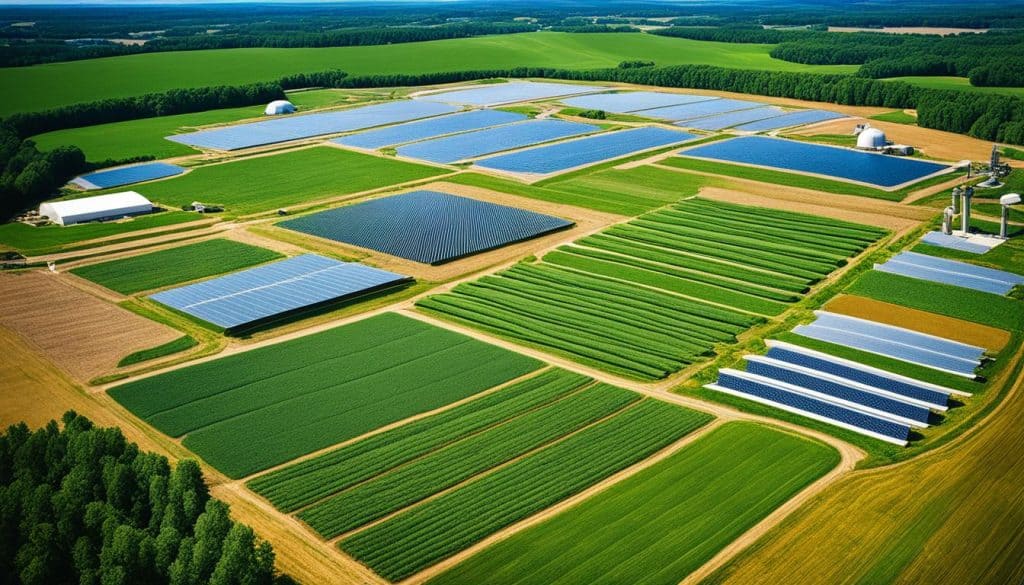
Did you know farms cause 24% of the world’s greenhouse gas emissions? This fact shows we need to farm more sustainably. Agroecology offers a way to farm that is good for nature. It looks at farming as part of nature. This way, we can grow food while caring for the earth and people too.
Agroecology suggests growing many kinds of crops together. This helps make the farm full of life and more productive. It also includes using compost and farming with less plowing. These help the soil stay healthy. The big aim is to let nature keep pests in check without using harmful chemicals. This makes farms that can take care of themselves, which is better for the planet.
Key Takeaways
- Farming is responsible for 24% of all greenhouse gas emissions, highlighting the need for sustainable practices.
- Agroecology promotes biodiversity through diverse crop cultivation practices.
- The approach includes eco-friendly practices like composting and green manuring to enhance soil health.
- Agroecology aims to reduce environmental impact and foster system resilience.
- Integrating socio-economic aspects, agroecology contributes to food sovereignty and community involvement.
Understanding Agroecology Principles
Agroecology was first brought up by Basil Bensin in 1928. It started to gain attention in the 1930s. It is a whole farming approach that combines ecological, social, and economic aspects. The goal is to create sustainable food systems that work in harmony with nature.
Definition and Philosophy
Agroecology uses ecological ideas in farming. It encourages practices that make farming sustainable for the long run. These practices decrease the need for external inputs and help farmers be financially independent. By working with nature, agroecology builds a strong and productive farming system.
Importance of Ecological Balance
Ecological balance is key in agroecology. It looks at how everything in farming areas connects. Focusing on sustaining the soil, saving water, and natural ways to control pests, agroecology aims to rejuvenate food systems. This approach is good for the environment, cuts costs, and helps farmers make a stable income.
The Role of Biodiversity
Biodiversity is vital for agroecology. It makes farming systems strong by having a range of organisms that keep the soil and crops healthy. With more variety, farms can better face pests, diseases, and climate issues. This means more security for our food and a stable ecosystem. Biodiversity is also good for both the planet and farmers’ wallets.
To wrap up, agroecology’s principles stress the need to farm in tune with nature. This approach is better for the earth and gives power to farmers. It works towards sustainable and tough farming areas.
Agroecology Practices for Sustainable Farming
Adopting agroecology is key for sustainable farms. This method enhances soil, saves water, and manages pests naturally. With intercropping, crop rotation, good soil care, and smart water use, farmers build strong ecosystems.
Intercropping and Crop Rotation
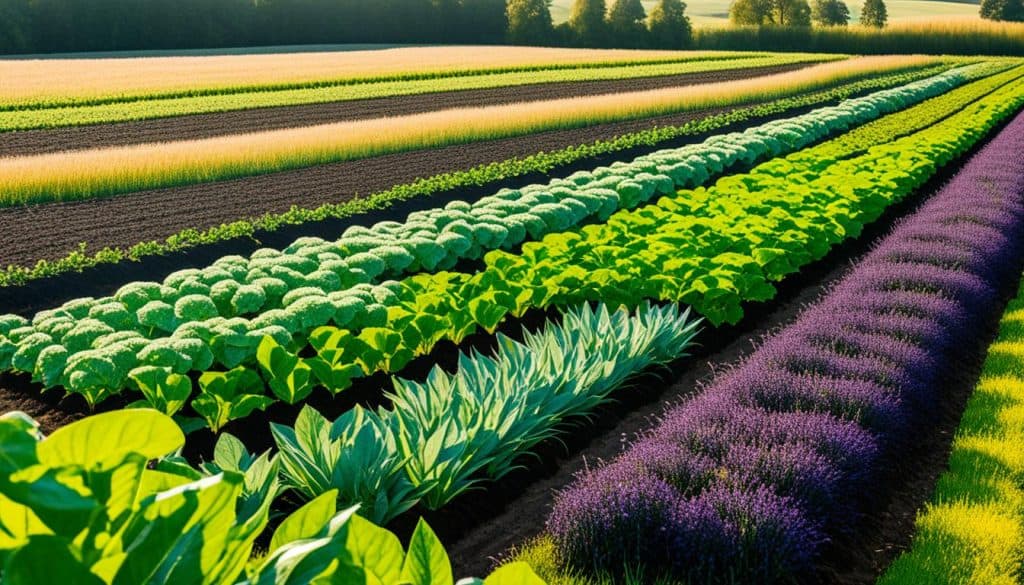
Intercropping and crop rotation are key in agroecology. Intercropping grows different crops together to increase variety and reduce pests. This method helps control pests naturally. Crop rotation stops soil from losing nutrients and breaks pest life cycles, making soil richer and ecosystems healthier.
Soil Fertility and Health
Keeping soil healthy is essential. Adding organic matter, like compost, boosts nutrients and helps good microbes thrive. Using less tillage and cover crops also stops erosion and improves soil quality.
Water Resource Management
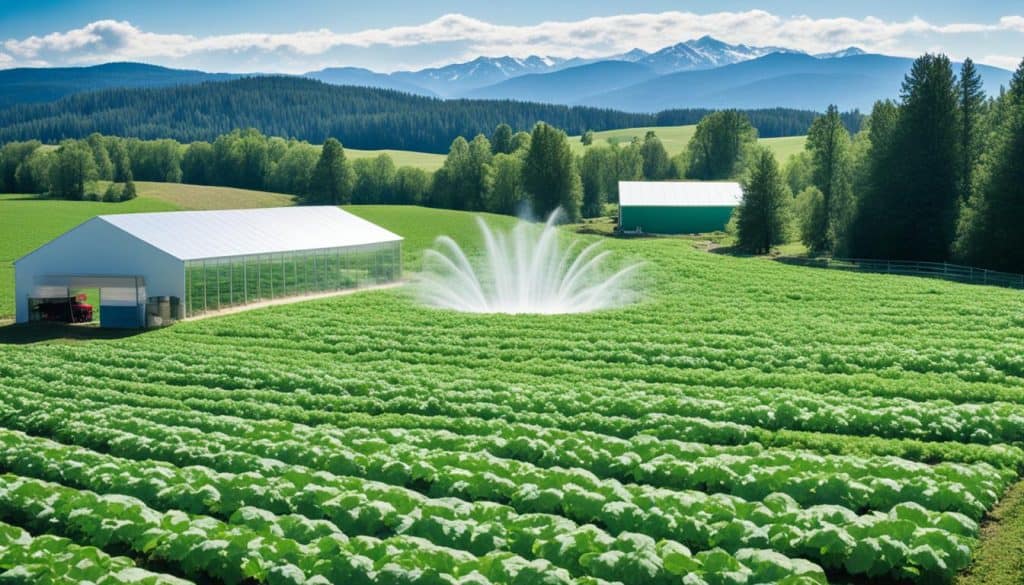
Water saving supports farming’s future. Drip and sprinkler systems cut down water waste. Mulching and using crop leftovers keep soil moist and plants healthy.
Natural Pest Control
Natural pest control cuts down on chemicals. It uses helpful insects, pest-resistant crops, and promotes diversity. These methods protect crops and keep the farm’s natural balance.
Benefits of Integrating Permaculture and Agroecology
Integrating permaculture with agroecology supports sustainable living. It encourages development of ecosystems that are efficient and regenerative. This creates a holistic approach, benefitting humans and the environment alike.
This fusion leads to regenerative agriculture. It boosts the health of the soil, water, and biodiversity.
Design Principles of Permaculture
Permaculture is a design system using natural patterns for sustainable agriculture. It was started in the 1970s by Bill Mollison and David Holmgren. It’s about ecological and sustainable methods.
Its core principles are interesting:
- Observing and interacting with nature to identify patterns and relationships.
- Capturing and storing energy, ensuring efficient use of resources.
- Obtaining a yield from the environment while enhancing it.
- Applying self-regulation and feedback to refine practices continuously.
- Using renewable resources and services to reduce environmental impact.
Synergies with Agroecology
The blend of permaculture and agroecology offers many benefits. Permaculture provides a structured design system. Agroecology focuses on biodiversity, through intercropping and ecological farming.
These methods boost soil fertility and water management. Together, they make sustainable living feasible on various farm sizes. They show how to achieve regenerative agriculture effectively.
Community Involvement and Social Factors
Community farming is key in merging permaculture with agroecology. It promotes local participation, empowering rural communities. It strengthens family farming and supports social justice and equity.
Such practices allow everyone in the community to take part. With platforms like Worldpackers, people can join agroecological projects around the globe. Together, we build a resilient, sustainable agricultural system.
Challenges and Solutions in Agroecology
Agroecology could change how we farm for the better, but it’s not easy. The way we’ve been doing things since the Green Revolution harms our planet. It’s hurt our ecosystems, polluted our soil, and made us lose too many plants and animals. Plus, it often forgets about the struggles of rural people, especially in the Global South.
About 2 billion hectares of land are in bad shape, affecting 1.5 billion folks. Using agroecology, like rotating crops and fighting pests naturally, can help our soil stay healthy. But, it’s not a one-size-fits-all deal. It needs to fit the local area. We need to come up with new ways to use agroecology to fix these problems and keep our environment strong.
Changing climates make farming even tougher, needing solid and adaptable methods. Managing our water better is one way to deal with this. Working together – farmers, communities, and governments – is key to make agroecology work everywhere. When we all pull together, we can create food systems that don’t break the bank or the planet. Did you know, the hidden costs of how we get our food were about $12,700 billion in 2020? That’s 10% of what the whole world earns in a year.