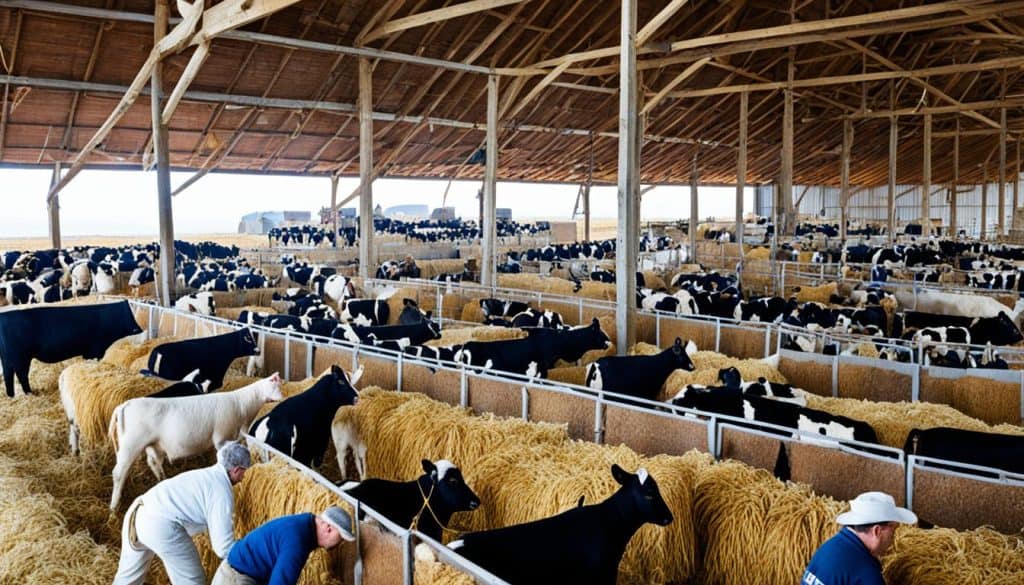
Did you know water is vital for livestock, needing to be available all the time? This shows a key point: managing livestock well in rural areas depends on many important practices. These practices help keep animals healthy and make farms more productive. Along with water, cleanliness, dryness, and gentle handling are crucial. They are the foundation of successful farming in rural areas.
Managing livestock isn’t just about caring for animals. It’s also about being ready for surprises and talking well with staff and partners. Knowing your farm well helps you quickly adjust to changes. This makes for a productive farm. UMN Extension says being able to manage well is key to a farm’s success. Making sure your farm runs smoothly and creating a positive work culture makes a big difference.
Key Takeaways
- Water is the most vital nutrient for livestock, requiring constant availability.
- Core practices such as hydration, cleanliness, and low-stress handling significantly improve animal health and productivity.
- Effective communication within the farm ecosystem strengthens operational effectiveness.
- Flexibility and preparedness in handling unforeseen challenges lead to better livestock outcomes.
- Evaluating farm practices and striving for operational efficiency are crucial for success.
- A positive farm culture enhances teamwork and pride among employees.
Essential Components of Basic Animal Husbandry
Basic animal husbandry is key for the health and output of livestock. It’s important to keep things clean, handle animals gently, and make sure they have water and shelter. These steps keep standards high on a farm.
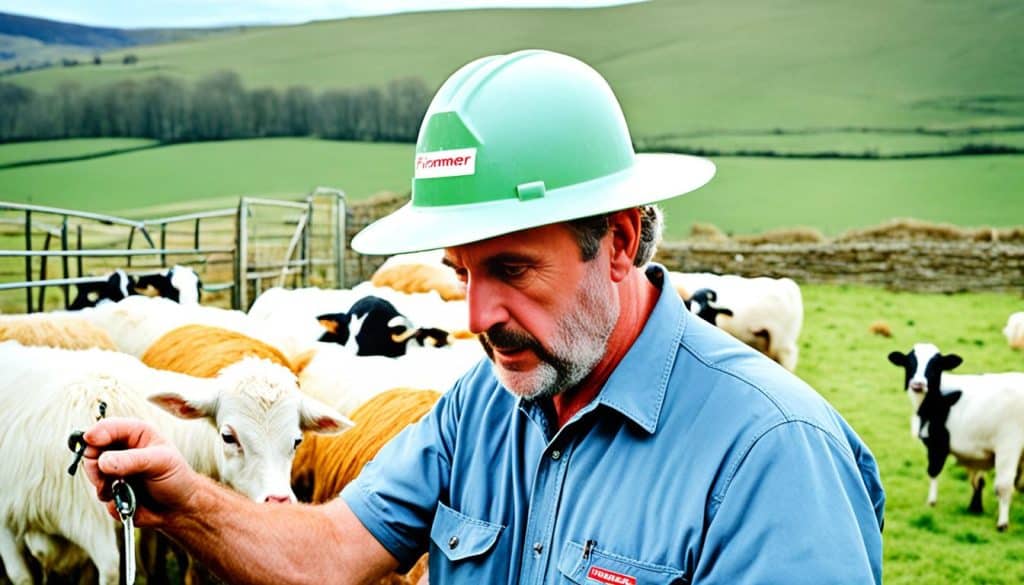
Importance of Cleanliness
Keeping things clean is a top priority. It helps stop diseases and makes animals more comfortable. UMN Extension says being clean also makes farms run better.
Low-Stress Handling Techniques
It’s important to handle animals in a way that doesn’t stress them. This helps them stay healthy and productive. It makes farm operations smoother, too.
Water and Shelter Management
Animals always need access to water and a good place to shelter. Water is a must-have, and shelter keeps them safe from bad weather. Good management of these shows a farm’s dedication to animal care.
Best Nutritional Practices for Livestock
It’s crucial to follow the best nutrition rules to keep livestock healthy. This ensures farming is both profitable and sustainable. Healthy animals start with a healthy gut. So, proper nutrition is key.
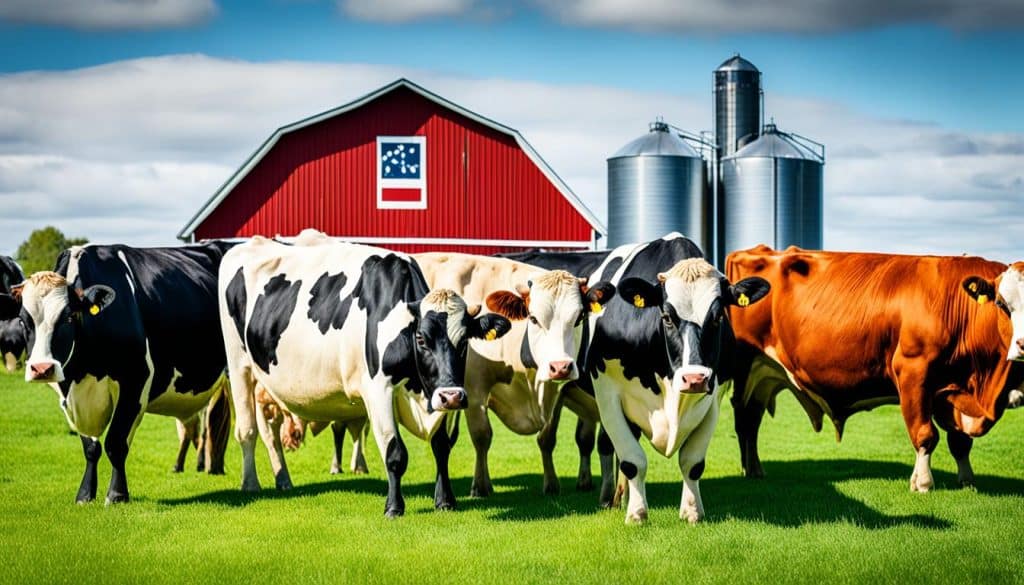
Balanced Diet and Ration Formulation
A balanced diet is vital for livestock’s growth, health, and ability to reproduce. It’s important to mix their feed correctly. This mix provides them with all the nutrients they need.
Studies show good nutrition can boost livestock productivity by up to 22%. It also fights off diseases related to poor diet. Animals need minerals like calcium and zinc for good health and reproduction. Getting the feed mix right is essential, especially for different animals and their growth stages.
Ensuring Water Availability
Livestock need constant access to clean water to stay healthy. Proper water supply can cut disease rates by 80%. Water helps with eating, digesting, and body functions.
So, keeping water sources clean and full is a basic but vital job in farming.
Quality of Feed and Ingredients
The quality of what livestock eat affects their health and production. Good feed means healthier animals and more successful farms. High-quality feed improves digestion, production, and reproduction.
Managing feed quality well can lessen baby animal loss by 30%. It can also boost animal health by up to 75%. What’s planned on paper for feeding needs to match what actually happens to keep animals at their best.
In conclusion, good nutrition practices are essential in livestock farming. They not only increase productivity but also enhance the health and sustainability of the farm. Nutrition is a key part of managing livestock well for the best results.
Effective Communication Strategies in Farm Management
Successful farm management depends on clear communication. It keeps everyone in the loop, improving readiness and protocol follow-up. Let’s explore the important aspects of these communication strategies.
Importance of Clear Communication
Clear communication is key in farm management. Studies show that 85% of good communication is setting clear goals in writing. This makes things transparent and gives a clear plan for the team. Using SMART goals makes objectives clear, which helps farm operations run smoothly.
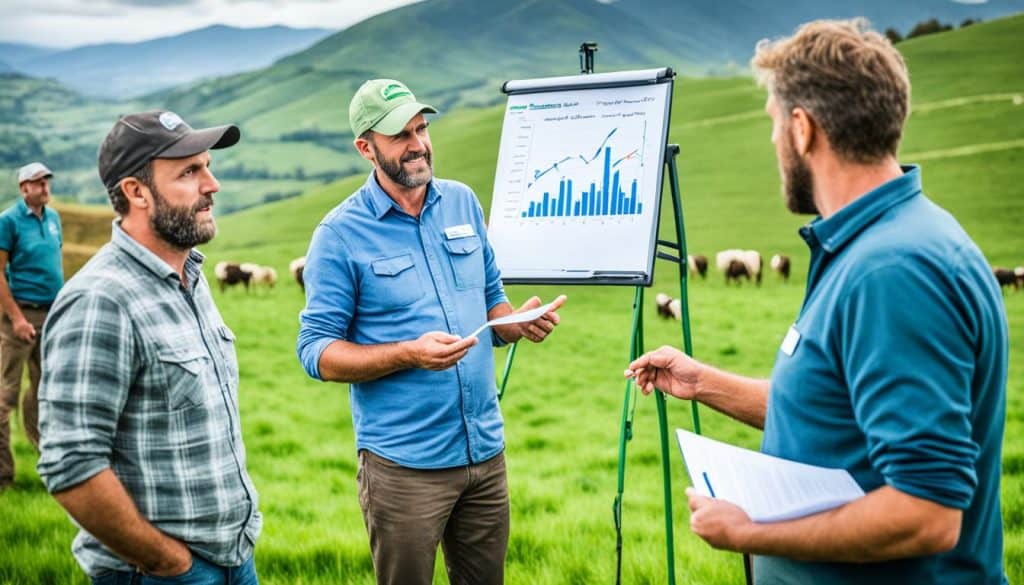
Employee Training and Protocols
Training employees is fundamental in managing a farm well. It’s vital to have detailed training protocols, especially in diverse environments. Clear communication during training ensures everyone knows their duties. This boosts productivity and reduces mistakes.
Checking in with employees boosts success by 40%. It creates a strong support system in the workforce.
Use of Visual Aids for Better Storytelling
Visual aids like diagrams and videos help communicate better, especially where people speak different languages. These tools make complex info simpler. Research shows that visuals improve learning and remembering better than text alone.
Using visuals in training clears up confusion and makes the team more efficient. In summary, clear communication, good training, and visual aids are crucial for farm management. These methods improve readiness, increase productivity, and help farms adapt quickly.
Rural Livestock: Adapting to Challenges and Changes
The rural livestock sector faces many challenges, such as economic changes and environmental effects. The economy has shifted, leading to more large-scale farms. For example, broiler production jumped 60%, fed-cattle 100%, dairy 240%, and hog by 2,000% from 1987 to 2002. Surveys show this trend is continuing, making it clear that farms need to adapt well.
Environmental issues like pollution and climate change also impact livestock farming. Farming communities are especially vulnerable to these changes. Agriculture supports 21 million jobs and adds about $1 trillion a year to the U.S. economy. This highlights the importance of sustainable farming.
Adapting to these changes is a must for livestock management. Farms are using new technologies and following government rules to improve. Practices like better feed and water management help address several issues.
For example, big dairy farms spend less money than small ones, showing the benefits of growing operations. In 2005, the biggest dairy farms had much lower costs than the smaller ones.
It’s also key to deal with health problems from antibiotics and help animals deal with heat stress. The FAO and other groups offer policies and support to help farmers. Efforts like the African Sustainable Livestock 2050 and the Koronivia Joint Work on Agriculture aim to make farming better worldwide.
By using these new methods, livestock owners can face today’s challenges head-on. They can succeed in this changing world, making farming better for the economy and the environment.
Creating and Maintaining a Positive Farm Culture
Farm culture is all about shared attitudes, values, and practices. These aspects are key for a farm’s success. A positive farm culture should match the farm’s goals, like being clean, safe, and efficient. Now, let’s look at how to build this kind of culture.
Establishing Core Values and Goals
Over 90% of top farm businesses clearly define their mission and vision. Setting and sharing core values and goals guides everyday actions and choices. The University of Wisconsin-Division of Extension has a program called “Becoming the Employer of Choice.” It teaches farm managers to grow a positive culture at work.
Hiring and Training for Cultural Fit
Finding people who share the farm’s values is crucial. Around 78% of farms saw better staff retention after applying ethics policies. Regular training helps staff live by these cultural values, boosting their commitment. The FARM 2019 Human Resource manual has helped farms create a strong culture.
Incorporating Feedback and Reward Systems
A good feedback and rewards system boosts employee motivation. About 95% of farms say recognizing great work improves morale and productivity. Feedback helps everyone contribute to the culture’s growth positively. When most farm workers feel valued, it lifts their spirits and dedication.
Strategies for Sustainable and Efficient Farm Management
Sustainable livestock farming matters a lot. The Food and Agriculture Organization (FAO) states that emissions from livestock can go down by 30% with better practices in animal health and care. These steps are key to making farms more efficient and helping the environment.
In places like Scotland, tackling diseases in cows and sheep lowers emissions by 4.5% in beef production. With ruminants being a big source of greenhouse gases, improving animal health is vital. It boosts farm productivity and helps the planet.
Changing what animals eat helps cut methane emissions. Cows fed diets with tallow or sunflower oil produce 14% less methane. And adding sunflower seeds to their diet can drop methane by 33%. Feeding animals better is crucial for greener farming.
New feed additives like 3-NOP can cut methane from dairy cows by up to 30%. This shows how new research can help farms work better and be more eco-friendly.
Since World War II, technology has helped farms produce more food and fiber. But this growth has sparked a shift towards farming that’s good for the planet, profitable, and fair.
Sustainable farming cares for our land and people. It makes sure we farm well today without hurting tomorrow’s farms. It changes as new challenges arise and different viewpoints are shared.
Research shows that diverse and flexible farms are more likely to last. It takes many people working together to make farming work well into the future.
No-till farming can cut soil erosion and use less fuel. Drip irrigation saves water and can increase crop yields by 50%. Cover crops can also lower fertilizer costs and improve soil.
By using natural pest control and crop rotation, farms can lessen their environmental impact. These actions help make farming sustainable and protect our environment.
Leveraging Technology for Modern Livestock Management
In today’s fast-changing farm world, using tech is key to better livestock care. Agricultural tech helps turn old ways into smart, data-using methods. This change boosts work efficiency and supports farming that’s good for the planet.
Precision farming tools like sensors, drones, and data analysis are vital. For keeping an eye on animal health, making sure they eat right, and checking the weather. For example, sensors track the conditions in which animals live, ensuring they are just right. Drones help check the farm’s borders and find any dangers, protecting the animals on a big farm.
There’s also huge progress in biotech that helps animals stay healthy and resist diseases better. Like creating new vaccines and fighting off parasites with smart tech. By using smart feeders that know how much to feed animals, farms cut down on wasted feed and make their animals more productive. These tools, along with specialized software, help predict and prevent problems, making farms more money with less harm to the environment.
Yet, moving to these high-tech tools can be tough. It means spending a lot on equipment, software, and training people to use it all. It’s vital for farmers to buy these tools and teach their team how to use them right. By mixing cutting-edge tech with smart decisions, farmers can tackle modern farming challenges. They ensure farming is profitable and kind to the earth in the long run.>