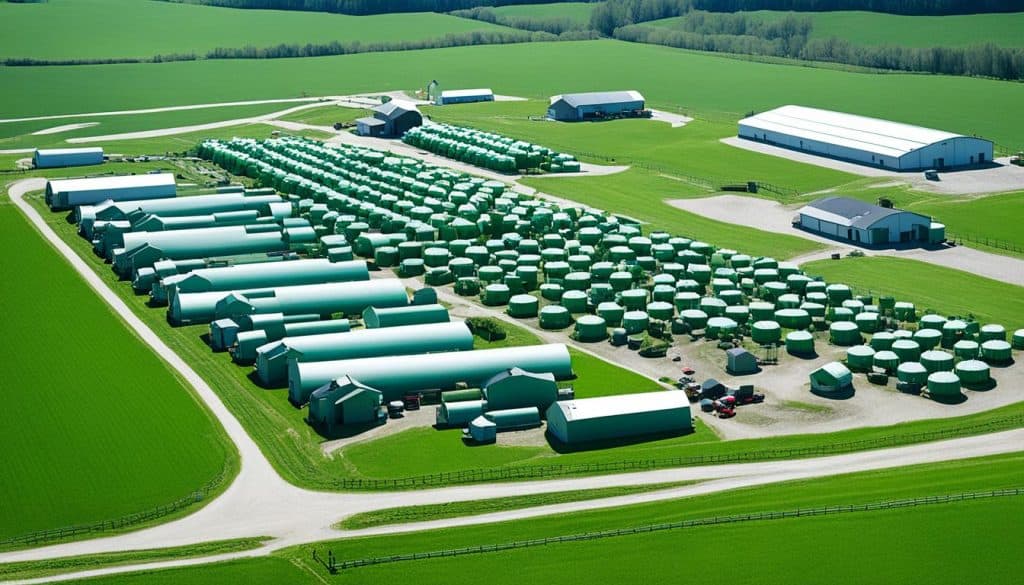
Well-maintained farm infrastructure can increase land use efficiency by up to 30%. This leads to big gains in farm efficiency and profits. These improvements are vital for any successful farming operation.
To build a successful farm, carefully evaluate existing resources and plan improvements. These improvements must meet the needs of your agricultural enterprise. This requires checking current infrastructure, studying feasibility, and planning for the future.
Necessary infrastructure might include suitable livestock housing, advanced storage facilities, and specialized buildings for processing. By managing potential costs wisely, farmers can run an efficient and profitable farm.
Key Takeaways
- Assessing and planning farm infrastructure is vital for enhancing agricultural efficiency.
- Infrastructure improvements should be tailored to the specific needs of the farming operation.
- Effective livestock housing and storage facilities are foundational components.
- Tracking potential costs ensures the feasibility and success of the farm enterprise.
- A well-maintained infrastructure contributes significantly to overall farm success and productivity.
Understanding Essential Farm Buildings
Farm buildings are key to a farm’s success. They help with many farming tasks. This includes taking care of animals and storing farm goods. A good layout of these buildings makes farming easier. It also keeps animals healthy and helps farms run smoothly.
Livestock Housing
Good homes for animals are important. They keep animals healthy and productive. Different animals need different kinds of homes. For example, dairy cows need different spaces than chickens or pigs. Good air, the right temperature, and cleanliness are important for all animal homes.
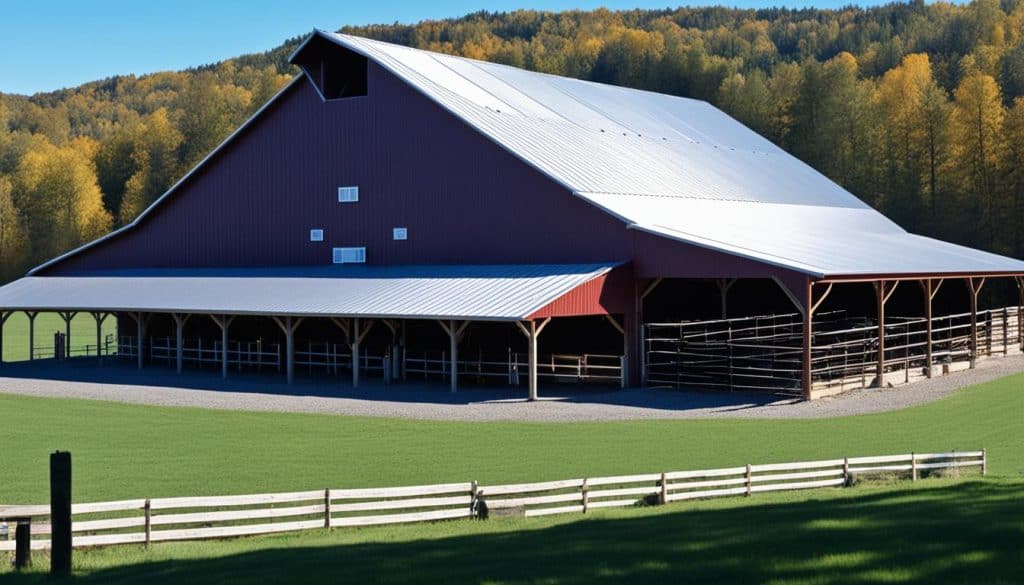
It’s also key to have enough room for animals. They need space to act naturally.
Storage Facilities
Storage areas are important for keeping feed and equipment safe. They help stop spoilage and keep pests and moisture away. When livestock feed and hay are stored right, they keep their nutrition. This keeps animals healthy. Using cool storage helps keep perishable items fresh longer.
Specialized Structures
Farms often need special buildings like greenhouses, barns, and sheds for packing. Greenhouses need a lot of sunlight and good watering systems. Central spots for processing crops help things run smoothly. These places need to wash, sort, and pack crops. Keeping them cool keeps the crops fresh.
Checking older buildings like barns is important. Renovating or building new ones can make a farm work better. Sometimes, renting extra space is a smart choice for growing farms.
The Role of Fencing in Livestock Management
Fencing is very important in managing farm animals. It keeps the animals safe and in one area. As we have more farm animals, the need for good fencing grows. Good fences help farmers manage their animals and land better than old ways.
Types of Fencing
There are different fences for different types of animals, such as:
- High Tensile Electric Fencing: Great for cattle and horses. It’s strong, saves money, and helps separate sick animals for better care. Also, it’s good for moving animals to different grazing spots.
- Mesh-style Fencing: Perfect for goats and sheep. It keeps them in and stops them from bothering neighbors.
- Barbed Wire Fences: Works well but needs careful handling to avoid hurting animals or people. Best used with cattle when watched closely.
- Wood Fences: They’re classic and easy to build but don’t last very long.
- Hedges: Living fences look nice and don’t cost a lot, but they take a lot of work to grow big.
- No-fence Control Technologies: These use GPS and are great but cost a lot upfront. They’re worth it for their accuracy and convenience.
Installation and Maintenance Tips
Putting in a fence right and keeping it up is key to its success. Here are tips to help:
- Grounding: For electric fences, good grounding is a must. You need three ground rods for each joule of power to work right.
- Wire Selection: Using 12.5 gauge wire is best. It conducts electricity well and lasts a long time without rusting.
- Voltage Requirements: Keep the voltage at least 2.0 kV. It ensures the fence can shock animals to keep them in line.
- Temporary Fencing: Polywire is good for short-term use. It’s flexible but doesn’t conduct electricity as well as high tensile wire.
- Regular Checks: Check the fence often for any damage. Fixing problems fast keeps the fence working well and keeps animals safe.
For advice on the best fencing, talk to experts like the Natural Resource Conservation Service (NRCS) or your local Soil and Water Conservation District (SWCD). They know a lot about how to manage animals and land well.
Optimizing Pasture and Grazing Land
Making the most of pasture and grazing land is key for lasting grazing methods. A planned approach to using land and rotating grazing ensures soil health and animal welfare.
Land Allocation Per Animal
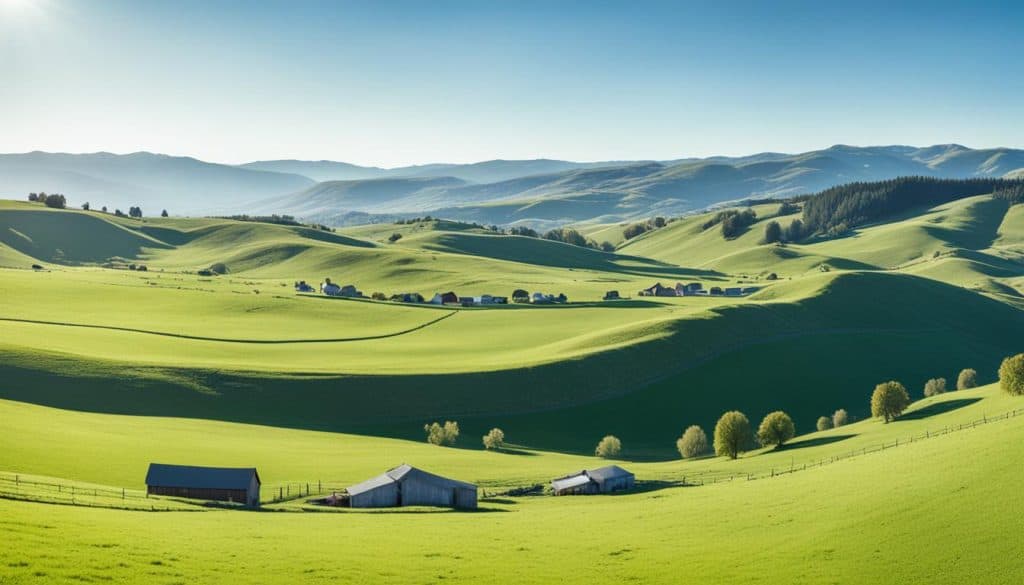
Knowing how much land each animal needs is vital for ongoing grazing. Usually, the right amount of land for livestock is around one acre per 1000 pounds of animal. Horses, needing more space for their grazing habits, require about 2.5 acres each. Getting the balance right improves pasture use and grazing land management.
Rotational Grazing Systems
Using rotational grazing can greatly better the health of pastures and increase forage growth. This method splits grazing land into smaller areas, moving livestock from one to the next. It keeps overgrazing at bay, protects soil, and helps maintain various plant types. This leads to grazing that’s sustainable, with healthier animals and more efficient land use.
To get the best results, setting up a regenerative grazing plan is suggested. It should have clear goals, support systems, maps, current infrastructure, types of forage, grazeable acres, and stocking rates. This all-in-one plan boosts both pasture and livestock management. It leads to higher productivity and profits over time.
Power Sources and Electrical Needs
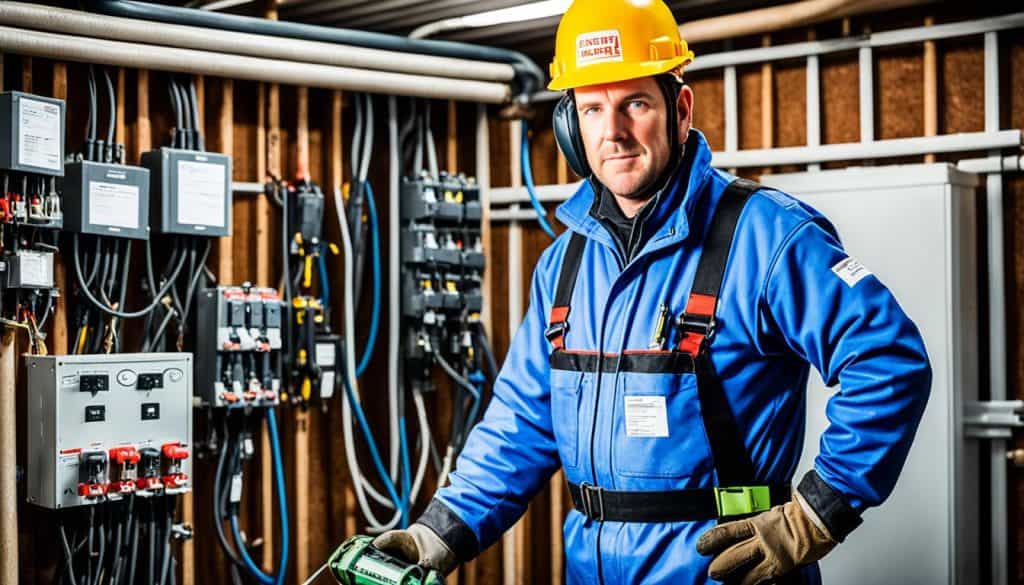
Every farm needs enough power for various tasks. It’s crucial to assess your electrical setup to see if you need stronger systems. Check your circuits to prevent overload and ensure safety. Getting help from a certified electrician can make sure your system meets standards and can support more usage.
Adequate Power Capacity
Modern farms use a lot of electrical tools, like irrigation and automated feeders. It’s important to have enough power for everything. Upgrading your electrical system makes your farm run smoother and avoids work stoppages. A safe electrical setup helps keep animals safe and boosts farm output.
Backup Power Solutions
Alongside regular power, having backup for emergencies is essential. Generators can keep things running when usual power fails. They maintain critical functions like climate control and watering. Farms often face unpredictable weather, so having backup power shows you’re ready for anything.
“Preparation is key—unexpected power outages shouldn’t hinder your productivity. Always plan for backup power solutions.”
Emergency systems protect your farm’s operations and give you peace of mind. They ensure you’re prepared for interruptions without losing crops or harming animals. A well-thought-out power plan is key for a farm’s success.
Farm Infrastructure for Long-term Livestock Success
For livestock success, strong farm infrastructure is a must. Proper farm infrastructure planning tackles key needs for sustainability and profit. This includes good farm buildings, reliable power, and strong fencing.
Planning for sustainable practices helps manage costs effectively. It also improves how well a farm operates. Even without help from government funds, this is possible. For example, using automated systems for milking and feeding cuts down on labor costs. It also reduces wasted feed, leading to better breeding results.
Automated systems for watering and climate control also make a big difference. They help manage resources well and take better care of the animals.
Getting involved in government programs and working with NGOs brings extra support. This can lead to stronger market ties and help the community. The S M Sehgal Foundation offers great examples of what can be done for long-term profitability.
Using modern tech for monitoring animal health is important too. It helps spot diseases early. This is key to keeping animals healthy and farms productive. Stopping diseases quickly can save a lot of money and improve how the farm is run.
View each investment in farm infrastructure as a step towards a lasting and profitable farm. With the world’s population expected to hit 9.5 billion by 2050, efficient farming is crucial. Using tech to handle labor shortages and support animal health is vital for today’s livestock farmer.
Embracing New Paradigms in Agricultural Development
It’s crucial to recognize the role of sustainable agriculture and capacity building today. Artificial intelligence (AI) and the Internet of Things (IoT) are transforming farms. With these technologies, farmers make smarter decisions, use less, and grow more. Moving towards smart farming is essential for lasting success in farming.
The advent of robotics and automation is changing agriculture. These innovations help with farming jobs, cut costs, and increase output. Yet, not everyone can get these new tools, which slows their widespread use. This gap needs closing to modernize agriculture fully.
Federal programs by the U.S. Department of Agriculture (USDA) are crucial in overcoming these challenges. They offer money and help so farmers can use these technologies. Federal nutrition programs also ensure farms last by improving food safety and adding income sources. With this support, farms can face climate change and other big challenges.
The path for agriculture in the future involves policy changes and building capacity. Precision agriculture and agritech will keep pushing agriculture forward. By adopting new ways and making technology available to all, we support farms that will thrive and last for years to come.