Did you know that by 2023, at least 32 states had embraced detailed policies for early literacy? This is to tackle the big challenges in education. That number shows only some of the big steps towards changing education. The field of education is always changing. Decisions on policies have big effects on students, teachers, and communities. Well-supported policies can really change the lives of kids. This is especially true for those hit hard by the pandemic and tough life situations.
After COVID-19, laws in many places started to focus on fixing learning gaps. They also worked on giving families more options, thinking of new ways to learn, and strengthening the road to college and jobs. These improvements show the progress we’ve made. But they also point out that we need to keep making smart policy choices. We need to face the educational issues of today and tomorrow.
Key Takeaways
- In 2023, 32 states adopted comprehensive early literacy policies.
- Both educational transformation and policy influence are crucial in addressing pandemic-induced learning loss.
- High-impact, evidence-based policies can drastically improve educational outcomes for struggling students.
- The role of policy influence is expanding to empower families and reimagine learning environments.
- Proactive policy-making is essential to confront both current and future educational challenges.
Transformative Education Policies: Addressing Learning Loss and Inequities
Educational reforms have made big steps in fixing learning gaps and ensuring all students have equal chances. The Brown v. Board of Education decision and the American Reinvestment and Recovery Act’s funding are key examples. They aimed to reduce differences and improve student success. Focus on early learning in literacy and math has been crucial.
Policies on Early Literacy
Improving early reading has been a major goal in recent reforms. In 2023, 18 states made their reading policies better. They chose science-based teaching and stopped using less effective methods. These efforts include new early reading policies in 32 states that focus on getting teachers ready, using the right teaching materials, and strong reading checks from the start.

Math Proficiency Initiatives
Improving math skills has also been important. States like West Virginia, Arkansas, and Florida have worked to make math learning stronger for young students. They use proven teaching methods, check progress often, and help students who need it to catch up.
Supporting Struggling Students
Helping students who struggle is key to making education fair for everyone. Various programs have been created to help close the achievement gap. These programs make sure every student, no matter where they come from, gets the education and help they need to do well.
Innovative Teaching Methods and Teacher Retention
In today’s schools, using new ways to teach is very important. It helps students learn better and keeps teachers growing professionally. By improving teaching skills and keeping good teachers, schools become better places to learn.
Incentives for High-Performing Teachers
Keeping great teachers is crucial for a strong school staff. When we reward top teachers, their happiness and teaching quality go up. Better pay and work conditions make teaching more appealing. This raises the job’s standing.
In states like California and Texas, they’re working to keep good teachers by tackling stress and heavy workloads. This lowers the chance of teachers leaving. Saving money on hiring and training can then improve the classrooms. This leads to an education that excels.
To wrap up, it’s vital to use fresh teaching ideas and reward good teachers. Focusing on helping teachers develop and giving them reasons to stay makes our education system solid and ready for the future. By doing this, we make sure teaching and learning are the best they can be.
The Role of Technology in Modernizing y”>Education
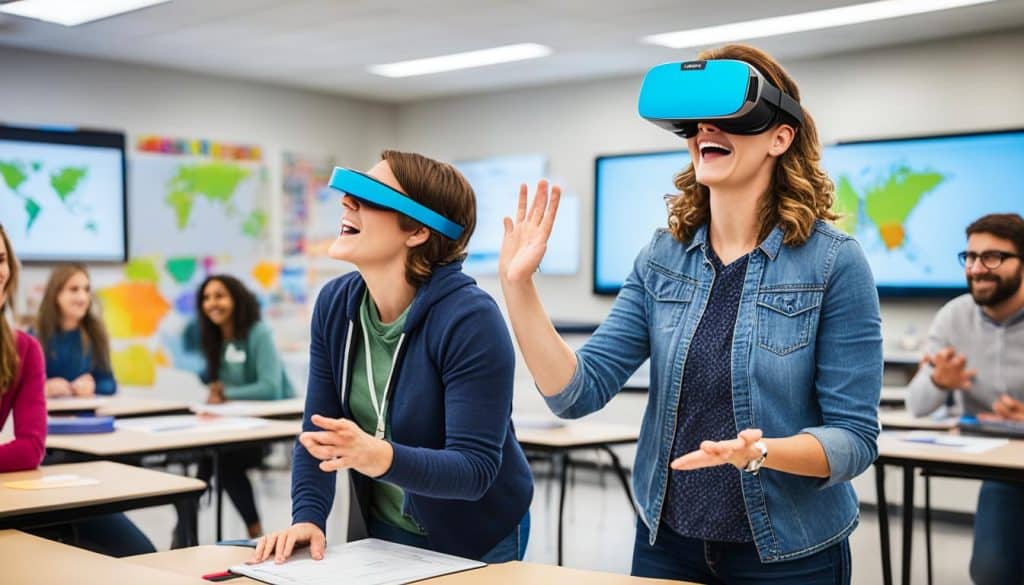
Technology has reshaped education, making learning more interactive. Digital tools have changed how teachers teach and students learn. A major study looked at 588 key articles on this topic, finding trends in areas like physical education and digital learning.
Researchers identified four major phases in the use of digital technology in education. These are starting, developing, exploring deeply, and rapidly changing. Experts like Selwyn and Henderson, and schools like Monash University, have led these efforts. Key journals have shared important research in this field.
Technology allows for learning that meets each student’s needs. It has made students more involved and helped them understand better. For instance, since 2012, online course enrollment grew to 220 million by 2021.
But, technology in education faces big challenges. Not every student has the same access to these resources. By 2022, half of the lower secondary schools lacked internet for teaching. We must ensure all students and teachers can access and use technology.
Research on digital tools in Chinese education shows this trend is global. Apps like Duolingo and sites like Wikipedia are reaching millions. They are changing how and what we learn.
The pandemic highlighted online learning’s strengths and weaknesses. By 2018, many teachers felt ready to use digital tools in their teaching. Yet, we must address the digital divide to ensure every student benefits from technology.
Educational Reform: Expanding School Choice and ESAs
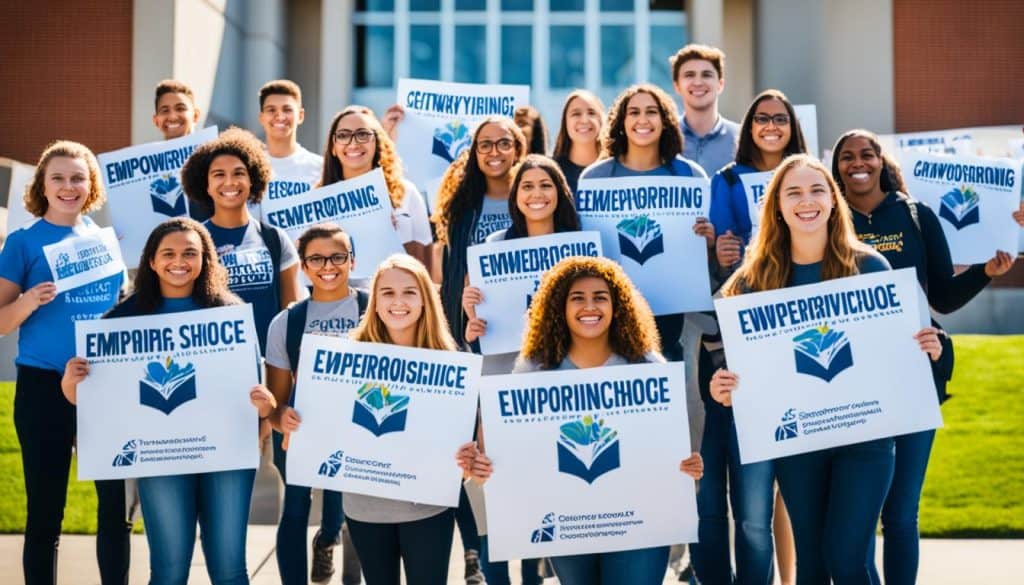
The growth of school choice and Educational Savings Accounts (ESAs) is key in educational reform. It aims to give families more choices, moving beyond classic public schools. ESAs highlight a big move towards empowerment in choosing schools.
Benefits of Education Scholarship Accounts (ESAs)
Education Scholarship Accounts (ESAs) let families tailor their child’s education. They provide funds for tuition, books, and more, emphasizing the power of choice. Eleven states now offer broad educational choice programs. For example, Missouri’s ESA program now has a higher fund limit of $75 million. Kentucky aims to allow K-12 education funds to go beyond public schools.
Public vs. Private School Options
The debate between public and private education options is heating up. ESAs make choosing easier for families, based on what’s best for their child. New laws, like the one in New Hampshire, show flexibility is key to meeting students’ needs.
Impact on Student Outcomes
How school choice affects student success is widely discussed. With ESAs, kids from all backgrounds can access better education, possibly improving grades. Utah is doubling its scholarship program funds, showing dedication to better education options. ESAs could help improve learning for students in many states.
Adapting to a Post-Pandemic Educational Landscape
After the pandemic, learning changed a lot. Online learning became essential, making us rethink how to teach well online. Adding both traditional and digital ways of learning helps meet different needs.
Remote Learning Strategies
Switching to online classes quickly was tough for both teachers and students. Research by Alenezi et al. (2022) showed the challenges teachers faced. To make online learning work, teachers need good training, and students need to stay involved.
Also, having the right tech is key for successful remote learning.
Blended Learning Models
Blended learning mixes in-person and virtual classes, offering flexibility and better learning. This method, supported by Bashir et al. (2021)’s research, can lead to better results in school. It’s great for respecting different ways people learn.
Challenges and Opportunities
The shift to online school has both tough spots and chances for growth. The digital gap is a big problem that keeps some students from getting a good education. President Biden’s $130 billion plan helps by giving money to reopen schools and support blended learning.
Focus on tutoring and more learning time can make education stronger. This helps students catch up on what they missed during the pandemic.
Addressing Mental Health and Social-Emotional Learning
Student mental well-being is getting more attention nowadays. Schools are focusing on helping kids deal with emotions and stress better. It’s important to help students grow both in classes and in how they handle their feelings and challenges.
The No Child Left Behind Act of 2002 made it important for schools to work with mental health services. Since 2008, many schools have started programs to help students before issues get big. These programs are great but they need a lot of time, which can take away from learning.
These days, schools are where most kids get help for emotional problems. But it’s hard to know the best way to do this. Even though many laws support schools, it’s still unclear if school programs are as good as other types.
Emergency visits for mental health problems are going up. Because of this, 26 states are giving more money to school mental health services. This helps schools give better support and teach everyone about emotional health.
In places like Arkansas and Florida, schools are trying to protect kids from social media’s downsides. They want to make sure students can handle life’s ups and downs. This way, kids can do well in school and life, facing the world more ready.
Balancing Federal, State, and Local Roles in Education Policy
Balancing roles in education policy is key. It helps make fair and effective educational plans. The federal, state, and local levels must work together. This teamwork is essential for a balanced policy that benefits everyone. About 92% of the funding for schools comes from state and local governments. Even so, the federal government’s 8% share is crucial. It helps ensure all students have equal education opportunities, especially those in need.
There are over 18,200 school districts and many schools across the country. This shows how big the role of local education is. Local insights help us understand what each community needs. But, these local efforts need federal guidelines too. For example, scores in reading and math fell in 2022. The drop was biggest among Latino, African American, and low-income students. This shows why we need to work together to fix big problems.
The federal government gives out more than $150 billion every year to help students with loans. This money helps over 12 million students go to college or university. Also, research shows that a student’s background is very important for their success. By supporting local and federal efforts, we can help students more. This includes things like summer programs and after-school activities in many districts.
Governors play a big role in education. They lead public education efforts in their states and bring people together to solve problems. By working for strong support from the federal government and local control, we create a better education system. This way, schools across the country can have high standards and help all students succeed.