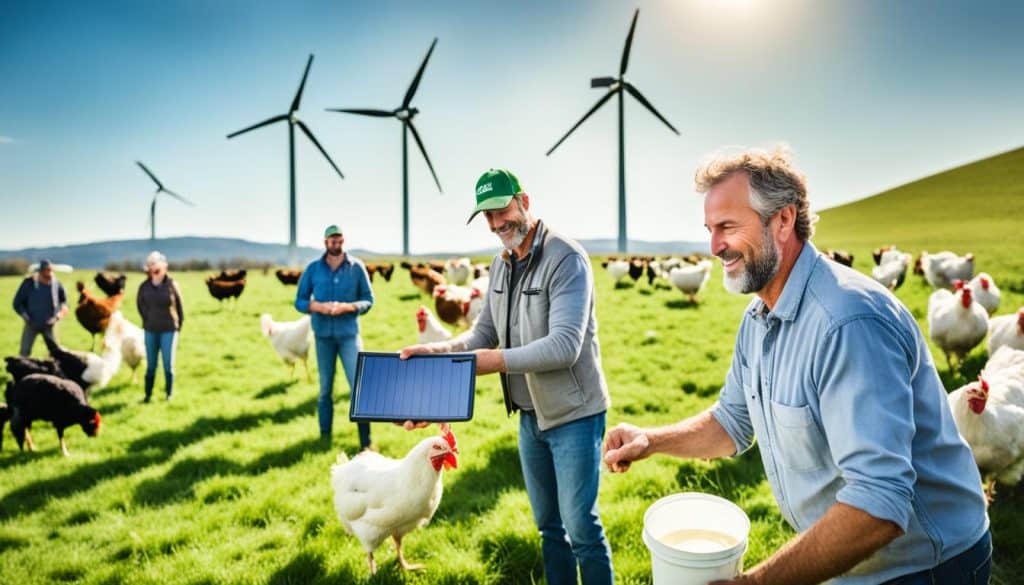
Did you know that in the U.S., industrial livestock farms create about 380 million tons of waste every year? That’s nearly 13 times more than what all the people in the country produce. This huge amount of waste shows we need better ways to farm livestock.
Community-led livestock farming can really make a difference. It reduces the harmful impacts while helping local food systems and making life better for animals. Unlike big farms, community farming focuses on working together, sharing, and caring for the environment. It matches the push for greener living, making sure farming stays good for both our wallets and hearts.
Key Takeaways
- Community approaches significantly reduce the environmental footprint of livestock farming.
- Enhanced animal welfare is achieved by providing natural light, fresh air, and pasture access.
- Economic advantages arise from shared resources and cooperative relationships.
- Sustainable livestock cultivation supports local food systems, benefiting both farmers and consumers.
- Participation in agricultural associations fosters communication and knowledge sharing within the industry.
- Community farming models encourage social cohesion and a collaborative spirit among neighbors.
Enhanced Collaboration Among Farmers
In recent years, farmer collaboration has gained attention. It is because farming land per person has dropped by half in 50 years. Working together, farmers can use new techniques and adopt sustainable ways to farm. This teamwork is key to better farm productivity and managing community resources well.
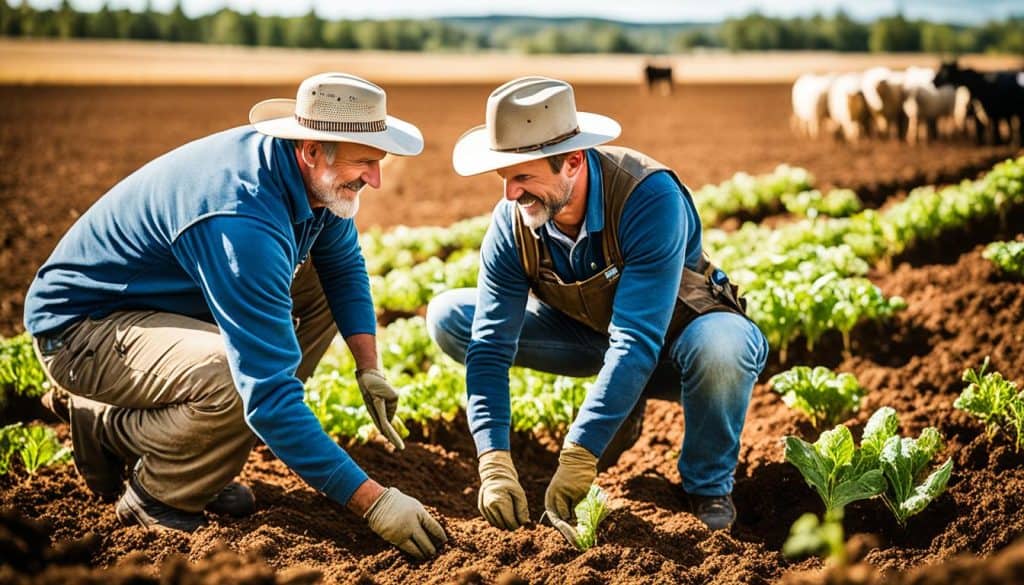
Farmers sharing ideas about crop rotation can better understand their fields. They keep an eye on crop yields and pests easier. They also watch production costs and profits closely. This helps keep their farming sustainable.
When farmers manage resources together, they use equipment and skills more wisely. A study of 30 groups in the EU showed this. They also track how well they use water and how much carbon they save. This gives farmers data on how their work affects the planet.
Together, farmers can monitor how diverse their farms are in plant and animal life. They also check soil health by looking at organic matter and microbes. This shared effort makes managing resources better and strengthens the farming community.
Working together also improves how farmers get along. It makes the community feel stronger and more supportive. Farm groups often get money and support from donors. They can cut costs and share what they know. By working as a team, they manage their farms better.
Economic Advantages of Shared Resources
Community farming brings economic gains by using shared resources. It’s based on old methods where people combined raising animals with growing crops. This helped keep the soil good. Today, we’re looking back at these mixed methods for their economic and sustainable value.
Community-supported agriculture (CSA) is a great example of shared resources working. It started in Japan and Switzerland in the 1960s. By 2007, the U.S. had over 12,000 CSA farms. These places often use organic ways to farm, like natural fertilizers and avoiding harmful chemicals.
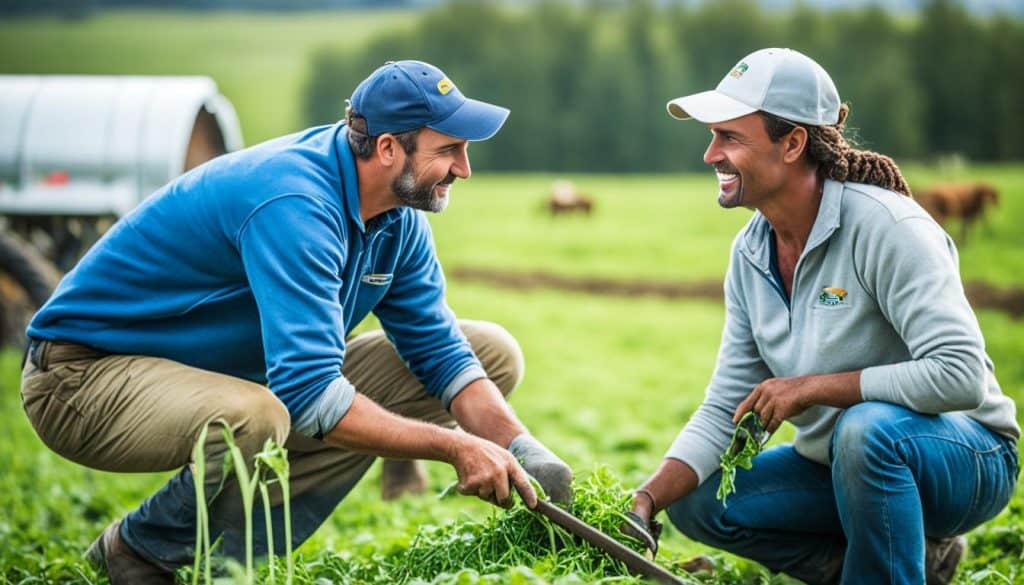
CSA helps economically by connecting those who grow food with those who eat it. It doesn’t use the costly and harmful stuff big farming does. Costs are shared, which helps both farmers and consumers save money and help the planet.
This idea also tackles the issue of not having enough food. About 13% of folks in the U.S. don’t have enough to eat. Community farms, including those in cities, help by providing good food. They also make local places better, building community and encouraging eating well.
In short, farming together using shared resources is smart and green. It doesn’t just save money; it helps the Earth. It shows that working together can make things better for everyone’s wallet and the world around us.
Community Farming: A Sustainable Approach
Community farming is a bright light in the journey towards eco-friendly farming. It offers many benefits for the environment and society. These benefits match the goals of keeping nature in balance and ensuring farming is done right. By working together and sharing, those in community farms show how humans and the planet can thrive together.
Environmental Benefits
Community farms bring great things for the environment. They bring crops and animals together again, like in nature. This teamwork makes the land richer and cuts the need for artificial fertilizers. With this approach, farms can keep being productive without harming the earth. Erika Styger, an expert at Cornell University, believes that traditional farming methods can yield steady harvests in places with tough climates, like New York.
Further, farms nationwide are trying new things to protect our planet. They use technology, rotate crops, and try renewable energy. These steps fight climate change and save our precious natural resources. They show why eco-friendly farming is key in our communities.
Enhanced Animal Welfare
Animals benefit a lot from community farming. They get to live in kinder conditions that let them act naturally. This kindness means healthier animals and better farm output. We show respect for animals by farming this way, which reflects what shoppers want.
The Ever-Growing Family Farm is a perfect example. They won a grant and worked with specialists to improve their farm. Their work proves how community and financial aid can make farms better for the planet and animals.
Embracing community farming helps our planet and promotes kind farming. Making these methods part of everyday life is not just important; it’s our pledge to a brighter, sustainable future for all.
Support Systems and Knowledge Sharing
In community farming, having strong support networks is key. They boost resource availability and foster shared knowledge, vital for improving farming techniques. Farmers get better access to information and innovations, keeping them updated and enabling them to use new strategies effectively.
This way of learning together helps tackle farming challenges. It also boosts the quality of the crops produced.

Access to Information
Community farming notably improves access to information. Thanks to support networks, farmers can share knowledge on agricultural tactics and get updates on best practices easily. This ensures everyone is up to speed with new methods and technologies, helping their farming grow.
Access to essential tips on crop management and pest control gets easier. It leads to more sustainable and productive farms.
Mentorship and Training Programs
Agricultural mentorship and training programs are key in community farming. They encourage skill development among farmers. Experts share their insights, guiding less experienced farmers. This improves skills and innovations.
These programs also create a strong educational foundation. This, in turn, supports sustainable farming advancements.
Socio-Cultural and Gender Benefits
Community farming greatly impacts society and culture. It notably changes gender roles and helps communities grow. Michelle Howarth’s work, joined by studies from Anna Gregis, shows these effects. They found that gardens improve mental, social, and physical health for many.
Traditionally, agriculture has set roles based on culture. But, community farming offers equal chances for everyone, no matter their gender. More women and diverse groups are getting involved in farming. This marks a positive move towards more open and equal farming communities.
Community farming promotes fairness between men and women. It also improves how decisions are made and strengthens community bonds. Pierre Paul Audate’s research shares how farming together can close social gaps. It proves that gardens are places where everyone can contribute and feel connected.
Addressing challenges like unequal work and limited resources is key in community farming. It provides training and support, for example through mentorship. Women benefit from joining groups where they get networking and support. This boosts their influence in farming.
So, community farming does more than just grow food. It brings social and cultural advancements. By including everyone fairly, it builds stronger, more welcoming communities.
Improved Livelihoods and Food Security
Community farming initiatives are key to improving lives and securing food. These projects bring economic, environmental, and cultural benefits. They help agricultural communities become strong and thriving. Sadly, over half the people who lack enough food belong to small farming families. This shows a big need for help and change.
Groups like Save the Children play a big role in tackling these troubles. They help set up savings and loans groups, focusing on women and the young. This means better farming and more money for communities. For instance, in Deir EzZour, 207 farmers got to learn about growing hybrid yellow maize. This helped them make more money and even support family in college. They also learned how to save water and turn crop waste into fertilizer and feed.
Save the Children doesn’t just look at money; they care about health and nutrition too. They bring new ways to make a living, help with food, and support women and girls. These efforts push for fairness and include everyone. In Kenya, where 3.4 million people didn’t have enough food in 2017, these steps are vital. Problems like poor rainfall, high food costs, and less food coming in from other places make it tough. But, plans to catch warning signs early can help face these problems.
In the end, farming together can lead to a better future. It makes sure people and animals have what they need to live well. By working as one, communities can face challenges and thrive.