
Mastitis is a big problem in dairy farming, leading to losses over $6 billion yearly in the US and Europe. This shows the urgent need for new solutions in managing livestock. The industry, once traditional, is now tapping into advanced technologies. These advances aim to boost sustainability, animal welfare, and farm productivity.
At the Animal AgTech Innovation Summit in San Francisco, 16 start-ups showcased their new technologies. Among these, Armenta offers a new way to treat mastitis, with a 70% cure rate and 10% more milk production. BinSentry has developed a method that solves a 40-year-old problem in feed inventory tracking. Such innovations are changing the future of farming. They make it possible for farmers to embrace sustainable practices.
Some other key developments include CattleEye’s tool for watching livestock without human help, FarrPro’s invention to lower the death rate of piglets, and General Probiotics’ work to reduce the use of antibiotics. These advances don’t just boost profits. They also greatly better the health and welfare of animals.
Key Takeaways
- Mastitis causes over $6 billion in losses annually in the US and Europe.
- Armenta’s technology shows a 70% cure rate for mastitis and increases milk yield by 10%.
- 16 start-ups with innovative solutions showcased at the Animal AgTech Innovation Summit.
- BinSentry and CattleEye offer groundbreaking solutions in feed monitoring and livestock management.
- Innovations promote sustainable agriculture and improved animal welfare.
Introduction to Technological Advancements in Livestock Management
Modern farming has changed a lot thanks to technology. Tools like precision livestock farming, real-time data, and health monitoring help farmers. These ensure animals are both healthy and productive. This shift comes from innovations supported by research on 1,454 global startups and scaleups.
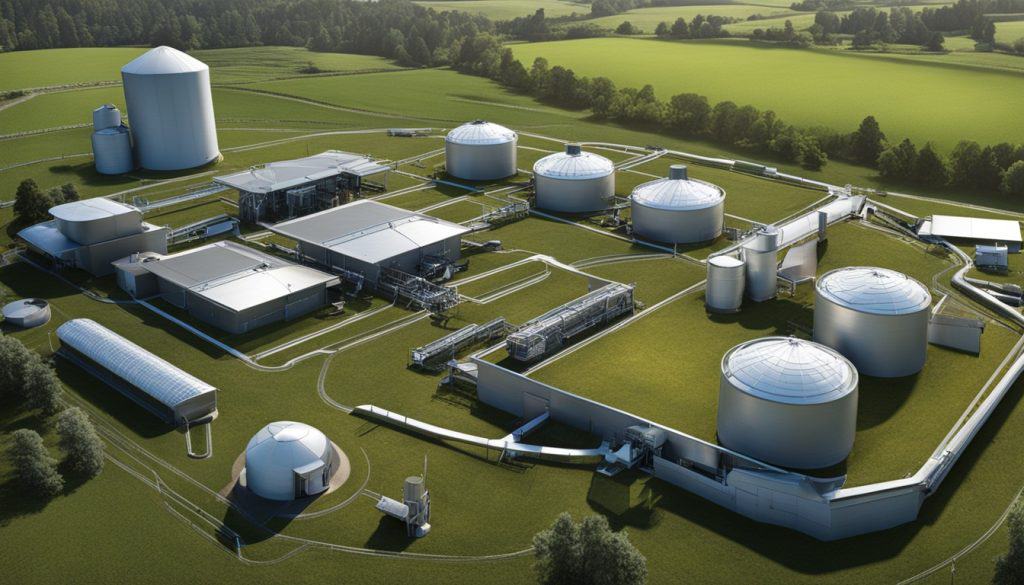
The impact of technology on modern livestock farming
Technology helps in many ways in livestock farming. Automated solutions help with food demand and not having enough workers. This leads to more products and sustainability. IoT sensors and wearable tech gather real-time info. This info helps keep the herd healthy and manage grazing better.
Advanced analytics and AI give insights on animal behavior and health. This lets farmers make smart decisions. It helps their farms run better overall.
Examples of cutting-edge innovations
There are many new technologies in livestock management. For example, BinSentry uses IoT sensors for managing feed better. Faromatics’ ChickenBoy improves poultry care. FarrPro’s Haven cuts down piglet deaths. All these show how tech helps animal welfare.
H2Oalert checks water quality for cattle, making sure they’re well hydrated. Startups are also working on ways to diagnose diseases automatically. This helps avoid losses caused by management mistakes. These technologies are changing livestock farming for the better.
Artificial Intelligence in Dairy Farming
Artificial intelligence (AI) is changing the game in dairy farming. It helps farms increase productivity and the health of their herds. By using AI, farmers get valuable insights helping them make smarter decisions. This leads to better management and savings. The technology also tracks cattle health, behavior, and productivity with high-tech algorithms and data analysis.
How AI is improving herd health and productivity
A recent study has shown how new tech is making big changes in dairy farming economics. Tools like wearable sensors are important for keeping an eye on livestock. They’re becoming more popular in the industry. AI helps with cattle identification and health scoring, improving productivity and herd health.
Recent advancements showcase the integration of computer vision for detecting dairy cows in free stall barns, further reflecting the trend of implementing AI solutions in livestock farming practices.
AI applications in dairy farming make things more efficient and health checks more accurate. For example, sensors can now spot sick calves early, which is key to keeping more of them alive. Also, AI improves breeding by pinpointing when cows are ready, leading to better birth rates.
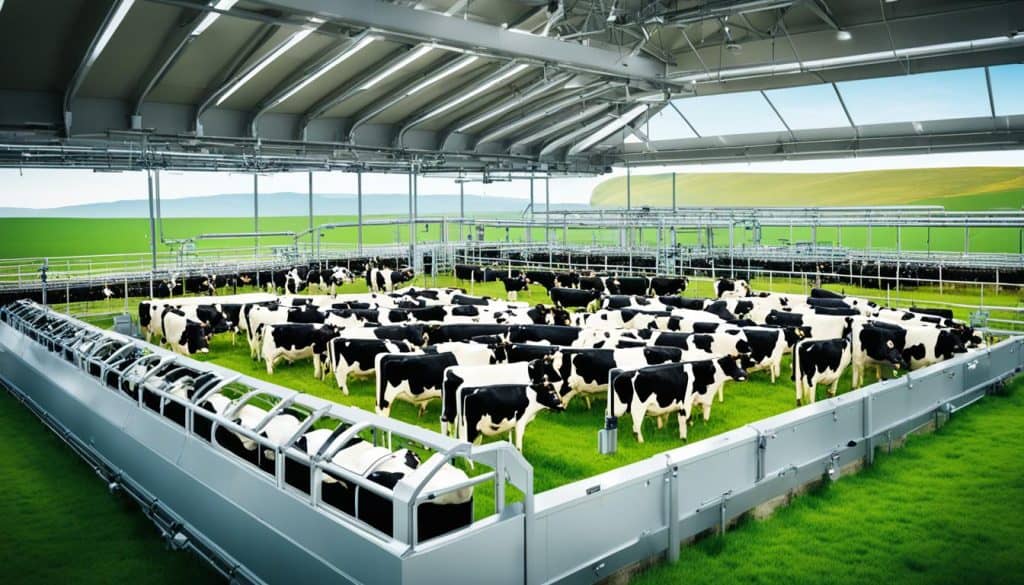
Case study: Cainthus and Facial Recognition Software
Cainthus is a leading company using facial recognition to keep an eye on cow health and behavior. This tech helps in watching each cow closely, spotting problems early. Cargill’s recent partnership with Cainthus shows how important AI is becoming in dairy management.
With Cainthus’ tech, farmers can watch their herds closely and understand their needs better. This forward-thinking method increases productivity and improves the cows’ living conditions. AI in dairy farming is paving the way to a future where technology helps farming achieve the best results.
Innovative Solutions for Disease Prevention and Management
Keeping livestock healthy is key to sustainable farming. With consumers wanting better practices, non-antibiotic treatments are becoming popular. These methods prevent diseases and boost animal health and farm productivity.
Development of non-antibiotic treatments
Armenta has led with Acoustic Pulse Technology (APT) to fight bovine mastitis in dairy cattle. APT increases milk production without antibiotics. This is a big step towards sustainable farming, balancing high output with less antibiotic use.
Real-time health monitoring systems
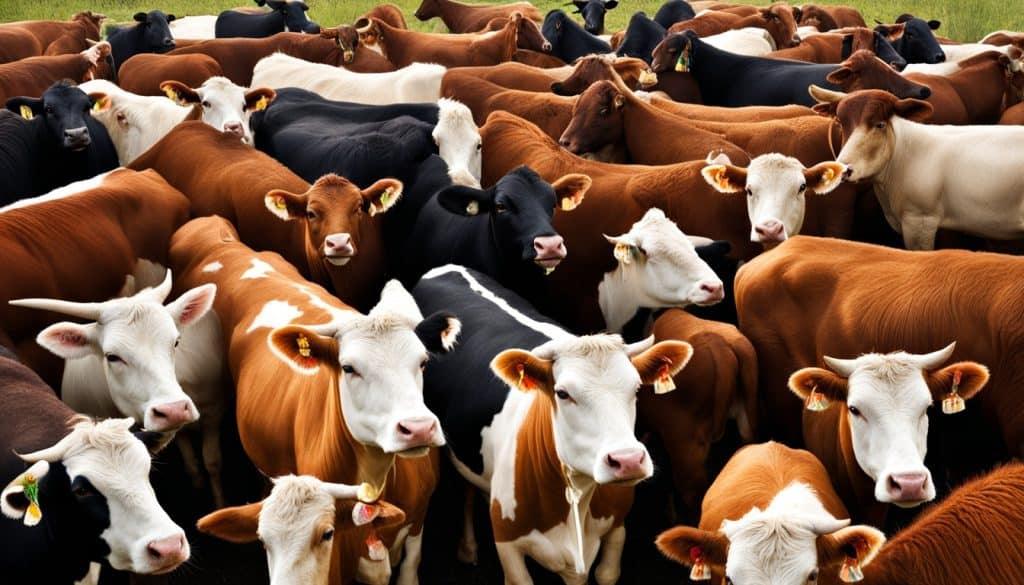
Monitoring livestock health in real-time changes how diseases are managed. Moonsyst and SomaDetect have introduced systems that spot diseases and stress early. These tools offer constant health checks, leading to fast and accurate treatments. This boosts both animal welfare and farm productivity.
“The integration of real-time health monitoring systems enables farmers to take a proactive approach in disease „stated a livestock health expert.“
Livestock Innovations: Enhancing Efficiency and Sustainability
In modern farming, using innovative tech is key to more sustainable and efficient livestock systems. New technologies are changing livestock farming in a big way. This leads to better operation efficiency and less harm to the environment.
Nextbiotics is known for its breakthrough bacteriophage technology. It targets harmful bacteria, reducing the use of traditional antibiotics. This significantly improves livestock health and supports eco-friendly farming practices.
Nutrivert is changing the game with growth promoters that don’t rely on antibiotics. These products help animals grow faster and use their feed more efficiently. This kind of tech is vital for keeping livestock farming sustainable.
Roper’s solar-powered GPS ear-tags blend tech with eco-consciousness. They offer real-time animal tracking, improving farm management. Plus, they use solar energy, cutting down the carbon emissions of farming operations.
Tools like smart ear-tags and remote systems are great for the animals’ well-being. They provide constant health updates, allowing for quick help when needed. This lowers death rates and promotes sustainable farming.
Robotics and automation are making livestock farming more efficient. They help reduce labor costs and make jobs like feeding and milking more accurate. These advances help meet the agricultural sector’s sustainability goals.
The Index-Based Livestock Insurance (IBLI) is really helping in places like the Horn of Africa. It’s a safety net against climate risks, made possible by partnerships between the public and private sectors. This type of insurance makes sustainability energy economically smart and resilient.
Together, these innovations stress the need for advanced tech in farming. By using the latest in technology, farmers can use resources better and keep animals healthy. This leads to more productivity and helps protect the planet and economy.
- In places like Kenya, livestock are not just animals. They mean wealth and status, adding more value to them.
- Manure is a key source of nitrogen for farms, especially where chemical fertilizers are scarce.
- There’s a growing interest in animal-based ventures. These offer new ways to earn money, especially in areas needing more jobs.
The Role of IoT in Precision Livestock Farming
The integration of IoT into precision livestock farming has changed the game. Now, farmers can monitor and manage their livestock with amazing precision. This is thanks to wearable technology and real-time data.
This approach is vital as we face a growing global population and fewer farmers. By 2050, we’ll have up to 10.1 billion people to feed. At the same time, the costs to produce food are going up.
Wearable Sensors and Real-Time Data Analysis
Wearable technology leads this change. For example, H2Oalert monitors water, which is critical for healthy animals. Also, CattleEye and SwineTech use images and sounds to help manage herds better.
These devices gather important information about animal health and their environment.
Thanks to real-time data analysis, farmers can quickly address any issues. Big tech companies like IBM and Google help with this. They use cloud computing to analyze data fast. This helps farmers make better decisions and keeps animals healthy.
Impact on Productivity and Animal Welfare
The impact of IoT on farms is huge. About 90% of ranchers using software see better herd growth. New technologies like 5G improve this even more, making farms run smoother.
IoT lets farmers use resources wisely and farm more sustainably. The goal is to make these technologies standard worldwide. This way, farms of all sizes can benefit from them.
The market for livestock management is growing fast. It’s expected to be worth USD 11.18 billion by 2029. With IoT, the agriculture industry will become more efficient and sustainable. This is great news for farmers and the planet.
Genetic Research and Its Applications in Livestock Management
Genetic research has revolutionized livestock management, especially in breeding and vaccine development. It has added billions to the economy worldwide. This progress benefits not only economic aspects but also social and environmental sectors in richer countries. By using genetic information, breeding improves livestock quality. This leads to a stronger, more productive agriculture.
Breeding Disease-Resistant Animals
Genetic research is crucial for breeding animals that can resist diseases. It helps us understand complex genetic information. This understanding lets us pick the best animals for breeding. These animals are healthier and can handle disease and stress better. This is key for traits that are hard to see early on, like how well an animal reproduces or resists sickness.
Advancements in Vaccine Development
Vaccine development has greatly benefited from genetic research. Innovations by companies like ViroVet have led to stable vaccines that are easier to deliver to remote places. Also, changing pigs at the genetic level improves vaccine effectiveness and health. The CRISPR/Cas9 system is a leading technology in this area. It allows scientists to make precise changes in the genes, improving vaccines further.
The work in breeding and vaccines shows the importance of genetics in livestock management. These advances promise a future of better productivity, sustainability, and care for animals. The agricultural world looks forward to these improvements.