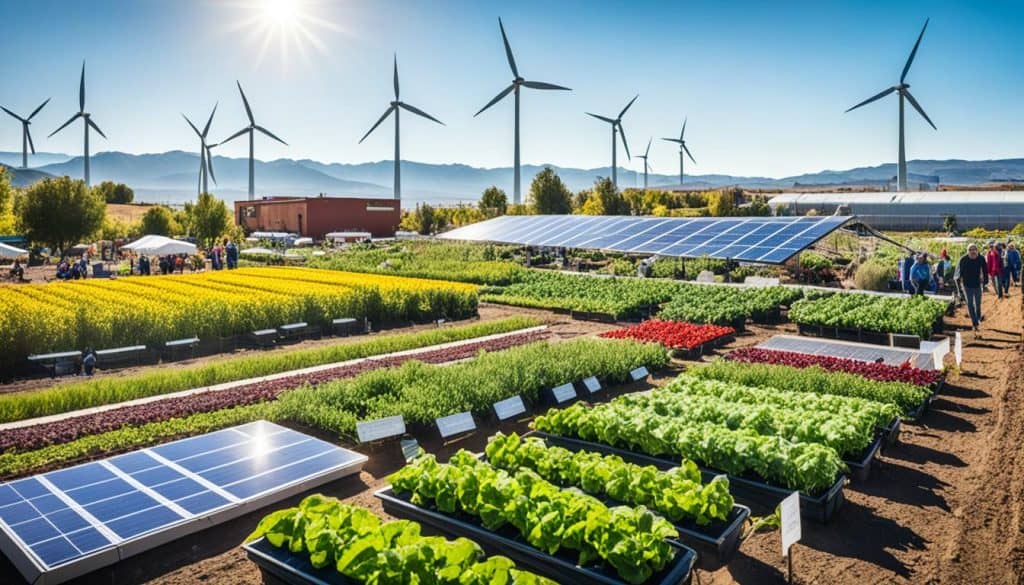
Did you know agriculture, forestry, and changing land use result in about a quarter of the world’s greenhouse gas emissions? This fact tells us we urgently need food systems that are both sturdy and green. With Asia’s population poised to grow by 250 million by 2030 and food spending set to soar to $8 trillion, it’s crucial to develop food systems that can handle climate challenges and push for sustainable agriculture.
Taking climate action is now essential, not optional, particularly for the food and agriculture sector. The Environmental Defense Fund’s report points out key moves towards sustainability. These include making sustainability a core part of a company’s identity, setting lofty, science-driven goals, and creating strong partnerships. Since this sector emits a fifth of the world’s greenhouse gases, there’s a pressing need for changes that boost resilience and aim for net zero emissions.
In different places, innovative efforts are changing traditional linear systems into circular ones controlled locally. For example, a project led by Dr. Michel Pimbert involves local communities in India, Indonesia, Iran, Mali, and Peru since 2001. It pushes for managing agricultural biodiversity in a sustainable and adaptive way. Initiatives like community grain funds and Farmer Field Schools are crucial. They help develop food systems that can endure and thrive.
Key Takeaways:
- Agriculture, forestry, and land-use change contribute nearly a quarter of global greenhouse gas emissions.
- Asia will see an astounding growth in population by 250 million and food expenditure doubling to $8 trillion by 2030.
- The Environmental Defense Fund emphasizes aligning sustainability with the company’s core identity and setting ambitious science-based targets.
- Community-driven projects such as those in India, Indonesia, Iran, Mali, and Peru play a key role in fostering resilient food systems.
- Strategic partnerships and inclusion of local farming communities are essential for achieving long-term sustainability goals.
Understanding Resilient Food Systems
Resilient food systems are built to adapt and keep providing food during unexpected events. They stand strong against various disruptions. This could be due to nature or human actions. Understanding these systems shows us how crucial they are for our global food supply.
Definition and Importance
The farming sector causes 20% of the world’s total greenhouse gas emissions. This makes resilient food systems key to fighting climate change. They protect our food supply from big challenges like climate change and globalization. To make them more climate-resilient, different groups work together. They create plans for sustainability and build partnerships to improve supply chains.
 Components of Resilient Food Systems
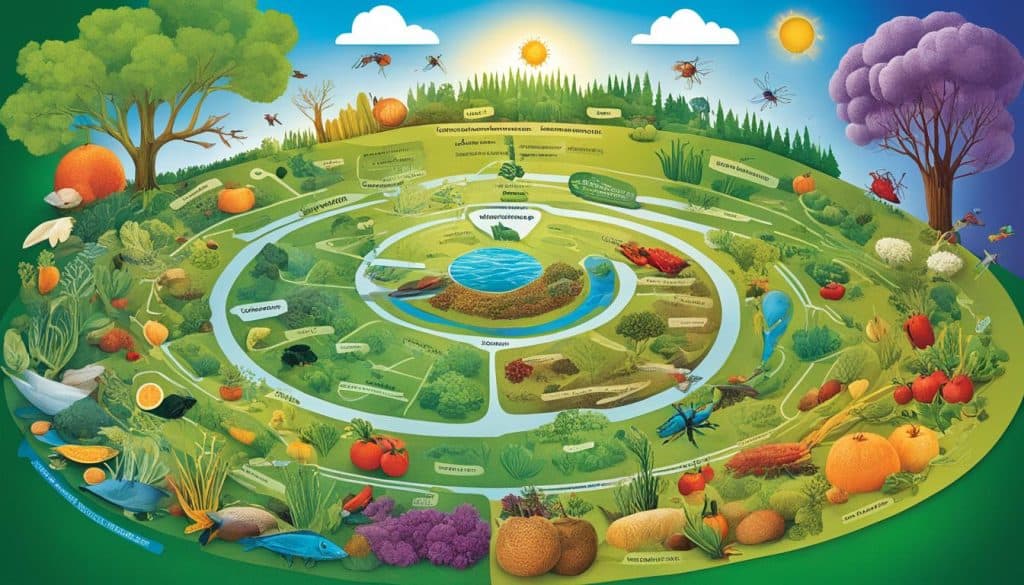
Understanding ecosystem interactions and promoting eco-friendly farming are part of resilient food systems. They help reduce reliance on things like fossil fuels. Important aspects include:
- Agricultural biodiversity: This helps the system adjust to environmental changes. It also aids in climate resilience.
- Local resource optimization: Makes the most out of local resources. This reduces the need for outside inputs.
- Stronger localized control mechanisms: Gives local communities more power over their food systems.
For these systems to work well, it’s crucial to focus on specific commodities or areas. Aligning actions with a company’s goals is important. Working closely with farmers and using science-based goals can make a real difference. Using data helps track success and show how changes benefit farmers financially.
Implementing Best Practices for Food System Resilience
Making our food system resilient requires specific, real-world actions. These include backing local governance, strengthening community groups, and improving access to resources. These efforts highlight how flexible management can boost agricultural diversity and make supply chains last longer.
Context-Based Solutions
Local solutions are key to overcoming food system challenges in specific areas. The 2017 Baltimore Food System Resilience Advisory Report showcased how well the city could adapt. Funded by the Bloomberg American Health Initiative, this effort from 2022 to 2023 focuses on spreading a Planning Guide, assessing outcomes, and talking with policymakers about food system plans for local governments.
The Johns Hopkins University Center for Applied Public Research partnered to create a Food System Resilience Community of Practice (CoP). It included five U.S. cities from 2020 to 2022. This project stressed the importance of flexible management and bringing community strategies into wider resilience plans.
Case Studies and Success Stories
Globally, there are many success stories of building a resilient food system. In India, community grain funds have made food security better. Sustainable farming in Indonesia has helped preserve agricultural biodiversity. And in Iran, working together on rangeland management has improved the sustainability of supply chains.
The Farm Seed Opportunities project in Europe stands out, bringing people together for on-farm conservation. It shows the power of using local know-how to boost food system resilience.
In Baltimore, engineers at Johns Hopkins Whiting School of Engineering designed a model to reduce food system problems. During the pandemic, the National Food Access and COVID Research Team (NFACT) did a survey on food security in households. Their work, which led to many published studies, shared important insights on how to stay resilient in difficult times.
These examples show how resilience in food systems can take many forms. They prove that flexible management, agricultural diversity, and sustainable supply chains are crucial for strong food systems.
Community Involvement in Sustainable Food Systems
Building sustainable food systems needs a lot of community involvement. It’s important to get people involved and make sure stakeholders have a say. I think making food systems more inclusive and sustainable starts with actions from the community.
One key practice is cooperative farming ventures. This approach allows farmers to work together in production and marketing. It helps with learning from each other and building a sense of community. Community-supported agriculture (CSA) models play a crucial role too. They build direct, clear connections between consumers and farmers, helping with food security and sustainability.
Also, focusing on things like community seed banks and agroecological practices helps a lot. These methods value local wisdom and improve soil and biodiversity. By working together on research and decisions, local people can come up with sustainable solutions that work for everyone.
Many projects show how important civic involvement is. Education and awareness campaigns start the process. However, we need strong efforts in advocacy and policy to make a real difference. Community land trusts help keep access to resources fair and protect farmland.
It’s also vital to support women farmers with specific initiatives. They are often left out but can help grow local food hasystems inclusively. Community projects like the Alaska Food Hub, led by people like Robbi Mixon, show the strength of grassroots efforts in improving food systems.
In a bigger picture, over 40 local stakeholders met in 2021 to talk about making food systems more inclusive. They discussed making sure everyone involved in planning food systems is heard. Focusing on community needs helps make sure food is secure, resilient, and fair. This is especially important in areas affected by structural racism and lack of healthcare access.
Urban farming is also key. It creates jobs, brings in income, improves food access, and helps build stronger community ties.
In the end, real community involvement means using local resources well, creating strong food systems, and keeping people engaged. This way, sustainable food practices become a part of everyday life, not just theory.
Technologies and Innovations for Sustainability
Technological progress is key to sustainable food systems. As we head towards a global population of 8.6 billion by 2030, innovative ideas are more important than ever. Advances like circular economy concepts and smart agriculture help use resources wisely and farm sustainably.
Role of Circular Economy Models
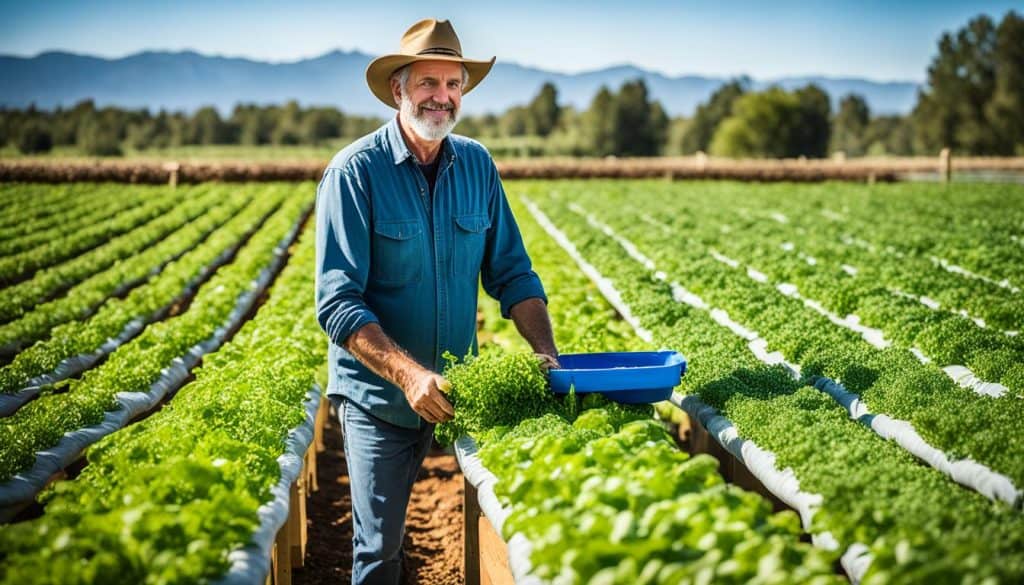
Circular economy models aim to use resources more efficiently. They reduce waste in food production. For example, the 4R Nutrient Stewardship promotes smart fertilizer use. This can greatly increase crop yields while cutting down nutrient loss.
Sustainable farm innovations, like drip irrigation and solar pumps, are also key. They help manage water sustainably. Since irrigation is crucial for our global food and water supply, these methods are vital.
Data-Driven Approaches in Agriculture
New technologies in agriculture, such as AI and Big Data, support sustainable food systems. They help monitor the whole food chain, from planting to sale. Earth Observation satellites, for instance, offer up-to-date crop data. This improves both crop quality and quantity.
In Guatemala, a coffee project showed how technology can aid farming. It increased crop yields by 45% and farmer income by 35%. Such tech gives farmers the insights they need for smarter, sustainable farming. As tech is embraced, the link between caring for our planet and farming efficiently grows stronger.
By blending tech with traditional farming, we can tackle food system challenges. This approach boosts both sustainability and the strength of agriculture worldwide. It makes farming more productive and resilient.
The Future of Sustainable Food Systems
The future of sustainable food systems is tied to our plans and actions today. Governments play a key role in responding to food emergencies. They work on spotting dangers and creating plans to tackle them. This is crucial as we aim to feed nearly 10 billion people by 2050 without harming our planet.
A report discusses a “five-course menu” of 22 ways to create sustainable food systems. It looks at improving city farms, making food transport better, and adding variety to food sources. The report uses research to show how each way helps achieve our goals. It focuses on dealing with climate change and making sure everyone has access to food during crises. It’s important we focus on these to make our food systems strong against future problems.
Also, new tech and remote sensing are changing how we see food systems. They give us fresh insights to help change things for the better. By focusing on fairness and recognizing how climate change affects us all, we can reach our global sustainability goals. Future food systems will adapt, include everyone, and be strong. They will make sure we have the food we need while protecting the environment everywhere.