
In 2018-2019, a study talked to 38,743 people to figure out foodborne illness patterns. These numbers show how crucial it is to prevent foodborne illnesses to keep everyone safe. By following food safety rules, we can lower the chance of outbreaks that are dangerous.
Food safety is about more than stopping bacteria. It’s about keeping everyone healthy with careful actions. For example, we need to keep raw meat away from other foods and keep food at the right temperature. When many states report the same outbreak, it shows how important these safety steps are.
Keeping our hands clean is key to food safety. Make sure to wash your hands for at least 20 seconds with soap and water. This is especially important after using the bathroom and before touching food. Using different cutting boards for raw and cooked food also stops bacteria from spreading.
Groups like the CDC and FDA stress the need for these safety steps. They have rules and plans, like the FSMA, to help keep food safe. Knowing and using food safety tips can make our food and environment safer for everyone.
By learning and using these important tips, we can all help lower foodborne illness cases. Stay with us as we discuss ways to improve food safety. This can help keep your family and friends safe from foodborne outbreaks.
Importance of Food Safety in Preventing Outbreaks
Food safety plays a key role in keeping us healthy and safe. Around 600 million people get sick yearly from eating bad food, leading to 420,000 deaths. The Food Safety Modernization Act (FSMA), started in 2011, focuses on preventing food issues before they happen.
Why Food Safety Matters
Keeping food safe stops serious diseases. Bacteria, found using methods like DNA fingerprinting, cause many sicknesses. The FSMA has the Centers for Disease Control and Prevention (CDC) improve how we watch for diseases. This helps figure out and handle outbreaks better.
Teams from federal and state agencies work together quickly against contamination. Their work is vital in preventing health problems from spreading.
Impact of Foodborne Outbreaks on Health
Foodborne diseases are a big health issue worldwide. They hit about one in ten people every year, especially harming kids under five. Sadly, these diseases cause 125,000 children’s deaths annually.
In the US, foodborne illnesses lead to 128,000 hospital stays and 3,000 deaths each year. They also have a huge economic impact, costing billions in lost productivity and treatment, especially in poorer countries. Better food safety measures can cut down these numbers.
Proper Hand Hygiene Practices
Keeping our hands clean is key to fighting foodborne illnesses and stopping the spread of infections. Surprisingly, food workers only wash their hands about one in three times when needed. Knowing and using the right way to wash hands can cut down on spreading germs.
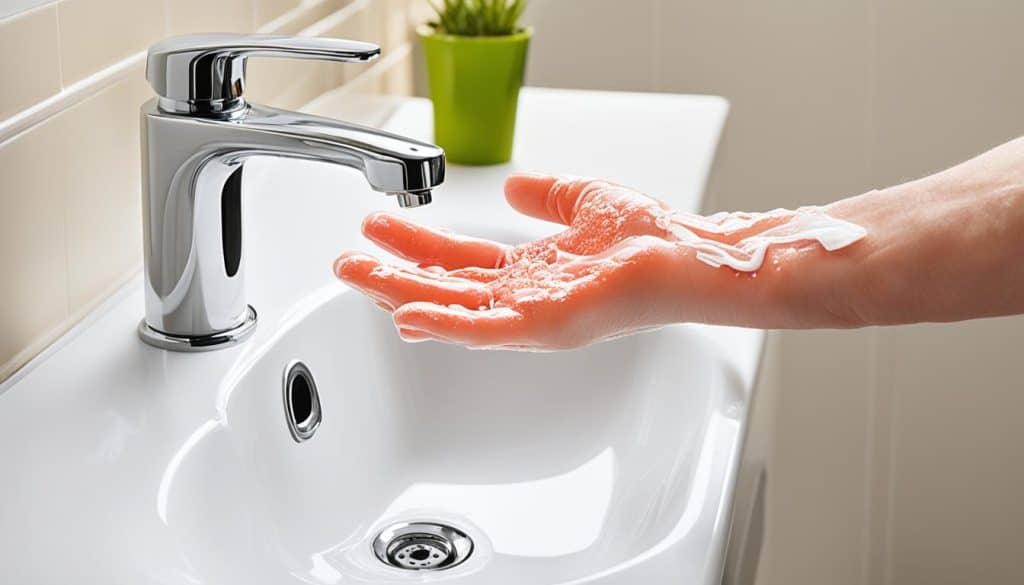
Correct Handwashing Techniques
Learning how to wash your hands the right way is vital. Here are the steps you should follow:
- Use warm water to wet your hands.
- Put enough soap on your hands.
- Scrub your hands for at least 20 seconds—singing “Twinkle, Twinkle, Little Star” can help keep time.
- Make sure to scrub the back of your hands, between your fingers, and under your nails.
- Rinse well under running water.
- Dry your hands with a paper towel or an air dryer. If you can, use the towel to turn off the tap.
Even with these clear benefits, only 1 in 4 workers wash their hands after handling raw meat or dirty equipment. And just 1 in 10 do it after touching their face. This shows a big problem with personal cleanliness that we need to fix fast.
Situations Requiring Hand Washing
Knowing when to wash your hands is just as crucial as how to do it. Key times include:
- Before touching food.
- After handling raw meat.
- After using the restroom.
- After dealing with trash.
- Following a cough, sneeze, or any contamination.
The CDC advises washing your hands with soap and water for at least 20 seconds especially around food. This helps a great deal in preventing germs from spreading. Every year, about 48 million people in the U.S. get sick from foodborne illnesses, showing the huge impact of good hand hygiene.
Good hand hygiene is not just advised; it’s critical for public health. By keeping our hands clean, we can stop many infections and diseases from spreading.
Handling Raw Animal Products Safly
It’s important to handle raw animal products carefully to prevent sickness. Following the right steps can keep meat safe. This reduces the chance of foodborne illnesses.
Thawing Techniques to Prevent Bacterial Growth
Thawing raw animal products wrong can increase bacteria. These bad bacteria grow fast between 40°F and 140°F, a range called the danger zone. So, don’t thaw meat at room temperature. Instead, try these methods:
- Refrigerator Thawing: This method is the safest. But it takes time, sometimes a whole day.
- Cool Water Thawing: Put the food in cold tap water. Remember to change the water every 30 minutes.
- Microwave Thawing: This is fast. But cook the food right away after thawing it in the microwave.
Avoiding Cross-Contamination
To avoid spreading germs, keep raw meats away from other foods. Use different cutting boards and knives for meats and veggies. Instead of rinsing raw meat, which spreads bacteria, dry it with paper towels before you cook it.
Cooking Temperatures for Various Meats
Cooking meat correctly is vital. A meat thermometer can help check if meat is cooked enough to kill bacteria:
- Poultry: Should reach at least 165°F.
- Ground Meat: Needs to be cooked to 160°F.
- Whole Cuts of Beef, Veal, Lamb, and Pork: These should reach 145°F. Then, let them rest for 3 minutes.
- Fish: Cook until it’s 158°F and the flesh is the right texture.
Following these guidelines for meat handling and cooking can really cut down the risk of getting sick from food.
Cleaning and Sanitizing Utensils and Surfaces
Keeping the kitchen clean is key to stopping foodborne illnesses. Every year, 1 in 6 Americans get sick from what they eat. Cleaning gets rid of dirt and some germs, but sanitizing is different. Sanitizing kills the germs that can make us sick. It’s important to know this to keep utensils clean and food areas safe.
The Difference Between Cleaning and Sanitizing
Cleaning uses warm, soapy water to take away dirt and some germs. But, it doesn’t kill germs. Sanitizing after cleaning gets rid of the bacteria that can cause sickness. A popular way to sanitize is with a bleach solution. First, clean to remove any debris. This makes sure the sanitizer works right.
Preventing Cross-Contamination
Harmful germs can move from one spot to another. This is risky and can make people sick. Some bacteria can live on surfaces for hours. To stop this, keep your prep area clean. Clean and sanitize it every four hours or after touching raw meat. Use different cutting boards for meat, veggies, and ready-to-eat foods. This lowers the chance of getting sick.
Recommended Cleaning Schedule
Having a cleaning plan is smart for kitchen safety. Clean and sanitize high-touch areas many times a day. Clean utensils and gear right after use. Every day, make sure to clean countertops, cutting boards, and sinks. Items like plastic, glass, and wood can often go in the dishwasher. Following these steps helps stop germs from spreading and keeps our kitchens safe.