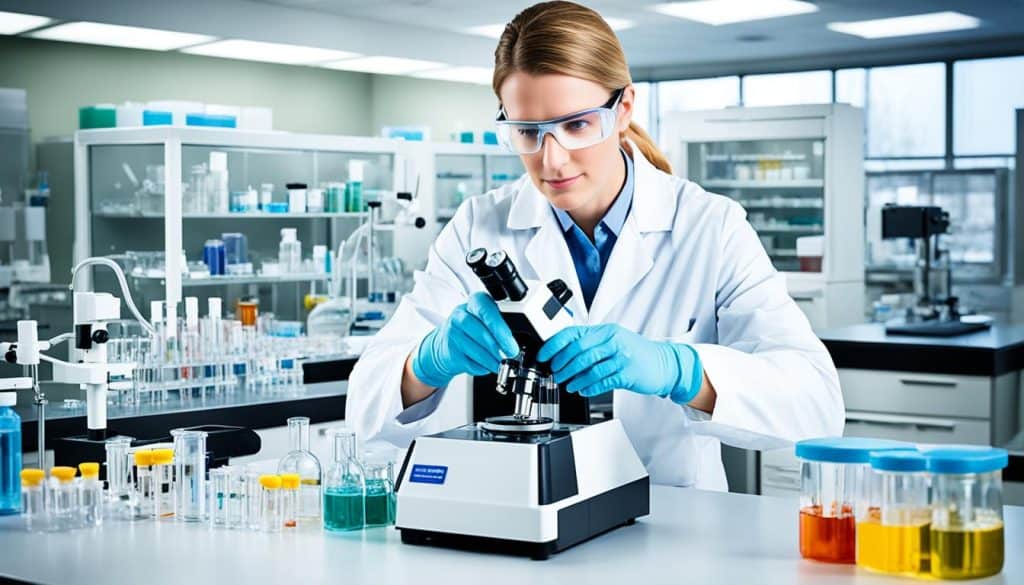
In 2022, the global food safety testing market was worth USD 50 billion. This huge number shows how important it is to keep food safe and of good quality. The industry faces many problems. But, new tech helps find clever solutions.
At the 2023 International Association of Food Protection (IAFP) Annual Meeting in Toronto, thousands of food safety experts met. They came from 53 countries. Leaders like Eurofins Scientific, Thermo Fisher Scientific Inc., and PerkinElmer Inc. showed off new tools. They use AI, blockchain, and machine learning to make big changes.
Paul Damaren from RizePoint talked about how new tech can change the game. Mobile auditing and tracking compliance are key. They give a full, up-to-date view of how food quality is managed. These tools make checking quality faster, more correct, and open. Food companies can really boost their methods and deal with problems better.
The FDA looked into a Salmonella outbreak from raw cookie dough in six states. This shows why we need to always get better at keeping food safe. New tech plays a big role in fixing problems fast and well. It keeps people safe and trusts in food high.
Also, working together on research helps make food safety and quality even better worldwide. Keeping up with new inventions is vital for dealing with the food industry’s changing challenges.
Innovations in Food Quality Management
In today’s fast-moving food quality sector, tech improvements are key. Digital tools help make processes better and boost food safety. They include features for auditing, assessing risks, and managing supplier quality, making it easier to track compliance and improve food quality.
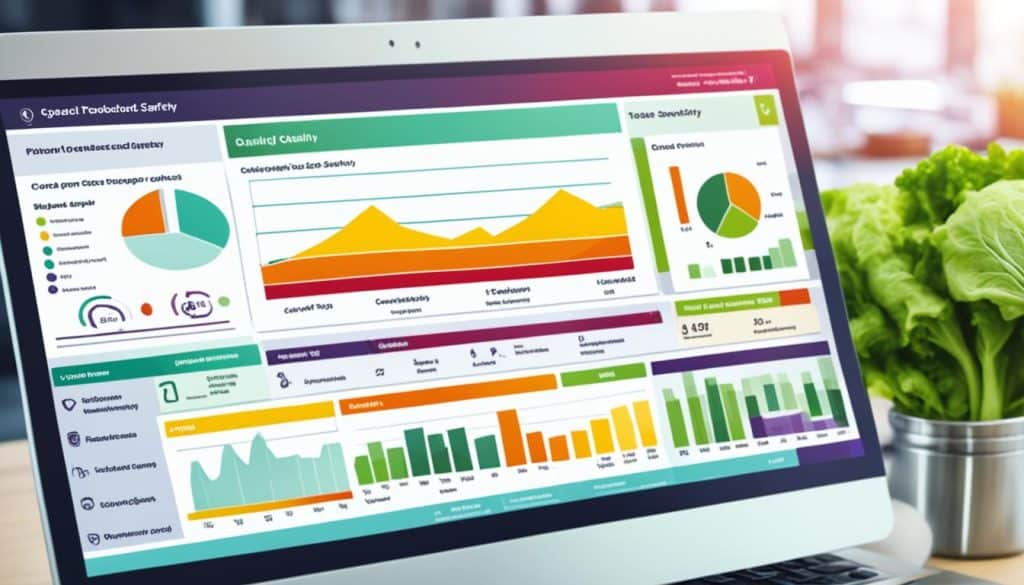
The Role of Technology in Enhancing Quality Management
Using tech in the food industry really helps brands. It makes quality programs much better. Tools like automation, AI, IoT, blockchain, and machine learning change how we handle food safety.
For example, machine learning looks at how food is stored and handled. It then predicts safety risks, avoiding problems. IoT gadgets keep an eye on things like temperature and humidity all the time. This helps find and fix risks quickly.
Mobile Auditing for Real-Time Quality Reports
Mobile auditing is a big part of new digital quality tools. It’s very important for efficient inspections, mainly where things move fast. With mobile options, businesses can do instant audits. They make sure every part of the supply chain meets top standards.
These tools give immediate feedback and useful tips. They make work flows smoother and keep food quality up.
Compliance and Reporting Capabilities
Food quality software makes it easier to track compliance and keep the supply chain straight. Blockchain keeps things clear and stops fraud. These tech solutions are now more affordable and easy to use. This makes them good for food companies of all sizes and budgets.
Technological Advancements in Food Safety
Technological advancements have changed food safety for the better. With predictive maintenance, businesses can now stop safety problems before they start. This method uses machine learning algorithms to look through lots of data. It makes sure food processing tools work well and safely.
The use of IoT devices lets us monitor things like humidity and temperature in real time. This improves transparency and helps find problems early, which stops food from getting contaminated. Digital systems for checking the temperature are key. They keep food safe all the way from the farm to our tables, using technology like low-energy Bluetooth in cold storage.
In the U.S., keeping food safe is very important. Every year, about 48 million people get sick from food, and around 3,000 die. This shows why we need strong food safety actions. Almost all food packaging companies use robots. This helps in safely handling food and keeping it free from germs.
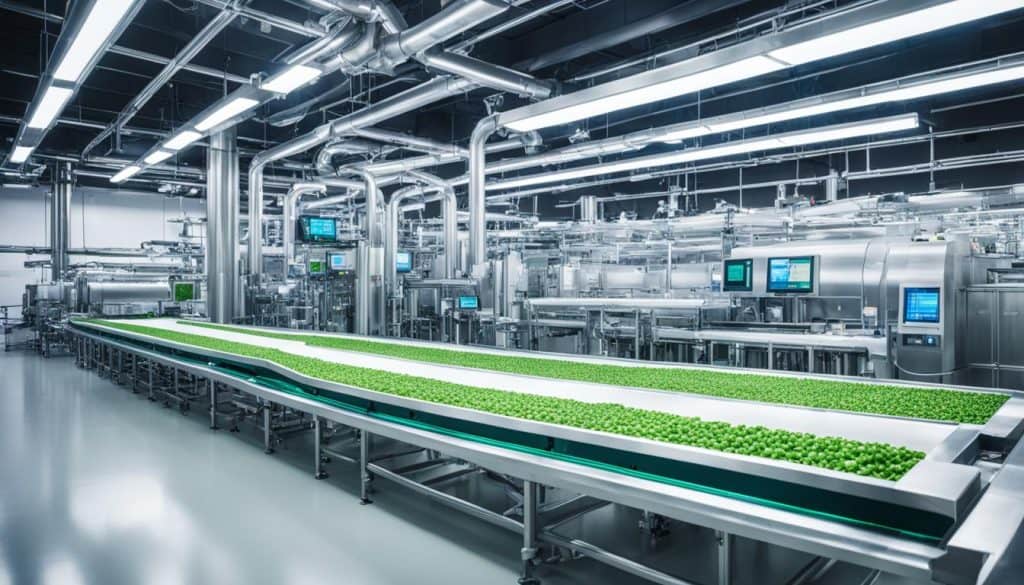
Automation makes many steps in the food industry better, from making to packaging and delivery. Items like smart sensors and labels with sensors are now used. They tell us if the product is fresh and how long before it goes bad. The work of Internet of Things (IoT) devices and machine learning algorithms can’t be praised enough. They make sure food stays good all through its journey to us.
Blockchain is changing the game by making food’s journey easy to track. It makes finding where contamination started faster. Plus, new x-ray machines and metal detectors are key for finding things that shouldn’t be in food. They make sure our food is safe and of good quality.
Using these advanced technologies is vital for the food industry. They cut down on mistakes, like contamination, and build trust with customers. Companies like TDI Packsys are at the forefront. They offer detailed checking systems and new automation for packaging. This is key for keeping food safe and making the industry more sustainable.
Food Packaging Innovations for Safety and Sustainability
Food packaging has changed a lot in recent years. It now uses high-tech methods to address both safety and sustainability. The CDC shows that about 48 million Americans get sick from bad food each year. With so many getting sick, better packaging can really help.
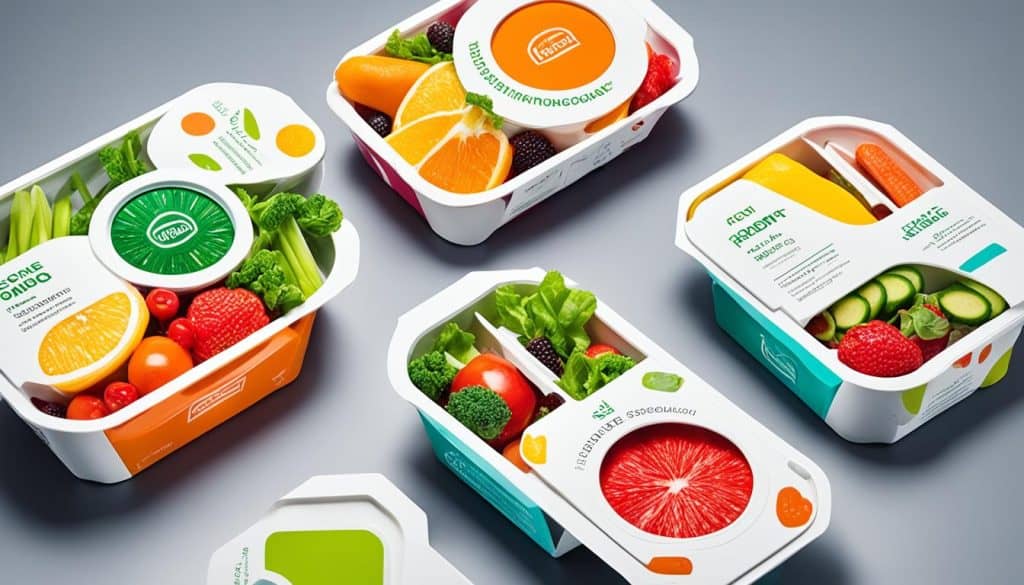
Micro-encapsulation: A New Frontier
Micro-encapsulation is becoming very important in keeping food safe. This method traps helpful substances like antioxidants in tiny capsules. These capsules then release the substances slowly, which helps food stay good longer. Texas A&M University is leading the way in this technology.
Edible Packaging: The Future of Sustainable Packaging
Edible packaging is a great answer to the problem of packaging waste. Innovations such as WikiCells by Harvard and rice paper packaging from Japan are at the forefront. These packages, made from things like starches, can be eaten with the food, cutting down on trash.
Smart Packaging with Integrated Sensors
Smart packaging can now keep an eye on the food inside and share info about it. It can have biosensors that find dangerous germs like Salmonella. Also, indicators can show if the food is still good, keeping us safer.
Temperature-Controlled Packaging Technologies
Temperature-controlled packaging keeps perishable foods fresh. It uses special materials to manage inside temperatures. This stops food from spoiling due to heat or cold, helping to lessen food waste.
Water-Soluble Packaging Solutions
Water-soluble packaging is a new, eco-friendly option. Companies like MonoSol offer the Vivos Edible Delivery System. These materials dissolve in water without leaving any waste. It’s perfect for items meant for one use, promoting green practices.
“Biosensors embedded in smart packaging technologies are becoming increasingly important, showcasing advances that can provide specific and stable detection of pathogens in food products without the need for sample removal.”
Together, these new ideas are making packaging both green and high-tech. As we look for packaging that is safe, efficient, and good for Earth, these improvements are making a big difference. They help keep us healthy and make less impact on the planet.
Food Safety Research
Food safety research ensures our food is safe, nutritious, and not contaminated. The FDA works hard on this, focusing on detecting harmful substances. They use advanced methods to find things like color additives, Listeria, and trans fats. This important work helps improve how we process food and keeps us healthy.
The FDA uses a method called whole genome sequencing. It shows how foodborne pathogens are related and finds contamination sources. The GenomeTrakr network helps quickly investigate food poisoning outbreaks. Thanks to this tech, finding and stopping foodborne illnesses has gotten easier.
The FDA also does risk assessments to understand food safety issues better. They use math models to pinpoint and manage dangers in our food. They study what we eat and look for risks through programs like the Total Diet Study. The FDA also backs four research centers focused on making our food safer. Together, these actions combat food contamination and teach us about safe food processing.