Did you know 1 in 6 Americans may get sick from food poisoning yearly? This results in about 128,000 hospital stays. Keeping our kitchens clean is our main defense against these sicknesses. This guide covers key strategies for a clean kitchen and safe food practices. It focuses on cleaning, separating, cooking, and chilling your food.
It’s all about making food safety a regular part of your daily life. By doing so, your kitchen remains a safe spot for making healthy and tasty meals. We will use tips from the FDA and others on washing foods and correct fridge use. Join us as we learn how to stop foodborne germs and keep our families safe.
Safe food handling is more than just theory. It means acting in ways that make our communities healthier. Whether you’re experienced or new to cooking, there’s something in this guide for you. Let’s work together to lower the risk of foodborne illnesses by focusing on food safety.
Introduction to Food Safety at Home
Food safety at home keeps us healthy. It’s important because foodborne diseases can make us very sick. Agencies like the FDA, CDC, and USDA teach us about home kitchen food safety.
Some people think food safety is complicated. But, simple steps can stop diseases. Following food safety rules makes our kitchens safer.
- The “danger zone” for bacteria is 40°F to 140°F. Always put leftovers in the fridge within 2 hours.
- Keep your fridge at 40°F to save perishable foods.
- Cook ground beef to 160°F and poultry to 165°F for safety.
Learning food safety basics is crucial. Next, we’ll talk about hygiene, avoiding cross-contamination, and safe cooking. By sticking to these tips, we make our kitchens safe. This helps prevent foodborne illnesses for everyone at home.
Clean: Ensuring Hygiene in Your Kitchen
Keeping your kitchen clean is key to food safety at home. It includes careful steps to stop bacteria. Washing hands, cleaning utensils well, and handling produce right are needed for a safe kitchen. Let’s look at these steps more closely.
Washing Hands and Utensils
Washing hands often is a must for a clean kitchen. The FDA says to wash hands with soap and water for at least 20 seconds. Do this before and after touching raw food, the trash, or pets. This prevents germs from spreading. 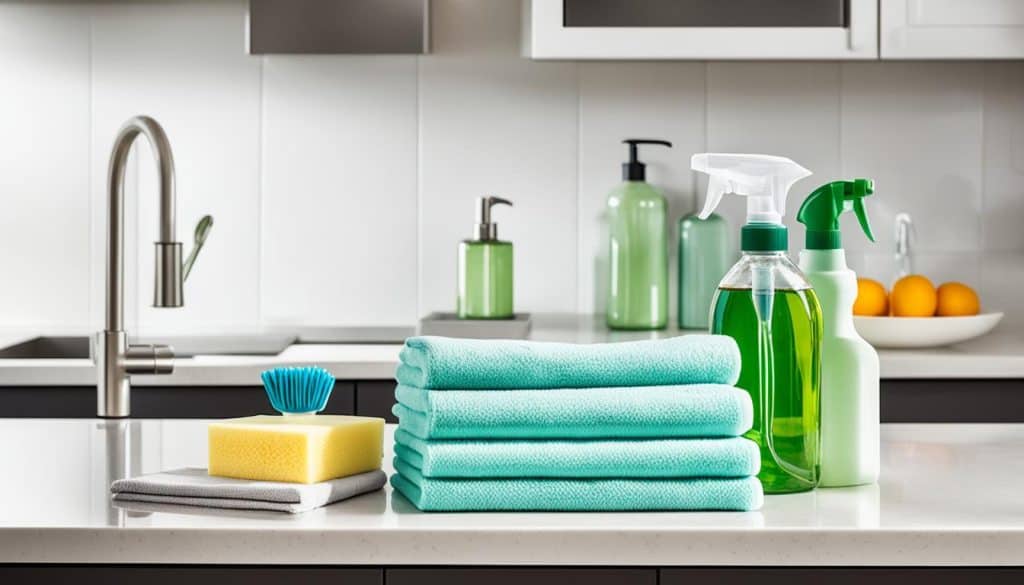 It’s also crucial to clean your kitchen tools well. To sanitize them, wash with hot soapy water. Then, use a bleach solution made from 1 tablespoon of bleach in 1 gallon of water.
Cleaning Surfaces
To keep germs away, clean kitchen surfaces regularly. Use a bleach solution to sanitize areas that touch raw foods. Dishcloths and towels should be washed often on the hot cycle to stop germs from growing. Clean sinks and ovens daily to keep your kitchen hygienic.
Properly Washing Produce
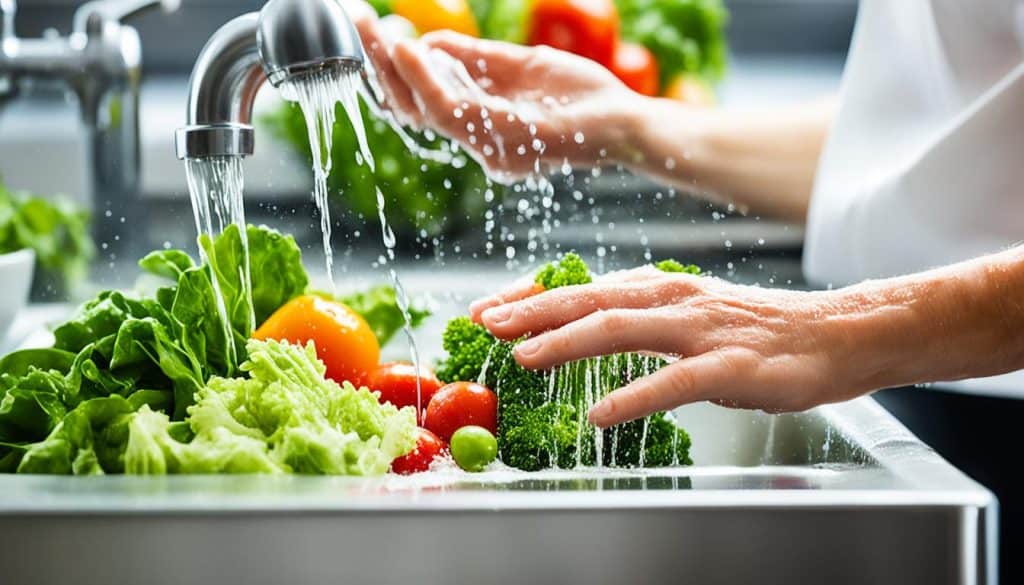
It’s important to wash fruits and veggies to remove germs and dirt. Rinse them under running water, but don’t use soap. Pre-washed items in bags don’t need more cleaning. But, don’t wash raw meat—it spreads germs. Cooking it well kills bacteria better than washing.
Following these kitchen hygiene tips helps keep your household safe. It makes your kitchen cleaner and healthier.
Separate: Preventing Cross-Contamination
Keeping food safe from cross-contamination is key to avoiding foodborne illnesses. It’s important because millions in the US suffer from food allergies. Using the right methods to stop cross-contamination is critical in our daily food handling.
Using Different Cutting Boards
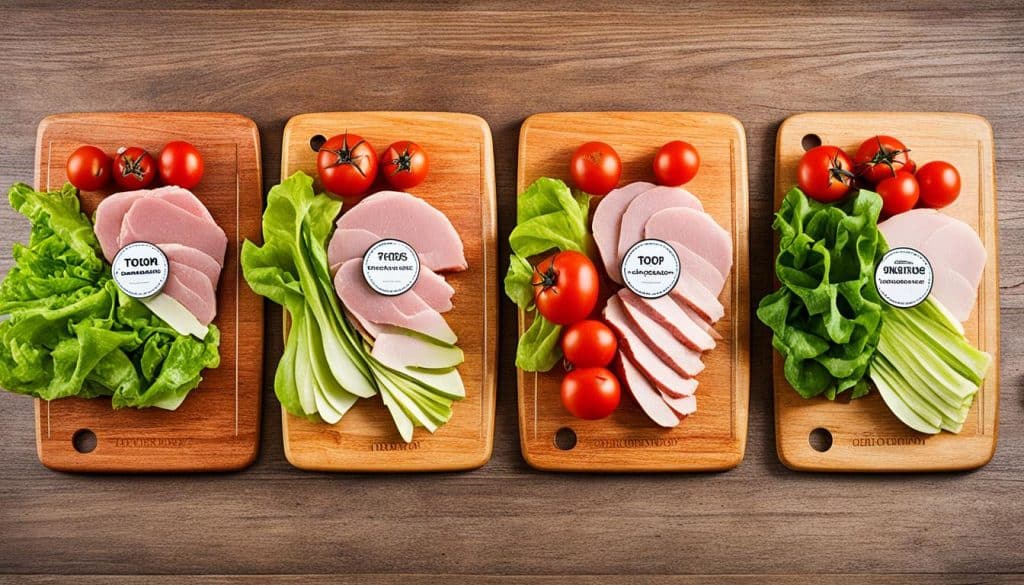
One simple yet effective step is using separate cutting boards for different foods. I suggest having one for raw meats, another for fresh produce, and a third for cooked foods. This helps stop bacteria from raw meats reaching vegetables or ready-to-eat food.
For example, a red cutting board for meats and a green one for veggies can help. This color-coding makes it easy to keep things safe and clear.
Storing Raw and Cooked Foods Separately
How we store food is also crucial in preventing cross-contamination. The FDA advises keeping raw and cooked foods apart. Always put raw meats on the bottom shelf in the fridge to avoid drips. And, use sealed containers to keep raw and cooked foods separate.
Having a shelf just for allergen-free or gluten-free items is another smart move. By doing this, we lower the chance of foodborne illnesses. Everyone’s health benefits from these safer food practices.
Cook: Safe Cooking Practices
Making sure food reaches safe cooking temperatures is key to preventing illnesses and keeping your kitchen safe. Every year, about 48 million people in the U.S. get sick from foodborne diseases. Symptoms like vomiting, diarrhea, and stomach pain are common. Serious cases can lead to hospital stays or even death. That’s why it’s vital to cook food to the right internal temperatures.
- Ground meat: 160°F
- Poultry: 165°F
- Seafood: Until the flesh is opaque and separates easily with a fork
- Leftovers and casseroles: 165°F or above
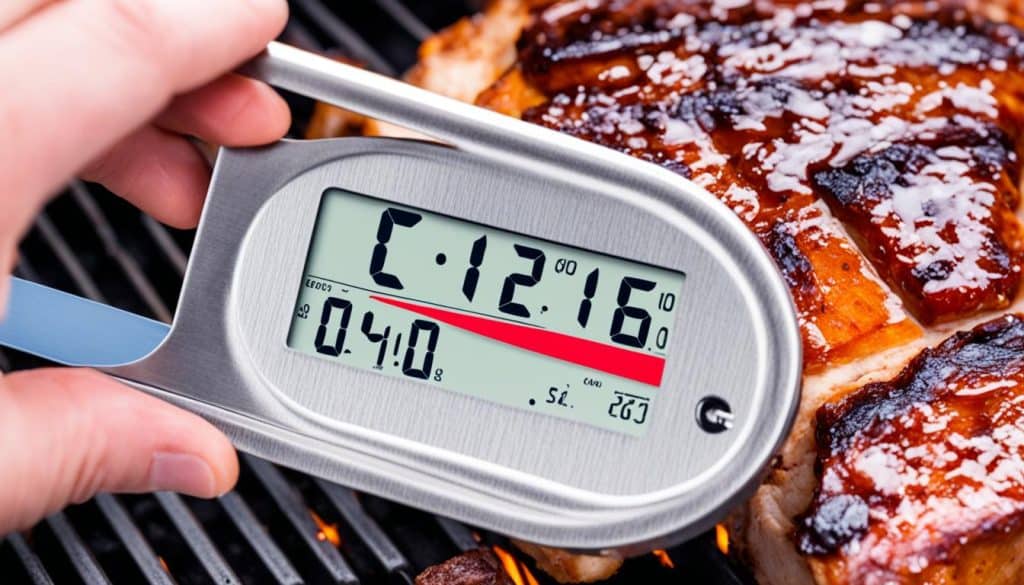
One of the best ways to make sure your food is safe is by using a food thermometer. Just looking at the color or texture of food isn’t enough. These signs can’t tell you if the food has been cooked enough to kill dangerous germs like Salmonella and E. coli.
Following safe cooking rules can lower your chance of getting sick from food by 60%. It’s also key to handle and store food the right way for cooking safety. Always put food in the refrigerator within two hours after you cook or buy it. This stops bacteria from growing. Also, always reheat leftovers to at least 165°F. This temperature can kill any bacteria that might have grown while the food was stored.
By taking these steps, you can prevent foodborne pathogens and keep your kitchen safe. Always cook food to the recommended temperatures. And, don’t forget to use a food thermometer. This will help you avoid getting sick.
Chill: Proper Food Storage Techniques
Chilling food right is key to keeping it safe. It’s important to know how to refrigerate food, thaw it safely, and understand danger zone temperatures to stop foodborne illnesses.
Refrigeration Guidelines
Keep your fridge below 40°F and your freezer at 0°F. This stops bacteria from growing. Also, eat refrigerated ready-to-eat foods quickly to reduce the risk of getting sick from Listeria.
If the power goes out, a full freezer keeps food safe for 48 hours if you keep it closed. If food gets warmer than 40°F for over four hours, throw it out to stay safe.
Thawing Food Safely
There are three safe ways to thaw food: in the fridge, in cold water, or in the microwave. Fridge thawing is safest. For cold water thawing, change the water every 30 minutes. If you thaw in the microwave, cook the food right away. Don’t thaw food on the counter because it can quickly become unsafe.
Understanding the Danger Zone
The danger zone is between 40°F and 140°F, where bacteria grow fast. Cool perishable food within two hours, or one hour if it’s hotter than 90°F. Keeping your fridge and freezer at the right temperatures is very important for food safety.
Following these tips on refrigeration, thawing, and the danger zone will help keep your food safe. These steps are key in preventing foodborne illnesses and keeping your food fresh.
Food Safety for Vulnerable Populations
Some people are more at risk of getting sick from bad food. This includes pregnant women, young children, older adults, and folks with weaker immune systems. Because their bodies don’t fight off germs as well, they need to be very careful about what they eat. By following food safety rules closely, they can avoid getting really sick from foodborne diseases.
Pregnant women need to be extra careful about what they eat. Their immune systems change during pregnancy, making them more likely to get food poisoning. This can harm both the mom and her unborn baby. Foods like unpasteurized dairy and undercooked meat and eggs can be really dangerous. That’s why it’s important for pregnant women to stick to safe food practices.
Kids under 5 are also at greater risk because their immune systems are still growing. They can get really sick from foodborne bacteria. Parents need to make sure raw meat is stored properly and that all food is cooked well. Keeping kids away from risky foods like raw dough and unpasteurized juices is a good idea too.
Older adults and people with certain illnesses or weak immune systems need to be very careful. They can get very sick from common germs like Salmonella. Washing hands regularly, storing food properly, and eating pasteurized products can help them stay safe. These steps are key in preventing serious health problems for these vulnerable folks.