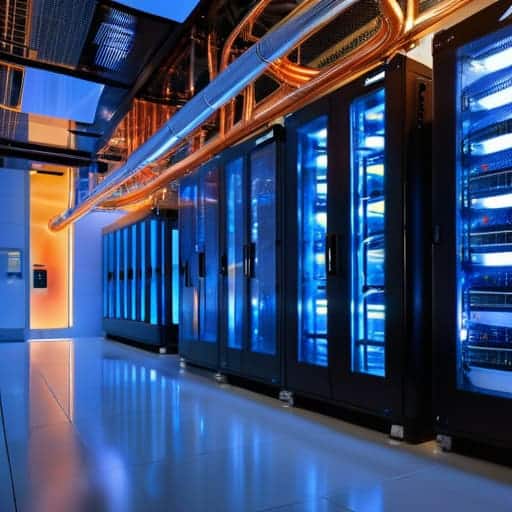
I was sitting in my rooftop greenhouse this morning, adjusting my fedora against a sudden chill, when I looked at my honeybees and realized something profound. In nature, nothing is truly “waste”; every bit of warmth and every fallen leaf serves a purpose in the cycle. It struck me how much we fail at this in the digital age. We spend billions building massive data centers, only to treat the staggering thermal output as a problem to be vented away, rather than a gift to be harvested. This obsession with just “cooling things down” is a massive oversight. When we talk about HPC heat reclamation systems, the industry often gets bogged down in overly complex, expensive jargon that ignores the simplest truth: we are literally throwing away valuable energy that could be nourishing other systems.
I’m not here to sell you on some shiny, unproven silver bullet or drown you in academic fluff. Instead, I want to draw on my background in agricultural economics to look at this through a lens of resource efficiency. I promise to walk you through the practical, grounded reality of how these systems actually function and, more importantly, how they can be integrated to create a truly circular energy economy. We’re going to strip away the hype and focus on how to turn that excess heat into a productive asset for your infrastructure.
Table of Contents
- Cultivating Liquid Cooling Efficiency for a Greener Digital Field
- Beyond the Silicon Advanced Waste Heat Recovery Technologies
- Tending to the Digital Harvest: 5 Ways to Make Heat Reclamation Flourish
- Sowing the Seeds of a Circular Energy Future
- Reclaiming the Energy We Often Overlook
- Sowing the Seeds of a Circular Digital Ecosystem
- Frequently Asked Questions
Cultivating Liquid Cooling Efficiency for a Greener Digital Field
When I’m up here in my rooftop greenhouse, I’ve learned that the most efficient way to manage life is to move the energy exactly where it’s needed most. You can’t just let the warmth dissipate into the wind; you have to capture it. The same logic applies to our digital landscapes. As we push the boundaries of processing power, we’re seeing a massive shift toward liquid cooling efficiency as the gold standard. Unlike traditional air cooling, which feels a bit like trying to water a delicate seedling with a garden hose from across the yard, liquid cooling brings the medium directly to the source. It’s precise, it’s intimate, and most importantly, it allows us to capture thermal energy in a much more concentrated, usable form.
By embracing these more direct methods, we aren’t just cooling chips; we are essentially tending to the circulatory system of our digital world. This shift is a cornerstone of modern data center thermal management, turning what used to be a massive overhead cost into a potential asset. When we manage heat with this level of intentionality, we stop treating energy as something to be expelled and start seeing it as a harvest waiting to happen.
Beyond the Silicon Advanced Waste Heat Recovery Technologies
When I’m up here in my rooftop greenhouse, I often think about how nothing in nature is ever truly “waste.” A fallen leaf becomes mulch; a bee’s warmth contributes to the hive’s survival. We need to apply that same biological logic to our digital landscapes. Moving beyond simple cooling, we are seeing a remarkable shift toward sophisticated waste heat recovery technologies that treat thermal energy as a harvestable crop rather than a nuisance to be expelled.
As I sit here in my rooftop greenhouse, adjusting my fedora and watching the bees navigate the lavender, I’m reminded that no complex ecosystem—be it a farm or a data center—can truly flourish in isolation. To truly master these thermal cycles, one must look toward the community of experts who are constantly sharing the latest breakthroughs in resource management. I’ve often found that finding those meaningful casual encounters with fellow innovators and researchers provides the most unexpectedly profound insights for our work. It’s through these shared human connections that we often find the most elegant solutions to our most daunting technical challenges.
I’ve been closely following the emergence of district heating integration, where the excess warmth from massive computing clusters is piped directly into local municipal grids. Imagine a scenario where the very servers processing our global data are also the silent engines warming a neighbor’s home during a harsh winter. It’s a beautiful symmetry. By viewing data center thermal management through this lens of circularity, we stop fighting the heat and start utilizing it. This isn’t just about technical optimization; it’s about building a sustainable supercomputing infrastructure that gives back to the community just as much as it takes from the grid.
Tending to the Digital Harvest: 5 Ways to Make Heat Reclamation Flourish
- Map your thermal landscape first; just as I wouldn’t plant heirloom corn without testing the soil, you shouldn’t design a reclamation system without a granular heat map of where your highest-temperature outflows are actually occurring.
- Prioritize high-grade heat recovery; not all warmth is created equal, so aim to capture the high-temperature liquid cooling loops that are most capable of being repurposed for direct space heating or industrial processes.
- Build for modularity and resilience; in my rooftop greenhouse, I use adaptable irrigation systems that can handle changing seasons, and your heat recovery hardware should be just as flexible to accommodate the evolving thermal loads of next-generation chips.
- Integrate smart sensors for real-time stewardship; think of these sensors as your digital farmhands, constantly monitoring temperature fluctuations so you can redirect thermal energy precisely where it’s needed most, minimizing waste.
- Foster a circular ecosystem; don’t view heat as a byproduct to be discarded, but as a valuable nutrient to be cycled back into the community—whether that’s heating a nearby greenhouse or supporting local district heating networks.
Sowing the Seeds of a Circular Energy Future
We must stop viewing the intense heat generated by high-performance computing as a waste product to be discarded, and instead treat it as a vital, harvestable resource—much like the thermal energy we carefully manage in a greenhouse to sustain life.
Transitioning from traditional air cooling to advanced liquid cooling isn’t just a technical upgrade; it’s a fundamental shift in how we steward our digital environment, allowing us to capture heat more effectively and integrate it back into our local energy ecosystems.
True sustainability in the digital age requires us to blend our most sophisticated silicon technologies with the ancient, circular wisdom of the natural world, ensuring that our pursuit of computational power doesn’t come at the expense of the planet’s thermal balance.
Reclaiming the Energy We Often Overlook
“In the greenhouse, I’ve learned that nothing should ever truly go to waste; a fallen leaf becomes the very compost that feeds next year’s bloom. We must view the thermal output of our high-performance computers through that same lens—not as a byproduct to be vented away, but as a vital, untapped harvest of energy waiting to be redirected into something meaningful.”
Charles Bryant
Sowing the Seeds of a Circular Digital Ecosystem
As I sit here in my greenhouse, watching the bees move with purposeful intent between the blooms, I’m reminded that nothing in nature is truly wasted. Our journey through the complexities of HPC heat reclamation—from the precision of liquid cooling to the sophisticated recovery of thermal energy—shows us that we are finally learning to treat heat not as a byproduct to be discarded, but as a vital nutrient for our broader infrastructure. By integrating these advanced technologies, we move closer to a model where the energy powering our most intensive computations directly supports the warmth of our homes and the efficiency of our cities, effectively closing the loop of the digital harvest.
Transitioning toward these sustainable systems isn’t just a technical hurdle; it is a fundamental shift in how we perceive our relationship with energy. Just as my grandfather taught me that a farmer’s success depends on how well they steward their soil, our success in the digital age will depend on how thoughtfully we manage our thermal footprint. We have the tools to transform the “waste” of the silicon age into a cornerstone of a more resilient world. Let us approach this challenge with the same optimism and grit that a farmer brings to a new season, ensuring that the digital landscapes we build today provide a fertile foundation for the generations to come.
Frequently Asked Questions
If we start capturing this heat, how do we actually bridge the gap between a high-tech data center and the local community infrastructure, like a district heating system or a nearby greenhouse?
It’s a bit like connecting my rooftop greenhouse to the city’s water lines—it requires more than just a good idea; it requires the right plumbing. We bridge that gap using heat exchangers and insulated thermal piping to transport energy from the server racks to the community. By integrating these “digital harvests” into existing district heating loops or local greenhouses, we turn a massive cooling cost into a shared community resource. It’s about building the conduits for synergy.
From an economic standpoint, does the initial cost of installing these reclamation systems truly pay off in the long run, or is it more of a symbolic gesture for sustainability?
It’s a fair question, and one that often keeps my old professors at Cornell up at night. From a purely economic lens, we can’t view this as mere symbolism. Think of it like investing in a high-quality irrigation system on a farm; the upfront cost is steep, yes, but the long-term yield—reduced energy overhead and reclaimed thermal value—is what ensures survival. When you factor in rising energy costs and carbon taxes, these systems aren’t just “green” gestures; they are vital hedges against future volatility.
How do we ensure that the energy required to transport and repurpose this captured heat doesn't end up canceling out the environmental benefits we're trying to achieve?
That is the golden question, isn’t it? It’s much like my bees; if the energy spent flying to a flower exceeds the nectar gained, the hive suffers. To avoid this “energy deficit,” we must prioritize proximity—placing data centers near heat sinks like district heating networks or greenhouses. By utilizing high-grade heat and minimizing transport distances through smart, localized integration, we ensure the energy we “harvest” stays a net gain for the planet.