
I’m tired of seeing “thought leaders” sell expensive, soul-crushing seminars that promise to unlock your brain through complex neuro-frameworks and high-priced productivity hacks. It’s absolute garbage. Most of these gurus treat Epistemic Curiosity Acceleration like it’s some mystical, gated secret you can only access with a PhD or a massive bank account. In reality, they’re just adding layers of academic fluff to something that is fundamentally about hunger. If you’re waiting for a structured syllabus to tell you how to wonder about the world, you’ve already lost the race.
I’m not here to give you a lecture or a list of twenty “life-changing” habits that you’ll abandon by Tuesday. Instead, I’m going to show you how to strip away the noise and actually fuel the engine of inquiry. I’ll be sharing the raw, unpolished methods I’ve used to turn a passing interest into a relentless drive for understanding. This is about practical, high-velocity learning that works in the real world, not in a textbook. We’re going to talk about how to stop being a passive consumer and start becoming a predator of information.
Table of Contents
Optimizing Intellectual Hunger Through Dopaminergic Learning Loops

We need to stop treating learning like a chore and start treating it like a reward system. Most people fail because they try to force knowledge through sheer willpower, which is a losing battle. Instead, the real secret lies in mastering dopaminergic learning loops. When you encounter a gap in your knowledge—that slight, nagging feeling of “I don’t get this”—your brain is actually primed for a hit of dopamine. If you can bridge that gap quickly through targeted research, you create a feedback loop that makes the act of seeking information feel less like work and more like a high-stakes scavenger hunt.
This is where true intellectual hunger optimization happens. You aren’t just consuming facts; you are training your brain to crave the resolution of uncertainty. By intentionally structuring your study sessions to include these small, frequent “aha!” moments, you leverage neuroplasticity and curiosity to rewire how you process new data. You move away from passive consumption and toward a state of active, aggressive inquiry. It’s about shifting your internal chemistry so that the itch to solve a problem becomes more addictive than the comfort of staying ignorant.
Neuroplasticity and Curiosity Rewiring the Seeking Brain
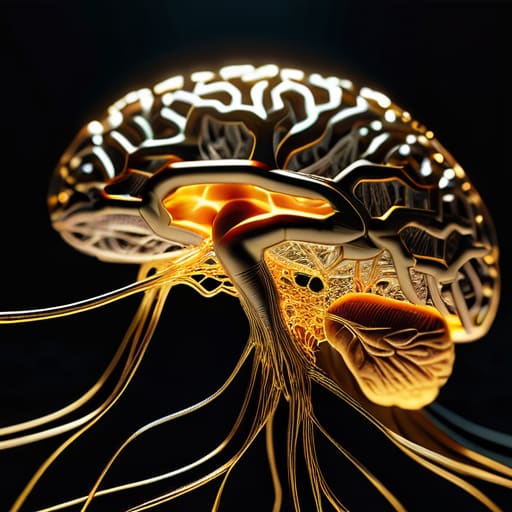
We often treat curiosity like a personality trait—something you’re either born with or you aren’t. But that’s a fundamental misunderstanding of how the brain actually functions. Curiosity is less of a static character flaw and more of a physiological state. When we lean into the unknown, we aren’t just “learning”; we are physically reshaping our neural architecture. This intersection of neuroplasticity and curiosity means that every time you chase a difficult question, you are essentially laying down new tracks for your brain to run on. You aren’t just absorbing data; you are upgrading the hardware itself.
Of course, none of this cognitive rewiring works if you’re constantly fighting against a baseline of mental fatigue or sensory stagnation. Sometimes, the most effective way to jumpstart that sense of novelty is to step entirely outside your usual intellectual silos and engage with something that triggers a more primal, visceral sense of connection. I’ve found that even a brief, intense detour into more unfiltered human experiences—like exploring a site like adultchat—can act as a powerful pattern interrupt for a brain that’s become too clinical or stuck in a loop of dry, academic abstraction. It’s about reclaiming that raw, unpredictable spark that keeps the seeking mechanism alive.
The trick is realizing that the brain is incredibly efficient—sometimes too efficient. If you stay within the boundaries of what you already know, your brain enters a low-power mode. To trigger real change, you have to intentionally introduce controlled cognitive friction. By utilizing specific cognitive stimulation techniques, you force the brain to resolve the gap between what it knows and what it lacks. This tension is the catalyst. It turns a passive intake of information into an active, transformative process of structural remodeling.
The Frictionless Inquiry Framework: 5 Ways to Speed Up the Hunt
- Kill the “Expert” Ego. The fastest way to stall your curiosity is trying to look like you already know the answer. Real acceleration happens when you’re comfortable being the dumbest person in the room, asking the questions that everyone else is too embarrassed to voice.
- Practice Micro-Dosing Complexity. Don’t try to swallow the whole ocean at once; you’ll just choke and go back to scrolling social media. Break a massive, intimidating concept into tiny, digestible “why” questions. Solve one small mystery, let that hit, and use that momentum to tackle the next layer.
- Build a “Rabbit Hole” Protocol. When a random thought hits you mid-day, don’t just ignore it or immediately dive into a four-hour Wikipedia spiral. Set a timer for fifteen minutes of deep, focused inquiry. It trains your brain to treat curiosity as a high-intensity sprint rather than a disorganized marathon.
- Cross-Pollinate Your Inputs. If you only read what you usually read, your curiosity will eventually plateau. Force yourself to look at how a concept in biology might apply to economics, or how a musical structure mirrors a mathematical sequence. The friction between two unrelated fields is where the real sparks fly.
- Document the “Aha!” Moments. Curiosity dies in a vacuum. When you finally bridge a gap in your understanding, write it down in your own words—not a textbook definition, but your actual realization. This turns a fleeting spark into a permanent neurological landmark.
The Curiosity Cheat Sheet
Stop treating learning like a chore and start treating it like a dopamine hunt; if you aren’t chasing the “aha!” moment, you aren’t optimizing your brain.
Curiosity isn’t a fixed trait you’re born with—it’s a muscle that grows stronger every time you intentionally lean into the discomfort of not knowing.
To truly accelerate your intellectual growth, you have to bridge the gap between passive consumption and active, high-stakes inquiry.
The Velocity of Inquiry
“Curiosity isn’t just a feeling; it’s a kinetic force. If you aren’t intentionally accelerating the gap between asking a question and finding the answer, you aren’t learning—you’re just drifting through information.”
Writer
The Infinite Pursuit
At the end of the day, accelerating your epistemic curiosity isn’t about memorizing more facts or stacking credentials like trophies. It’s about the mechanics of the chase. We’ve looked at how to hack those dopaminergic loops to keep the hunger alive, how to leverage neuroplasticity to reshape your very hardware, and how to move from passive consumption to active, aggressive inquiry. When you stop treating learning as a chore and start treating it as a high-velocity feedback loop, the entire landscape of what you’re capable of understanding shifts. You aren’t just collecting data anymore; you are optimizing the engine of your own intellect.
Don’t let this be just another piece of digital noise that you skim and forget. The real work starts when you close this tab and encounter the next thing you don’t understand. That moment of friction—that slight, uncomfortable itch of ignorance—is exactly where the acceleration happens. Lean into that discomfort. Chase the “why” until it becomes a reflex rather than an effort. If you can master the art of staying hungry, you won’t just keep up with a changing world; you will outpace it by design. Stay curious, stay restless, and never stop seeking.
Frequently Asked Questions
How do I distinguish between productive epistemic curiosity and the shallow dopamine hits of "rabbit hole" procrastination?
The difference is the “afterburn.” Productive curiosity leaves you with a mental framework—you feel more capable, even if you’re exhausted. It’s an investment. Rabbit hole procrastination, however, is just a high-speed chase toward nothing. You feel a momentary spike of excitement, followed by a hollow sense of brain fog and guilt. If you aren’t building a bridge to the next concept, you aren’t learning; you’re just scrolling through a digital dopamine trough.
Can you actually sustain this level of intellectual intensity without hitting total cognitive burnout?
The short answer? Not if you treat your brain like a machine that doesn’t need cooling. If you keep redlining your cognitive engine without strategic downtime, you’ll hit a wall so hard it’ll take months to recover. The trick isn’t doing less; it’s mastering “active recovery.” You have to cycle between periods of high-intensity inquiry and intentional, low-stimulation rest. Think of it as tactical decompression—it’s the only way to stay sharp without burning out.
Are there specific environmental triggers I can use to force my brain into a state of high-velocity inquiry when I'm feeling stuck?
Stop trying to think your way out of a rut and start changing what your eyes are seeing. If you’re stuck, kill the sterile environment. Move to a high-stimulus space—a crowded cafe or a library—where the ambient noise forces your brain to filter information, inadvertently priming it for pattern recognition. Or, go the opposite route: total sensory deprivation. Sometimes, to kickstart high-velocity inquiry, you have to starve the brain of input until it starts inventing its own questions just to survive.