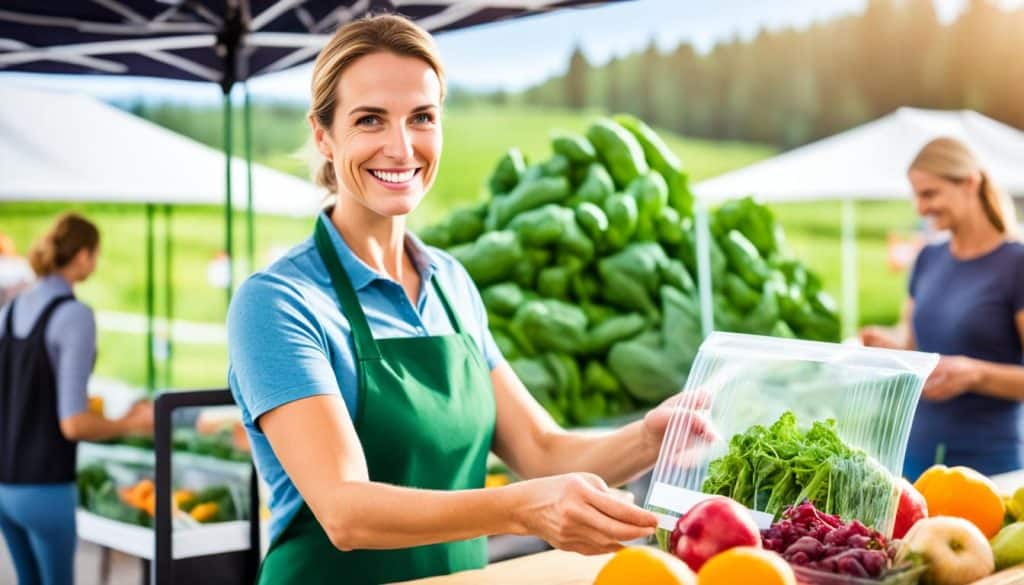
Did you know that getting products from suppliers close by is a big deal in farm-to-table? The National Restaurant Association found out it’s a key trend. About 80% of chefs think getting food locally is hot right now. This focus is not only about keeping food safe but also about supporting sustainable farming.
Food safety is super important. Take Chipotle, for example. They had a big problem in 2017 because of a virus, and their stock value went down 13%. This shows that restaurants need to be very careful about keeping their food safe. It’s all about keeping a good reputation and making sure food does its job without causing harm.
Making sure our food is safe starts with how it’s grown. Good Agricultural Practices, or GAPs, are key to avoiding contamination. These actions, along with farming in a way that cares for our planet, mean we can enjoy safe food. Everyone involved, from the farmers to those who check the farms, must follow these important steps.
Foodborne illnesses can cause big problems, especially in places with less money. This tells us that keeping food safe is everyone’s job along the way. Let’s look at all the things we can do together to make sure our food is safe and healthy.
The Critical Role of Good Agricultural Practices (GAPs)
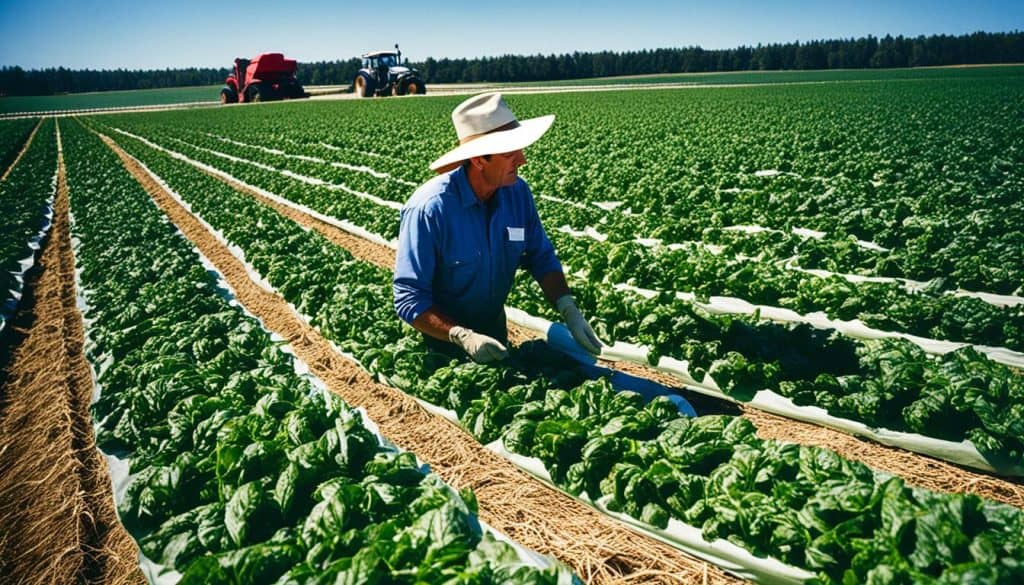
Good Agricultural Practices (GAPs) help keep our food safe from the farm to our tables. They ensure both produce and the environment are healthy. Through steps like using disease-resistant seeds, managing soil well, and choosing safe irrigation water, GAPs cut down on food hazards.
This strategy includes rotating crops, managing pests wisely, and following strict food safety steps. Together, these efforts lead to safer, top-quality crops.
Implementing Disease-Resistant Seeds
Using disease-resistant seeds is a key part of GAPs. These seeds fight off disease better, making plants healthier. This means more produce and safer food from farms.
Because these seeds are tough against pathogens, farmers have an easier time with pest control. This keeps the agricultural environment healthy.
Effective Soil Management Practices
Healthy soil is vital for strong plants and safe food. Practices like rotating crops and using organic amendments keep the soil clean and rich. This not only increases the amount of food grown but also fits well with food safety efforts.
Working the soil properly helps avoid disease spread. Clean soil results in better produce, straight from the source.
Use of Safe Water for Irrigation
The water used on crops must be clean to prevent disease. If irrigation water is dirty, it can harm both the yield and safety of food. That’s why it’s key to regularly check water for harmful microbes.
Using clean water helps with pest control and keeps crops safe. It’s a fundamental part of keeping the whole farm healthy.
Following GAPs and staying updated on safety rules are crucial for food safety. Support from the USDA and guidelines from experts like UC Davis and Penn State University make these practices strong. They provide a steady foundation for producing safe, healthy food.
Advanced Processing Techniques for Food Integrity
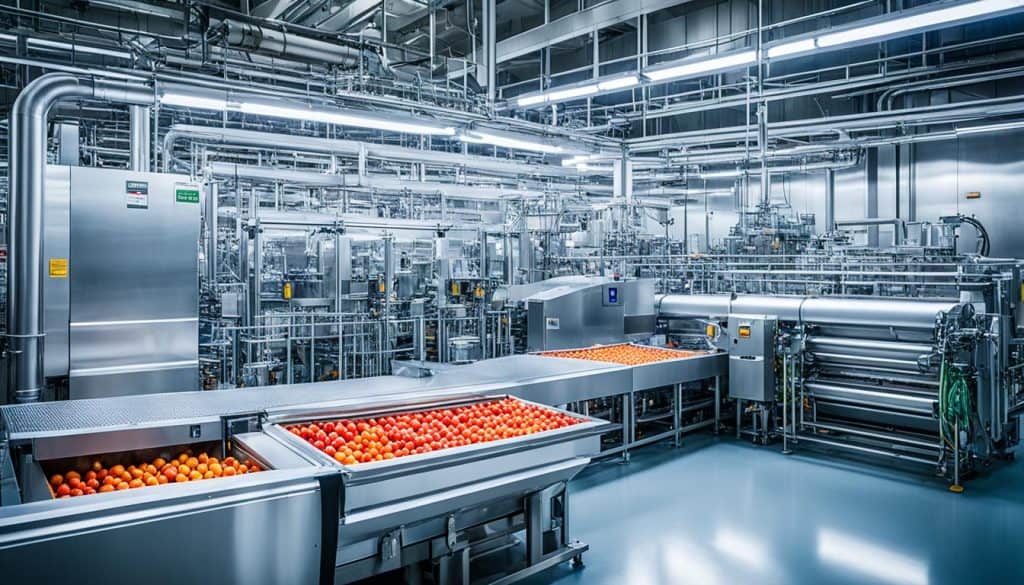
Keeping our food safe is key, and advanced methods are at the heart of it. Flash freezing and ultra-heat treatment (UHT) are stars in the safety game. They keep nutrients in and microbial contamination out, meeting top quality assurance standards.
Flash Freezing to Preserve Nutritional Content
Flash freezing makes food stay fresh and nutritious. It quickly cools food, keeping its taste and texture. It also fights food processing microbes, making our food safer. Plus, it keeps food good longer, which means less waste.
Pasteurization and Ultra-Heat Treatment (UHT)
Pasteurization and UHT zap microbial contamination. They heat food to kill off bad germs but keep the good stuff. UHT is great for longer shelf lives. It makes sure we get safe dairy, juices, and other foods.
Thanks to these methods, food safety and quality are better than ever. Adding tech like robotics, automation, IoT, and blockchain means even safer food from farm to table. Our meals stay safe, nutritious, and top-notch.
Importance of Food Safety in Transportation
Keeping food safe during transport is key to public health. The World Health Organization (WHO) shares worrying numbers. Unsafe foods lead to about 600 million cases of diseases and 420,000 deaths a year worldwide.
Children under 5 years old are especially at risk. They account for about 125,000 deaths each year because of unsafe food.
Real-Time Monitoring with GPS and IoT Sensors
Food transportation now uses GPS and IoT sensors. These track temperature and humidity in real time. This technology provides detailed journey logs, improving traceability and accountability.
By using real-time data, people can quickly fix any issues. This helps keep the cold chain management process solid.
Compliance with Food Transportation Regulations
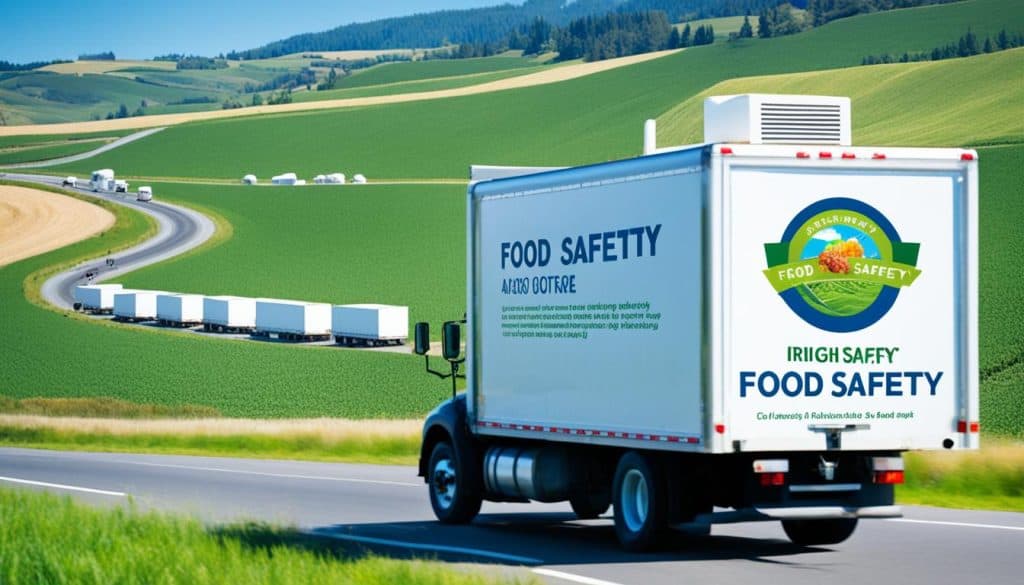
Following rules is crucial for food safety. The FDA’s Food Safety Modernization Act (FSMA) sets rules for transport equipment, operations, and training. It aims to prevent risks during food transport. This law affects everyone in the U.S. involved with food, ensuring it’s safe for everyone.
Effective cold chain management needs the right packing and temperature control. Good communication within the supply chain is also vital. Using refrigerated trailers and insulated coolers helps keep food at safe temperatures. This ensures food safety during transport.
Farm-to-Table Safety: Ensuring a Secure Food Journey
The path from farm to our tables goes through many important steps. To keep our food safe, every step must be carefully watched. With people caring more about where their food comes from, how it’s shipped and handled matters a lot. Ensuring food doesn’t spoil or get contaminated is key, especially during transport.
Training Transport Staff in Sanitary Practices
It’s critical to teach transport staff how to keep food safe. They learn to wash hands often, use clean tools, and follow clean rules. This way, everyone involved knows how crucial their job is to stop illnesses from food.
Maintaining Cold Chain Integrity
Keeping food cold from start to end is vital for its freshness and safety. With tools like digital monitoring and GPS, food stays at the right temperature. Tech like IoT sensors and following rules make sure the cold chain stays unbroken. This reduces the chances of food going bad or becoming dangerous.
To wrap it up, making sure our food is safe during its journey takes work from everyone. By focusing on good training, clean habits, and the latest tech, we can make sure our food is safe and healthy. This way, only the best reaches our tables.